

Salauddin, Founder President of the Telangana Gig and Platform Workers Union, helped organise the action that saw over 2 lakh gig workers log off their apps in protest.
“This was a flash strike, a trailer,” he says in an interview to YourStory. “Picture abhi baaki hai (the picture is still pending),” he adds.
The Telangana Gig and Platform Workers Union is one of the earliest state‑level unions working for the interests and rights of gig and platform workers.
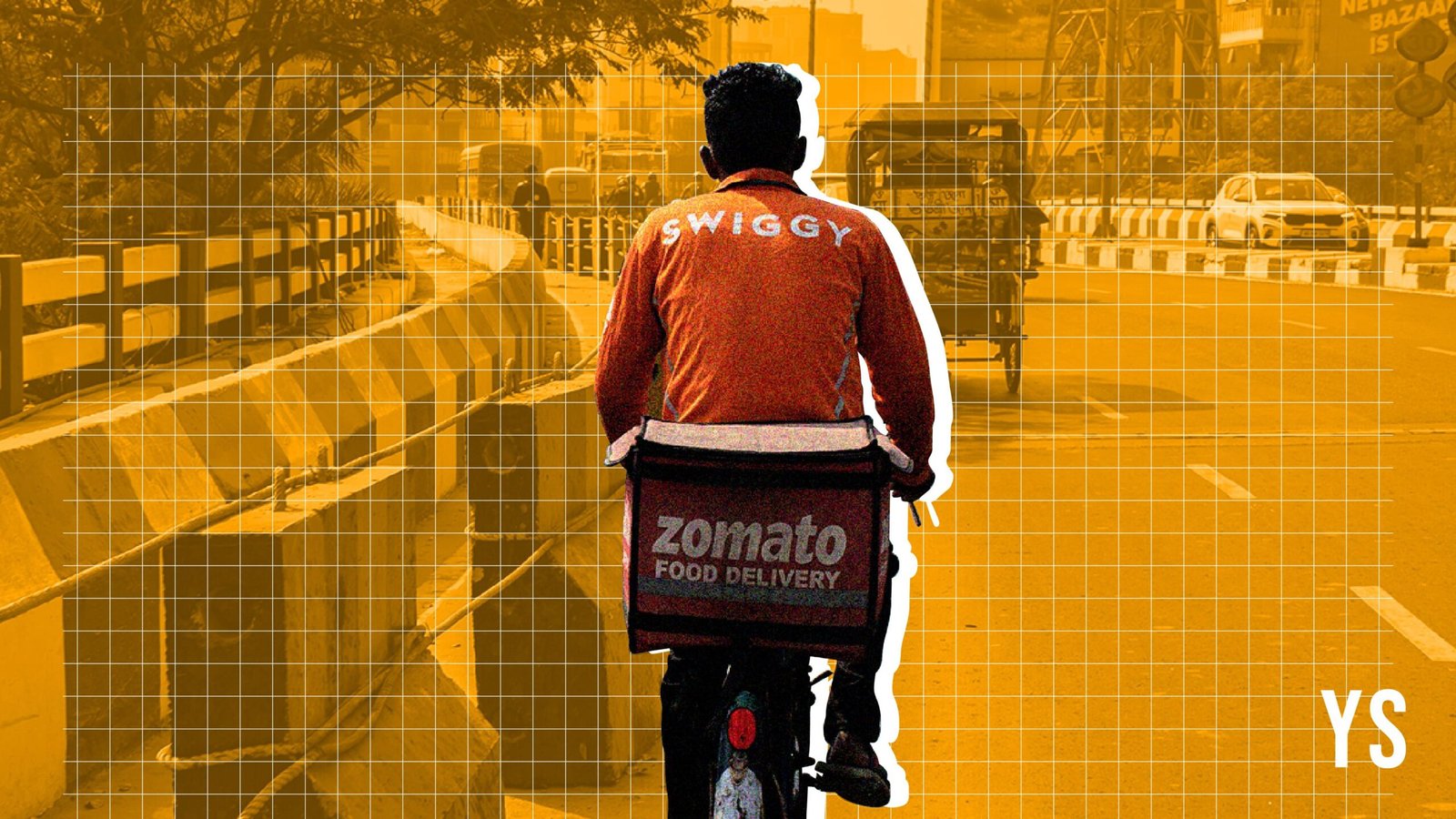
Gig workers associated with major platforms such as Zomato, Swiggy, Blinkit, and Zepto staged coordinated strikes across India, including Tier I and II cities such as Mumbai, Delhi, Ahmedabad, and Kolkata, on Christmas and New Year’s Eve.
The workers demanded transparent pay structures, removal of the ‘10-minute’ delivery pressure, protection against arbitrary account deactivation, improved insurance and safety gear, rest breaks, social security benefits, and the right to collectively bargain.
While executives and founders of delivery platforms have claimed minimal to no disruption to deliveries, Salauddin paints a different story. He says 60% of orders were delayed across platforms, and workers demonstrated that they could coordinate action across Tier I and II cities alike.
“Check the logs at the stores. Orders were sitting there for hours,” he says.
<figure class="image embed" contenteditable="false" data-id="587601" data-url="https://images.yourstory.com/cs/2/c5c652a0fb5a11eca125d7821ea2fbc4/2Imageovag14ovag14ovag-1767607938888.png" data-alt="Shaik Salauddin, Founder President of Telangana Gig and Platform Workers Union" data-caption="Shaik Salauddin, Founder President of Telangana Gig and Platform Workers Union
” align=”center” style=”float: right; margin-left: 20px; width:50%; height:auto”> Shaik Salauddin, Founder President of Telangana Gig and Platform Workers Union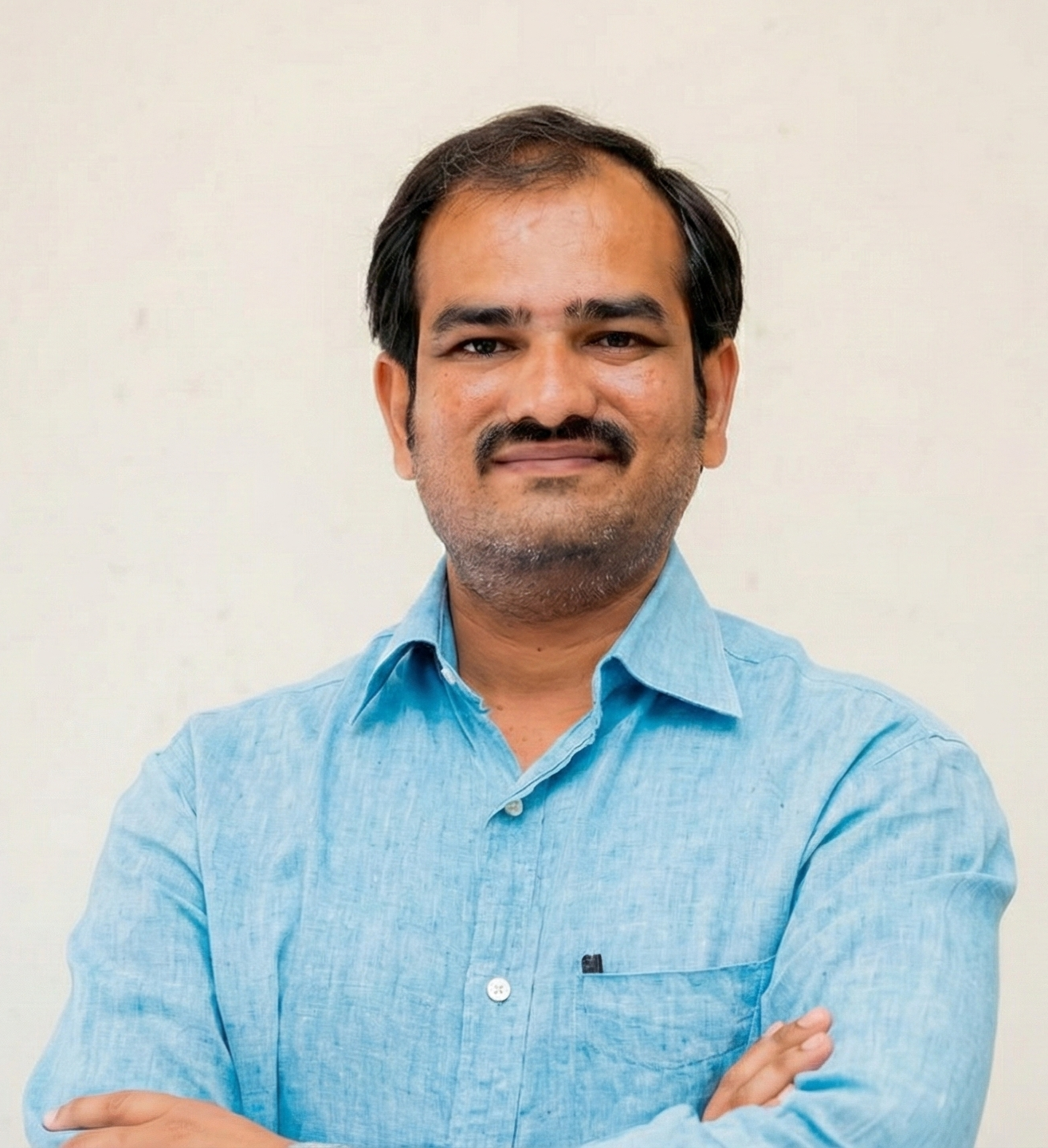
This narrative clashes with the account provided by Deepinder Goyal, Founder of Zomato, who stated on social media platform X that the company delivered a record number of orders “unaffected by calls for strikes”. Goyal also attributed disruptions to a “small number of miscreants.”
Salauddin rebuts this claim, suggesting that the platforms’ scramble to offer a surge in delivery incentives—up to Rs 3,000 a day in some regions—was an admission of pressure.
“The union and workers’ voices finally reached the CEOs’ ears,” he says.
The union leader—who has worked with app-based ride-hailing companies like Uber and Ola and has helped address driver grievances in Hyderabad for over a decade—argues that the union’s ability to force C-suite executives including Zomato’s Goyal and Albinder Dhindsa of Blinkit into a public defence proves the collective power of the workforce.
The gig workers’ strike also appears to have triggered political intervention.
Salauddin notes that the strike has prompted immediate reactions from lawmakers, including Members of Parliament. He also cites the central government’s release of a draft notification regarding gig workers shortly after the protests as evidence of the strike’s impact.
Raghav Chadha, a Member of Parliament (Rajya Sabha) from the Aam Aadmi Party, issued a strong statement on X, directly countering Zomato CEO Goyal’s description of the striking workers as “miscreants”.
<div class="tweet embed" contenteditable="false" id="2007352369378451871" data-id="2007352369378451871" data-url="https://x.com/raghav_chadha/status/2007352369378451871" data-html="
Delivery partners across India went on strike demanding basic dignity, fair pay, safety, predictable rules and social security. The response from the Platform was to call them "miscreants" and turn a labour demand into a law & order narrative. That is not just insulting, it is…
— Raghav Chadha (@raghav_chadha) January 3, 2026
https://platform.twitter.com/widgets.js
” data-type=”tweet” align=”center”>
Delivery partners across India went on strike demanding basic dignity, fair pay, safety, predictable rules and social security. The response from the Platform was to call them “miscreants” and turn a labour demand into a law & order narrative. That is not just insulting, it is…
— Raghav Chadha (@raghav_chadha) January 3, 2026
.thumbnailWrapper{
width:6.62rem !important;
}
.alsoReadTitleImage{
min-width: 81px !important;
min-height: 81px !important;
}
.alsoReadMainTitleText{
font-size: 14px !important;
line-height: 20px !important;
}
.alsoReadHeadText{
font-size: 24px !important;
line-height: 20px !important;
}
}

Workers’ union open to dialogue
The union leadership insists that confrontation was never the first choice, and workers resorted to it only after repeated attempts at dialogue had failed. “We gave them five days’ opportunity to sit down and talk,” says Salauddin. “They didn’t come (for talks).”
The union leader reiterates that the gig workers’ action was conducted entirely through democratic participation. Workers were not coerced, penalised, or compelled to join, he adds.
“Every worker decided for themselves. That is what makes this powerful. Participation came from shared experience, not force.”
Now, he says, the ball is in the companies’ court.
The union warns of further action if dialogue continues to be avoided—but the approach will remain consistent. “There is more to come,” says the leader. “But it will always be non-violent, always collective, and always democratic. We are not interested in chaos. We are interested in accountability.”
He also says the union remains open to tripartite discussions involving platform companies, worker representatives, and the government—arguing that sustainable solutions can emerge only through formal negotiation and not via unilateral announcements on social media.
“Our doors are still open,” he says, adding, “But dialogue has to be real, not performative.”
Gig workers’ unions face a unique set of logistical challenges that are vastly different from the challenges that traditional trade unions face.
A primary obstacle is the transient and scattered nature of the workforce. Salauddin describes the workers as unorganised individuals who are constantly on the move, which makes establishing a consistent point of contact nearly impossible. Hence, driving formal union membership among this floating population is a “very big challenge”, he says.
This challenge is compounded by fear of retaliation—workers are often reluctant to speak up or step forward publicly because they fear their IDs will be suspended or blocked by the platforms if they are identified.
Also, gig workers’ unions do not have a professional public relations machinery, which platform companies often use to influence media narratives and underplay worker grievances, says Salauddin.
Edited by Swetha Kannan