


Cashfree’s CardLink in action: How Pilgrim achieved a remarkable 90% card success rate and faster conversions

At the forefront of this transformation in beauty and personal care is Pilgrim, a brand that arrived at a moment when Indian consumers were ready for something different. By blending global beauty traditions with formulations designed for Indian skin and climate, Pilgrim created a distinct identity in a crowded category.
From Korean skincare rituals to French vine therapy and Spanish squalane traditions, Pilgrim brought pplglobally inspired beauty practices to Indian consumers in a way that was clean, science-backed, and transparent. The brand’s ‘Pilgrim Code’ became its differentiator: 100% vegan, cruelty-free, FDA approved, and free from 20 harmful chemicals.
Cracking Tier II and III markets
As Pilgrim grew, demand began coming in from across the country. “We began delivering to completely new pin codes,” says Pritish Vartak, Founding Member and Senior Director, D2C at Pilgrim. “In some cases, logistics partners told us Pilgrim was the first brand they had ever shipped for in those locations.”
Scaling a digital-first beauty brand across a diverse, geographically spread customer base meant that growth was no longer just about demand. It increasingly depended on how reliably the brand could deliver a seamless experience at every touchpoint, especially in moments of peak intent.
Where growth meets friction
While the country’s D2C market is projected to grow into a multi-hundred-billion-dollar opportunity by the end of the decade, for brands like Pilgrim, building at speed and scale often reveals friction before it delivers momentum. High repeat purchase cycles, frequent product launches, and intense sale-day traffic spikes, strain systems that are not designed for sustained demand. And in categories where loyalty is hard-won, even a single broken checkout experience can undo months of brand-building.
“During high-intent moments, success rates used to drop sharply, and the system would break just when we expected hundreds of orders per minute,” Pritish recalls. During one major flash sale, intermittent payment failures led to repeated retries and frustrated customers. Support tickets spiked and CSAT scores dipped almost immediately.
For Pilgrim, the challenge was clear. How could the brand scale rapidly without compromising the smooth, trustworthy experience it had promised customers?
Choosing infrastructure built for scale
The answer lay in strengthening the payments layer. Pilgrim realised it needed a partner that understood the realities of D2C businesses, where repeat buying, impulse decisions, and peak-sale pressure leave no margin for error. That’s when the brand partnered with Bengaluru-based fintech company Cashfree Payments.
What stood out to Cashfree was not just Pilgrim’s growth, but its intent.
“Pilgrim wasn’t just selling beauty products. It was elevating how consumers think about self-care,” says Akash Sinha, CEO and Co-founder, Cashfree Payments. “Brands with a strong sense of purpose need infrastructure that never gets in their way, and Cashfree is committed to powering the growth of such brands.”
The impact of the partnership was visible quickly. Direct integration brought stability to Pilgrim’s checkout, reduced drop-offs, and simplified reconciliation across payment modes. But the real test came during high-pressure sale events like Black Friday 2024. “After a month of planning, we entered the sale expecting massive volume,” Pritish says. “At 8 pm, when the flash sale went live, we processed 1,556 prepaid orders in just one minute. That surge was handled seamlessly.”
By August 2025, during Pilgrim’s Birthday Sale, the system scaled further, handling over 1,720 transactions per minute and powering one of the brand’s biggest sales moments.
These peak events became trust-building milestones. For customers, smooth checkout during moments of heavy demand reinforced confidence in Pilgrim as a reliable brand. Internally, it strengthened Pilgrim’s confidence in the payments infrastructure supporting its growth.
“Another unexpected unlock was the breadth of payment options we could offer,” Pritish says. “From UPI and BNPL to wallets and international cards, checkout became more inclusive. We saw more customers confidently completing digital payments instead of defaulting to COD, and payment-related support queries reduced because customers could always find a method that just worked.”
Rewriting card payments with CardLink
As Pilgrim deepened its D2C footprint, another challenge came into sharper focus. Beauty shoppers return often, but their checkout patience does not. In repeat-heavy categories, even small friction can trigger disproportionate drop-offs.
Manual card entry, especially during first-time purchases on a new website, emerged as a critical pain point. Across the industry, re-entering card details is known to drive over 30% checkout abandonment, particularly on mobile devices.
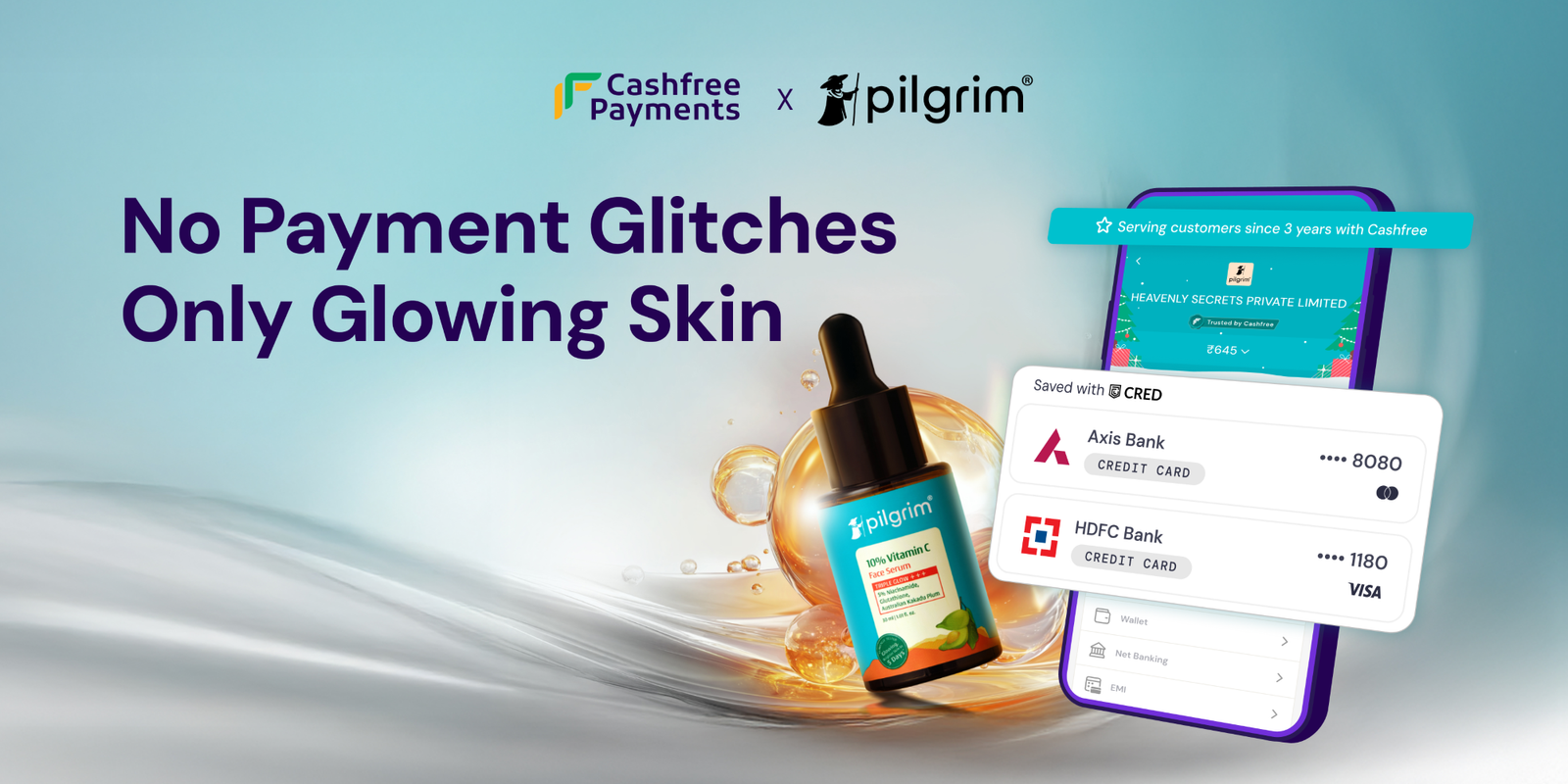
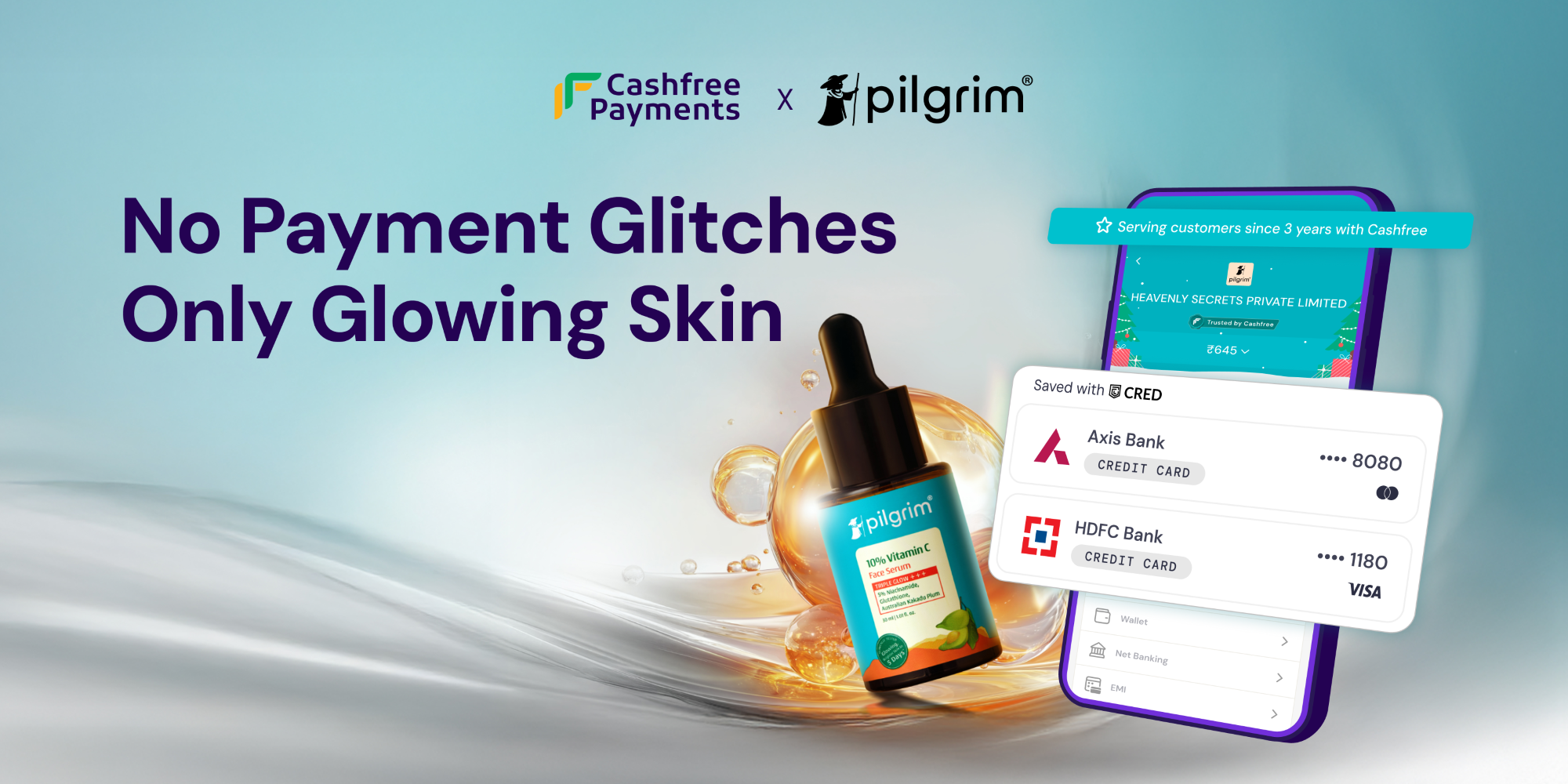
To address this, Pilgrim adopted Cashfree’s CardLink, a next-generation step in India’s tokenisation journey. CardLink securely surfaces a shopper’s saved card through partner apps such as CRED, eliminating the need to manually type card details at checkout. The experience mirrors the speed and simplicity users associate with UPI, without compromising on security or compliance.
“Card re-entry friction was a meaningful problem for us,” says Sai Charan, Product Manager at Pilgrim.
“Even when customers wanted to pay by card, many dropped off when asked to enter details again. This often pushed them toward UPI or COD, but that changed dramatically after we adopted CardLink.”
CardLink removed the 16-digit barrier entirely. A card saved once appeared automatically at any Cashfree-powered checkout, including Pilgrim’s. The results were immediate. Card success rates rose to 90%, conversions became 25 seconds faster, and drop-offs at the payment screen declined sharply.
This shift addressed a long-standing gap in India’s payments ecosystem.
“India leapfrogged the world with UPI, but card payments remained frozen in time,” Sinha says. “Millions of shoppers still abandon carts because a 16-digit form stands between intent and purchase. CardLink was built to remove that friction.”
By creating a secure, linked-card network that works seamlessly across brands, CardLink changes how card payments function in Indian ecommerce.
“For partners like Pilgrim, this does not just improve conversions,” Sinha adds. “It changes the relationship between intent and purchase, turning cards from a hurdle into an advantage.”
The impact went beyond metrics for Pilgrim. CardLink helped deliver a checkout experience that felt intuitive, effortless, and almost personalized. Checkout became a natural extension of the brand’s smooth shopping journey rather than a point where intent risked breaking.
Building for the next phase
Having crossed Rs 1,000 crore in gross ARR, Pilgrim is now focused on sustainable growth and deeper category leadership.
“Our next milestone is to double down on focused product innovation within a few high-potential categories, addressing new use cases and user segments while maintaining our science-backed positioning,” Pritish says.
For D2C founders navigating India’s fast-evolving commerce landscape, Pilgrim’s journey offers a clear takeaway. Great products build desire, but invisible payments infrastructure protects trust. When checkout friction disappears, brands are free to focus on what they do best, and customers get the seamless experience they expect.
Discover more from News Link360
Subscribe to get the latest posts sent to your email.