


Flex banners to paper jobs: Inside a small print shop business in Jalaun
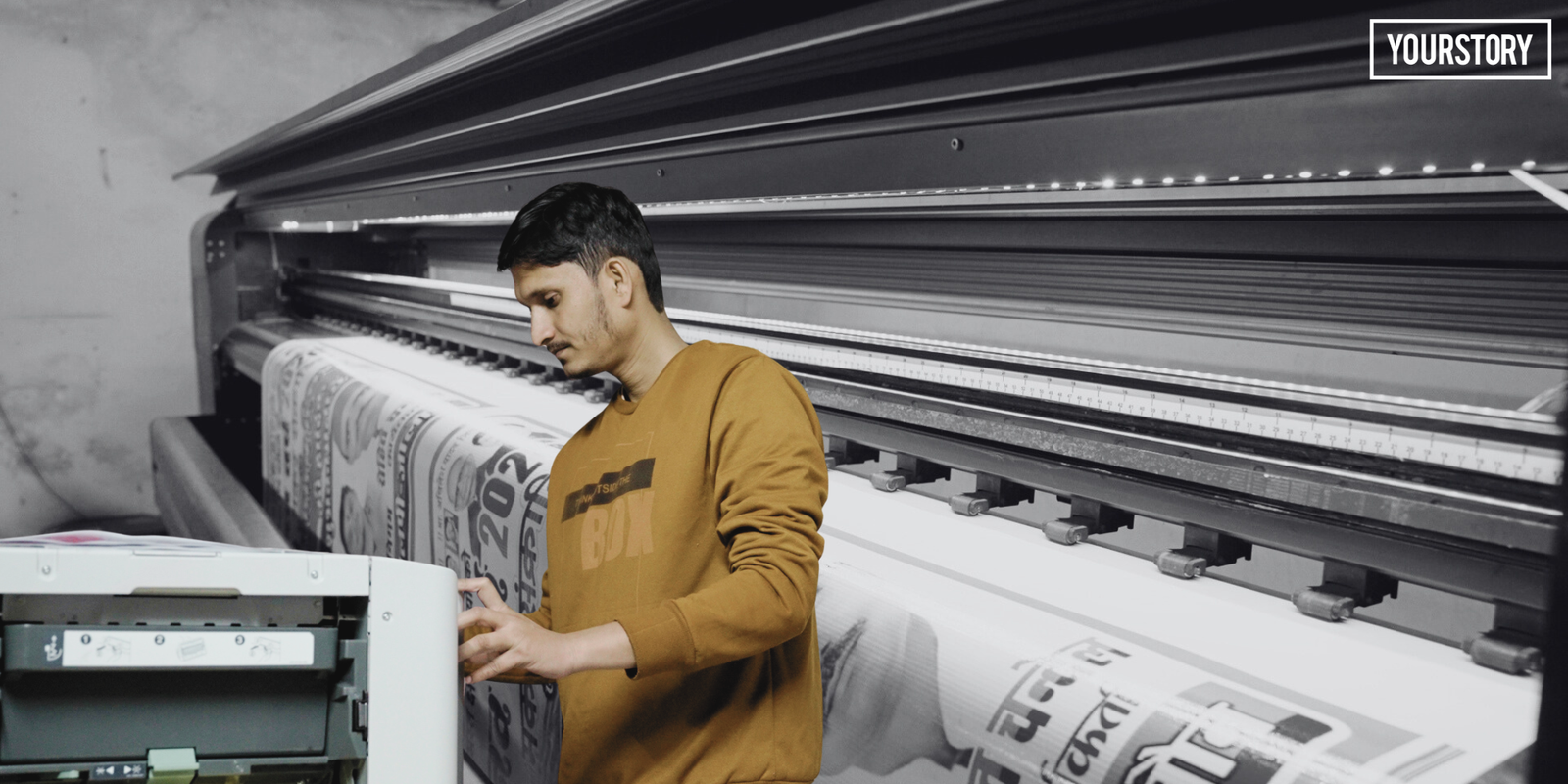
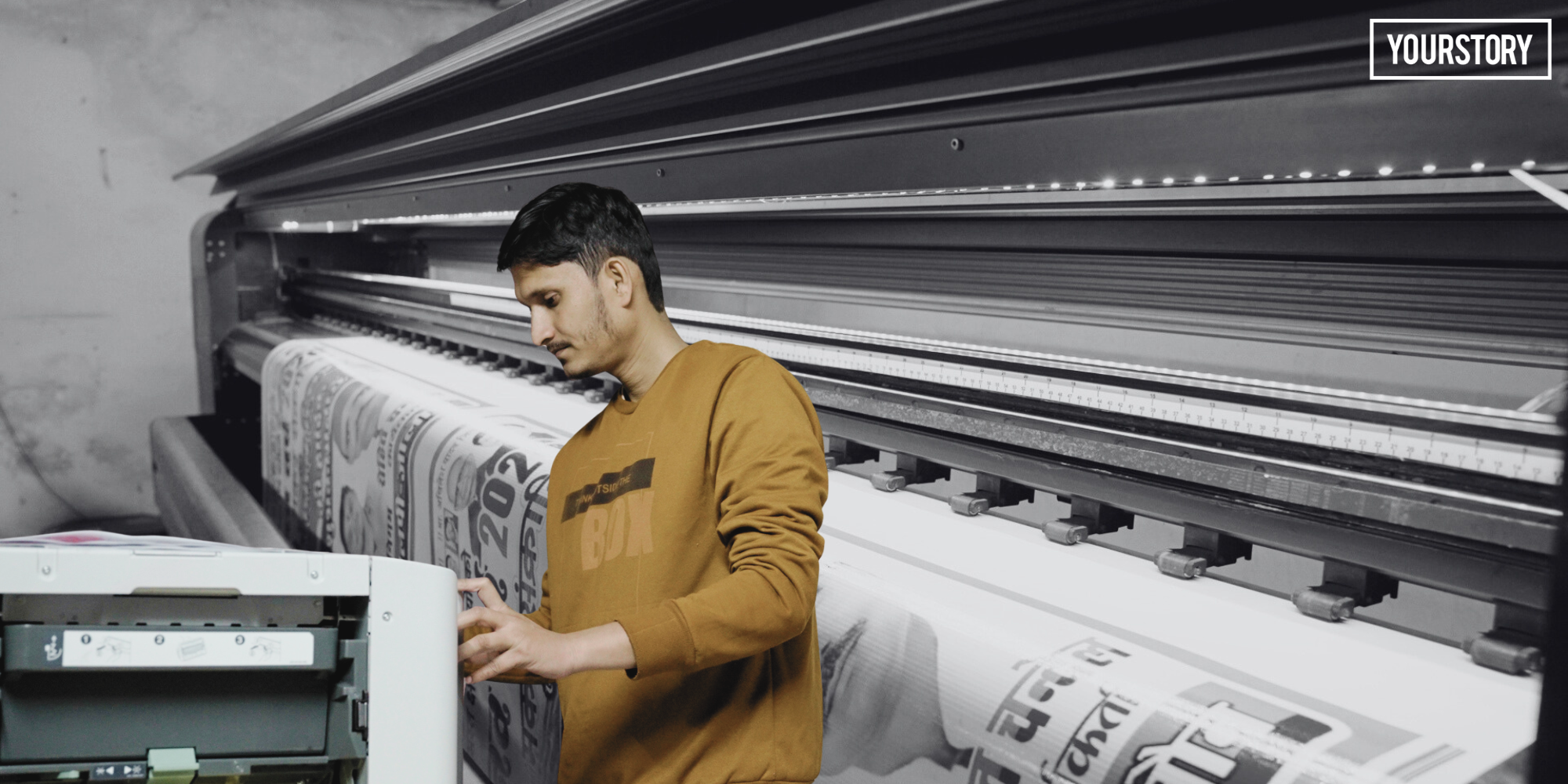

The work is straightforward: a design is prepared on a computer, then printed on flex or paper according to what the customer needs and how quickly it is required.
Danish says the shop primarily focuses on flex printing and designing, with jobs ranging from “holding, banner, poster, pamphlet” and similar publicity material.
Orders can come from local businesses, institutions, and sometimes political groups, especially around election periods when demand rises and deadlines tighten.
Learning the trade, returning to Kalpi
Printing was not a sudden choice, Danish says, but something he grew into by watching people close to him. His elder brother learned the work outside the district in Kanpur before the family set up a base in their own area.
Danish has been connected to the trade for nearly a decade, and began working from the present location in 2019.
The early years were about learning by doing. There is training available in the field but for him the real learning came from practical exposure—standing beside someone experienced, watching processes repeat, and understanding how machines, materials, and deadlines shape the business.
The disruption of the COVID-19 period, he says, slowed work and unsettled routine, but demand returned gradually as local commerce and public activity resumed.
Adding a machine, changing the daily workflow
As orders expanded beyond what the existing set-up could handle, Danish applied for support through the “Mukhyamantri Yuva Udyami Vikas Abhiyan (CM YUVA) Yojana” to purchase an additional machine and widen the range of work he could take on.
This purchase allowed him to move further into paper printing jobs that earlier had to be routed elsewhere.
He explains the shift in operational terms: older offset processes often required more labour, took longer, and consumed more electricity, while the newer set-up lets him prepare designs on a computer and print more directly with fewer hands involved. That has also reduced the need to travel to other locations for specific jobs.
“Earlier we had to get some orders printed outside, and the transport and visits cost us,” he says. “Now that expense has reduced, and the work happens more easily.”
Today, the unit’s stability rests less on big claims and more on routine—steady local demand, repeat customers who know where to find him, and a workflow that is less dependent on outside printing trips.
For Danish, the distance between the uncertain start and the present is measured in fewer interruptions, tighter control over delivery, and a shop that can keep pace with the small but constant printing needs of the town.
Discover more from News Link360
Subscribe to get the latest posts sent to your email.