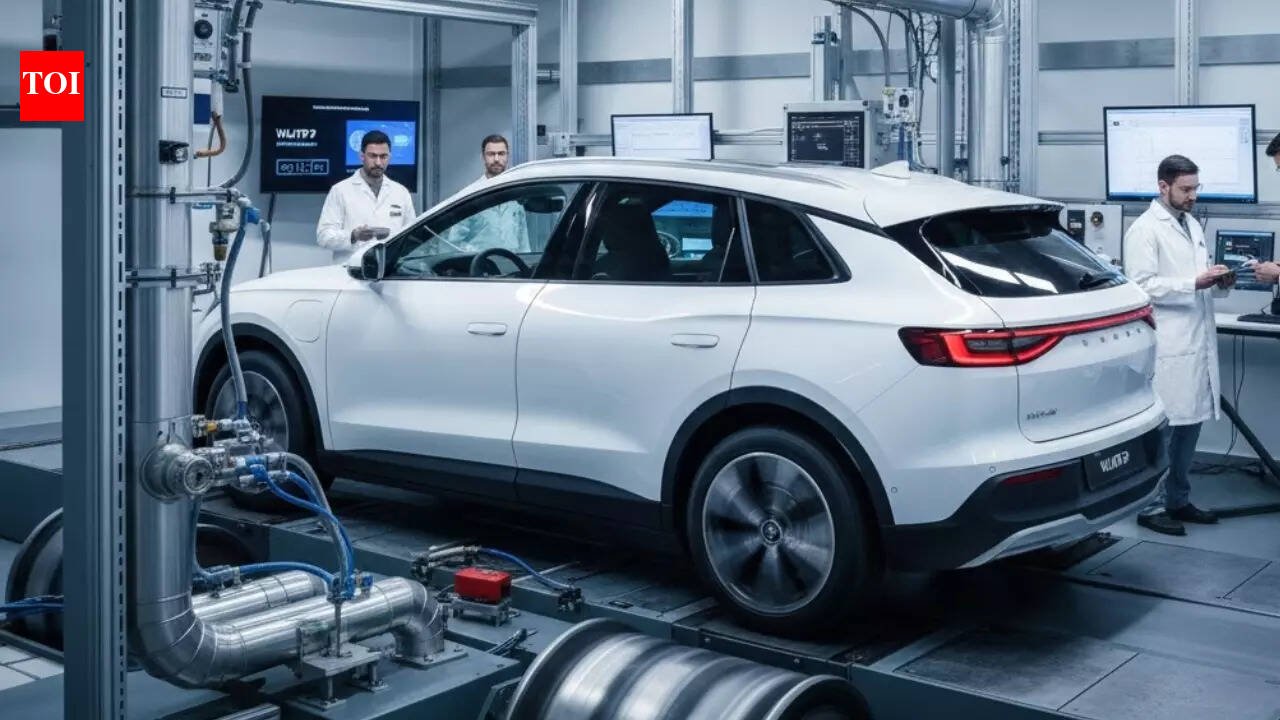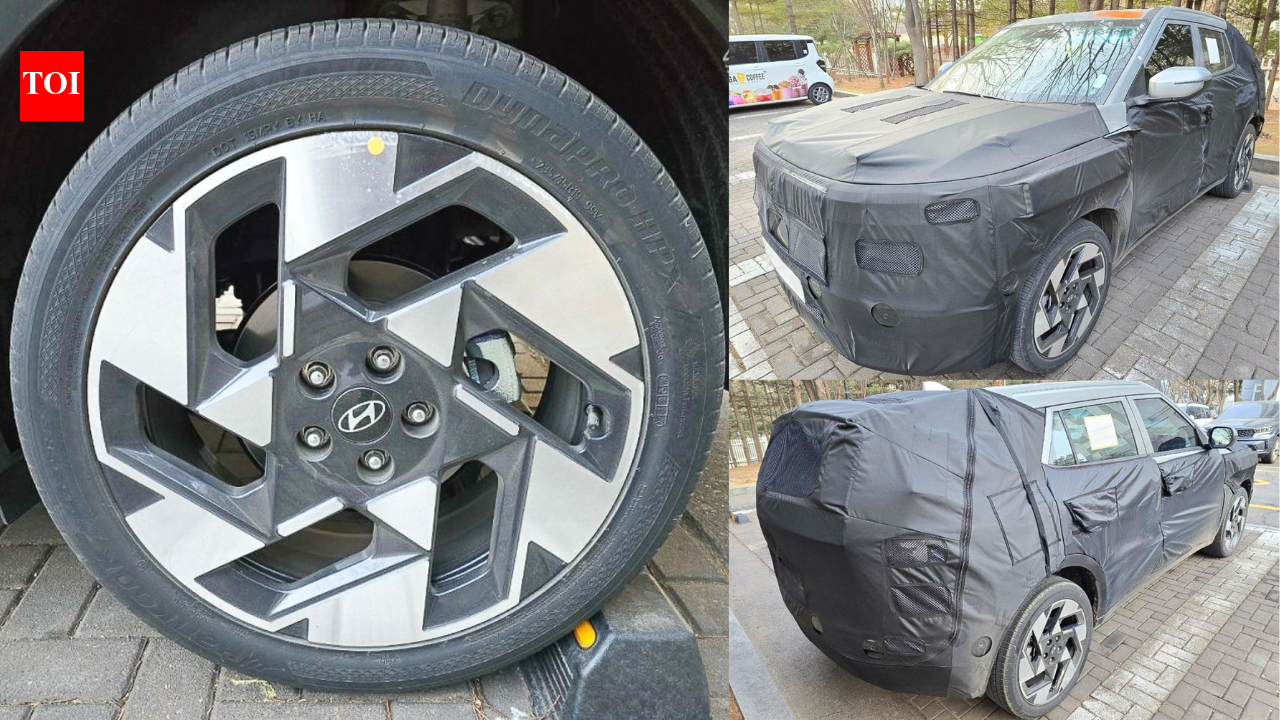



New Bharat NCAP rules in 2027 could drop today’s 5-star cars to lower ratings
The Ministry of Road Transport and Highways has recently issued a draft policy for review, open for stakeholder comments until December 20.
The new framework will replace the existing programme that is valid until September 2027. It is based on assessment practices followed by Euro NCAP, Global NCAP and ASEAN NCAP.Instead of rating cars almost entirely on how they protect adult and child occupants during a crash, Bharat NCAP 2.0 introduces five assessment areas that together determine the star rating:
- Crash Protection – 55% weightage
- Vulnerable Road User Protection (pedestrians and two-wheelers) – 20%
- Safe Driving features – 10%
- Accident Avoidance systems – 10%
- Post-Crash Safety – 5%
Each vehicle will earn points out of 100, replacing the earlier dual-score format. The threshold for achieving the highest score also rises. From 2027 to 2029, a vehicle must reach 70 points to earn five stars; from 2029 to 2031, the requirement increases to 80 points.
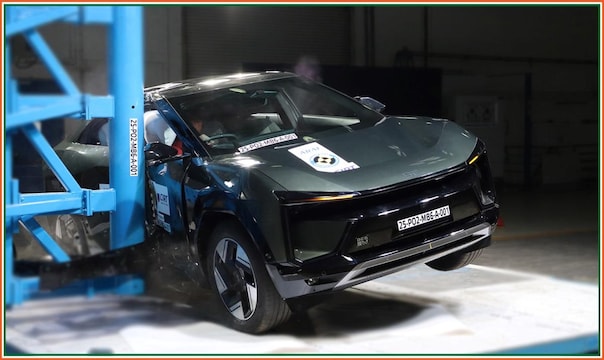
Mahindra BE6 being crash tested at BNCAP
Crash performance remains the most critical part of the evaluation. However, a model scoring zero in any single vertical or showing “red zone” injury readings for any adult or child dummy cannot be rated five stars, even if the total score is high enough. A minimum of 55% of the adult occupant protection points is required for a rating of three stars and above.
The number of mandatory crash tests expands from two to five, adding new scenarios such as full-width frontal, rear impact and oblique pole side testing, conducted at speeds ranging from 32 km/h to 64 km/h.
Male and female adult dummies, as well as child dummies, will be used, and features such as head restraints, ISOFIX anchors, and airbag configuration will influence the outcome.
To even qualify for a star rating under the new system, base variants must include Electronic Stability Control and side head protection such as curtain airbags, and cannot have side-facing seats. These requirements are expected to drive wider adoption of active and passive safety features as standard equipment.
A major change is the dedicated scoring for those outside the vehicle. Leg and head injury risk for pedestrians and cyclists will be tested on the vehicle’s front end, and optional scoring will evaluate whether autonomous emergency braking can prevent a collision involving pedestrians or motorcycles. This reflects India’s road safety concerns, with pedestrians alone accounting for more than a fifth of fatalities.
Driver-assist functions will carry more weight than before. Seat-belt reminders with occupant detection, forward-collision warnings, blind-spot detection, rear cross-traffic alerts, driver-drowsiness warnings, lane-departure alerts, speed-sign recognition and hill-hold assist are among the features recognised. Only five can be counted, even if more are fitted. Accident-avoidance scoring also evaluates the optional performance of automated braking.
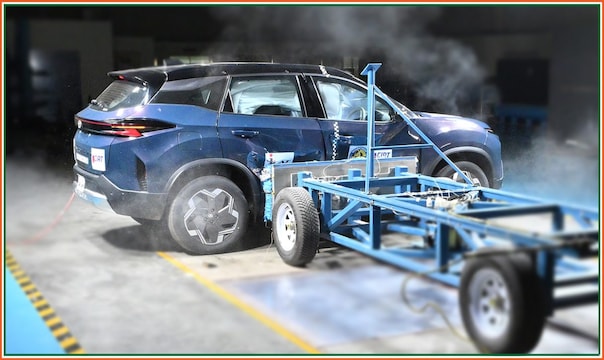
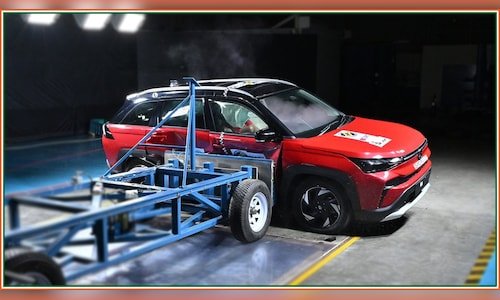
TATA Harrier being crash tested at BNCAP
Post-crash safety is assessed too, including ease of rescuing occupants, automatic SOS dispatch, energy-management to reduce electrical or fire hazards and systems like hazard-light activation or multi-collision braking.
Like the current version, Bharat NCAP remains voluntary, and applies only to right-hand-drive passenger vehicles up to 3,500 kg already certified for sale in India. Ratings issued will continue to be valid for four years.
Base variants must be tested, but manufacturers may also submit a higher-equipped version once the base model reaches at least three stars.
With more crash configurations, technology-based scoring, and new protection criteria for pedestrians and bikers, a future five-star rating will require a broader suite of safety upgrades. Some of the best-rated vehicles today could lose stars if they do not meet stricter performance checks in every category.
Discover more from News Link360
Subscribe to get the latest posts sent to your email.