



A quiet business bet: How a former factory worker started his own oil unit in Bijnor

The idea of running something of his own had been on his mind for years, though it remained vague and distant while he continued his job. That changed during a routine break at work, when he came across a short video on his phone describing a government-backed loan scheme for first-time entrepreneurs.
Unsure whether such schemes were practical or merely aspirational, he spoke to colleagues, made enquiries at the local office, and gradually understood that the support was real. He began collecting documents, weighing his options, and thinking more seriously about what kind of business he could realistically sustain.
Within a few months, his loan under the Chief Minister Yuva Udyami Vikas Abhiyan was approved. The day it came through, he resigned from his job.
Choosing a familiar product
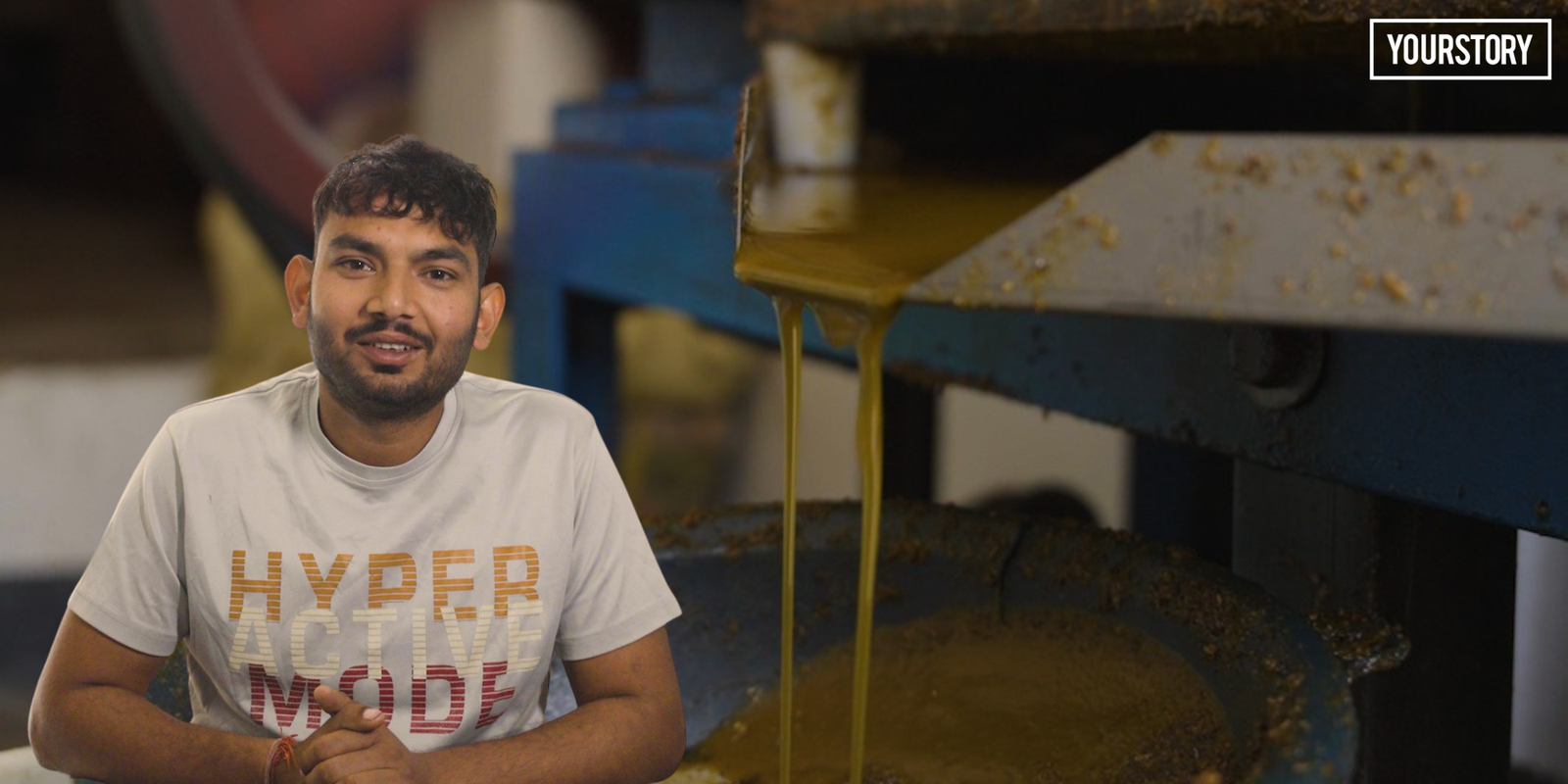
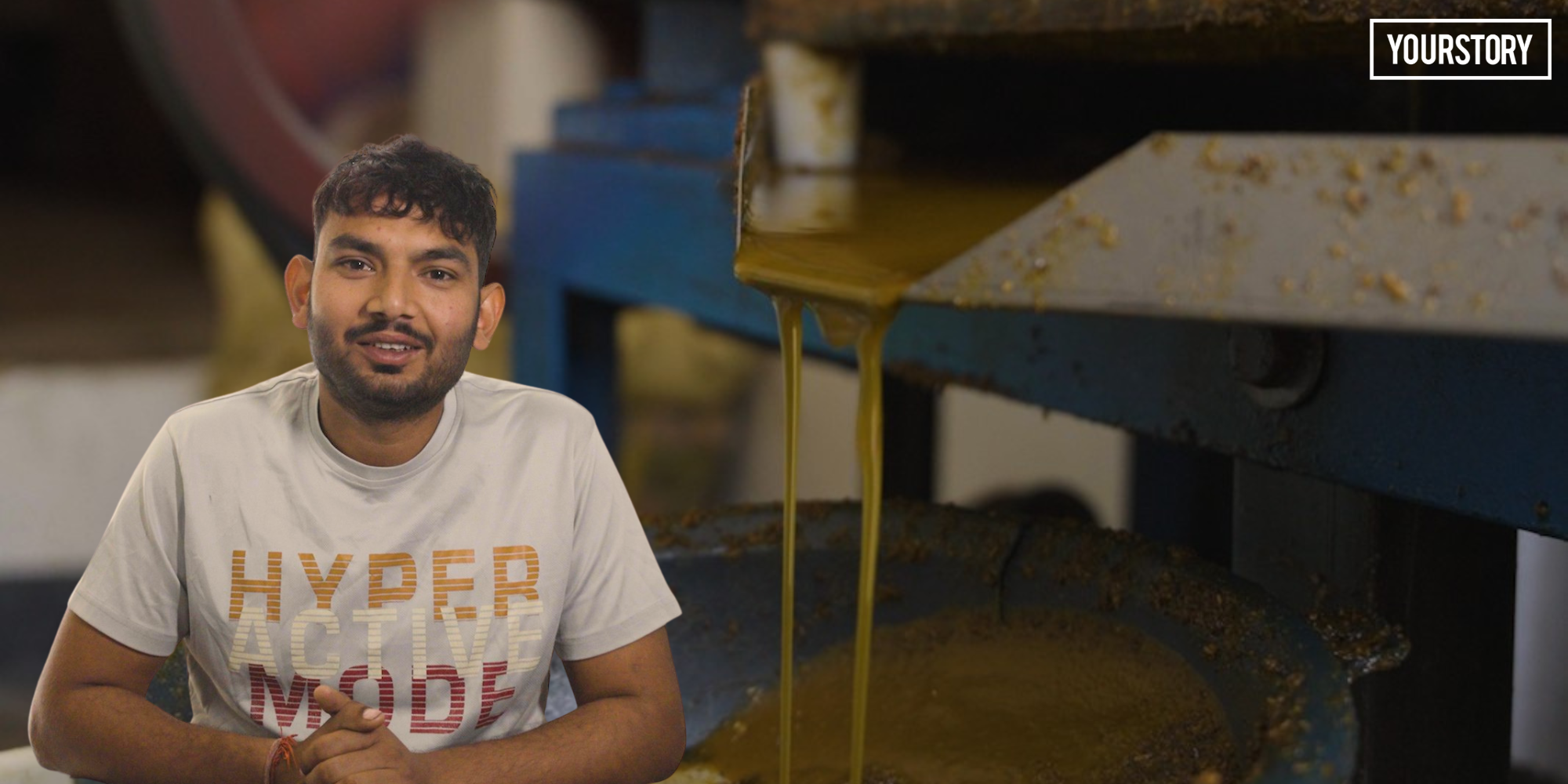
Harish decided to set up a small mustard oil mill, a product he felt confident about both as a consumer and a seller. He says his focus has always been on purity and process, shaped by his observation that much of the mustard oil sold locally is produced in unhygienic conditions.
His unit produces cold-pressed mustard oil at controlled temperatures, without heating, in order to retain natural properties. The business itself is simple in scale, run from a small setup with limited machinery and two workers, including Harish.
The mill sources mustard seeds from local markets, where quality varies widely. Harish spends time selecting and cleaning the seeds before processing, a routine that begins early each morning. The oil is filtered and sold directly from the shop, without reliance on distributors or wider markets.
For now, sales happen entirely at the outlet, largely through word of mouth.
There was hesitation at the start. Leaving a steady job came with uncertainty, and Harish admits there was fear about whether the business would survive. Family support played a role in easing that transition, particularly encouragement from his elder brothers.
“I was scared at first, but I knew I had to try,” he says.
Standing on his own
The business has been running for only a few months, and Harish is careful not to overstate its success. He says demand has been steady and manageable, with daily production kept within modest limits. Feedback from regular customers has been encouraging, but he treats it as part of a learning curve rather than proof of arrival.
The experience of managing procurement, production, and sales on his own has been different from anything he encountered as an employee.
Looking ahead, Harish hopes to gradually develop the mill into a recognisable local brand, once he understands the business better. For now, stability matters more than expansion.
His journey reflects a shift from dependence on wages to the discipline of self-employment, shaped by cautious decisions rather than sudden ambition. The early uncertainty, he says, has given way to a sense of control over his work, even if the road ahead remains uncertain.
Discover more from News Link360
Subscribe to get the latest posts sent to your email.