French dailies reported an open letter by Bardot as saying, “The natives have retained their savage genes… All of this has echoes of cannibalism from centuries past… I am ashamed of this island, of the savagery that still reigns here.” She also wrote, “a degenerate population still steeped in ancestral customs, barbaric traditions that are their roots”, as reported by Le Monde.
Two years after these remarks, in 2021, Bardot was fined €25,000 by the judicial court of Saint-Denis de La Réunion. Le Monde reported that the deputy prosecutor had condemned the “unacceptable” writings by Bardot, and fined her for “serious, racist, and repeated insults that attack the citizens of Réunion as a whole.”
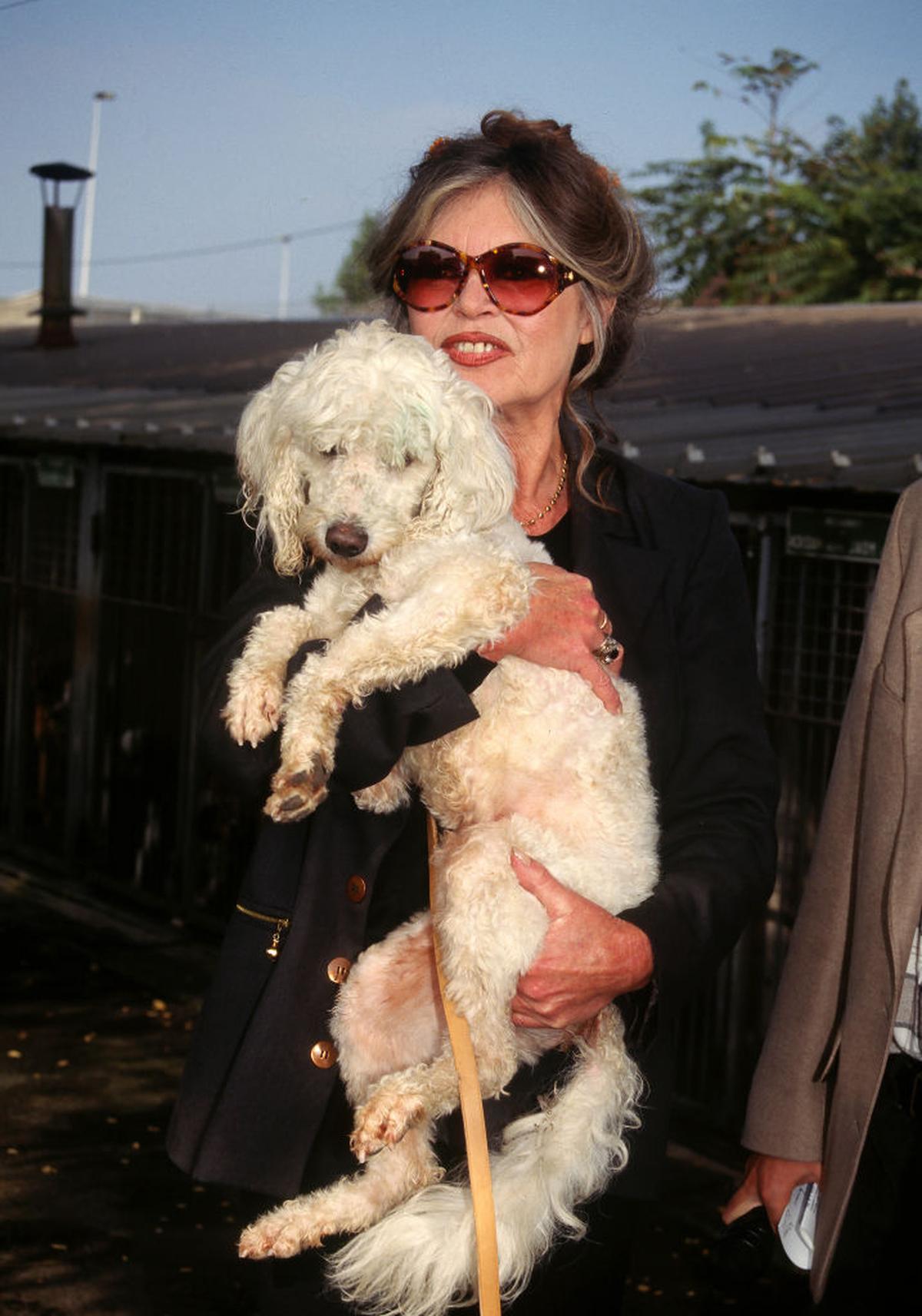
Actor Brigitte Bardot and an abandoned dog from SPA (society for the prevention of cruelty to animals) attend a SPA Cocktail Party on October 1990 in Paris, France.
| Photo Credit:
Getty Images
Animal sacrifice has been intrinsic to Tamil religious life and temple worship over thousands of years. Over the years, however, in a process noted by Indian sociologist M. N. Srinivas as Sanskritisation, some temples, especially those with Brahmin priests, have eschewed the practice. A number of temples, especially in Tamil Nadu villages, continue to practice animal sacrifice and is an occasion for the villagers to partake in a feast.

Réunion Island Tamils seem to have carried their worship practices along with them to the French colony, just as the Tamil diaspora did in British-ruled Malaysia and Singapore.
Back in time
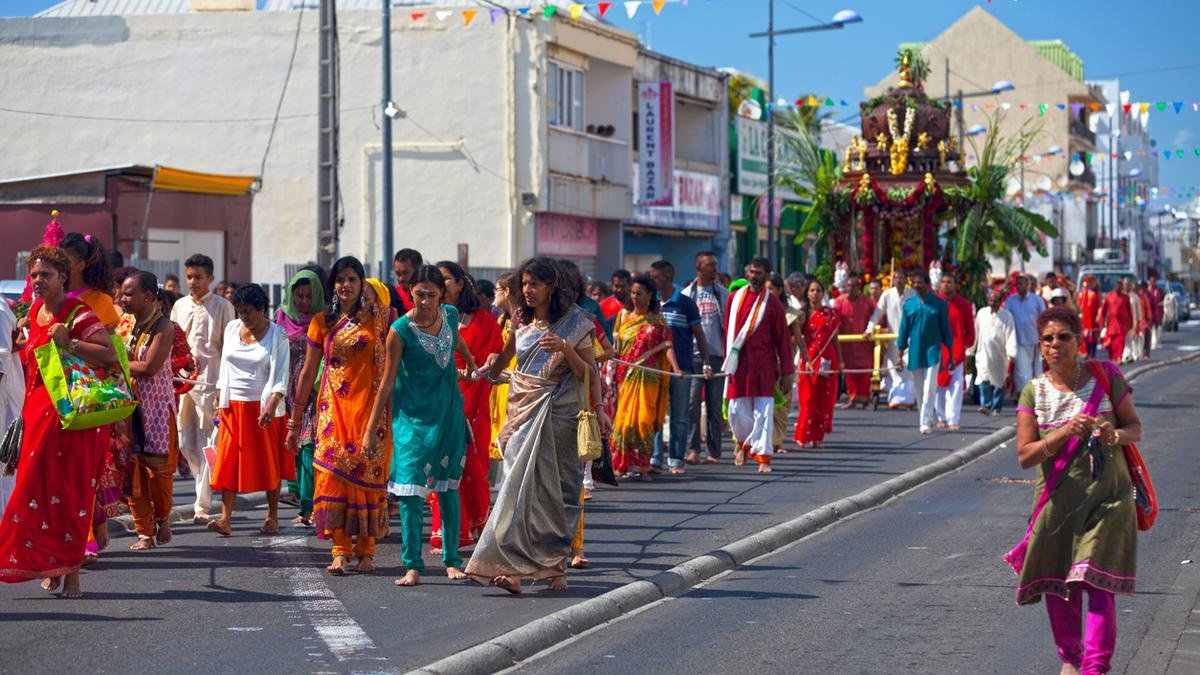
As per the website of the Consulate General of India, Saint Denis, Reunion Island, between 1829-1848 many came as indentured labourers to the island from Pondicherry and Tamil Nadu.
A little over one 1,50,000 Indian indentured labourers were officially registered at the island between 1823 to 1933, as per Portail Esclavage (official portal of slavery and post-slavery history of Réunion) run by the Département de La Réunion. As of 2018, out of 8.5 lakh population, three lakh people are Tamils, as reported by The Hindu.
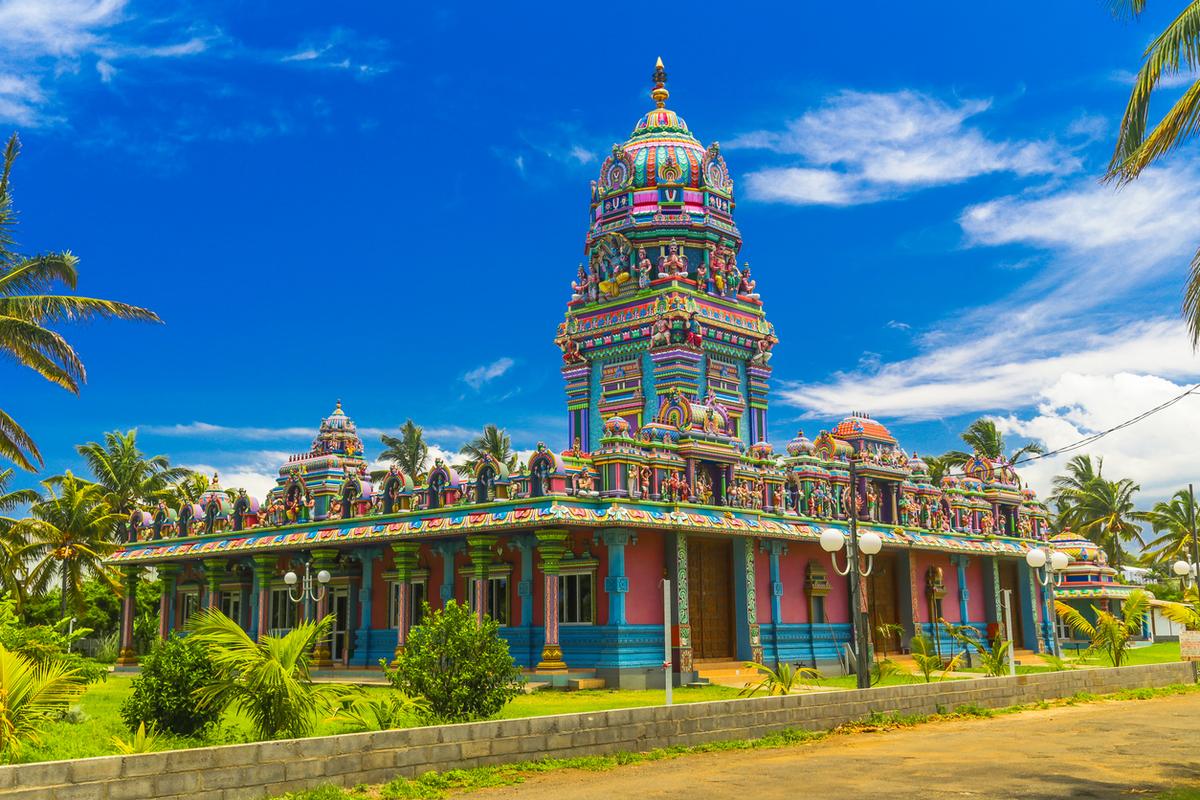
Narassingua Peroumal Tamil temple in Saint-Pierre on Reunion Island.
| Photo Credit:
iStock/ Getty Images
R. Kurinjivendan, Dean, Faculty of Developing Tamil Professor, Department of Tamil Studies in Foreign Countries Tamil University, Thanjavur, says that the colonists took Tamil people from Karaikal, Nagapattinam, Cuddalore back then for sugarcane plantation. “When they left India, they took their own deities from this Tamil land, like Mariamman and Murugan. They built temples for these deities and continued to practice their rituals. The successive generations forgot to speak their mother tongue, but they have continued with all the traditions”, he says.
A green flag to continue tradition
Researcher Natalie Lang has chronicled the specific ritual of animal sacrifice on Réunion Island in her book, Religion and Pride: Hindus in Search of Recognition in La Réunion, first published in 2021. She wrote: “I stopped counting. It must have been twenty goats and over two hundred cocks in two hours. Ritually prepared, ritually slaughtered, the bleating and screeching heads thrown onto piles, the jumping and fluttering corpses thrown into large green trash containers. Two men needed to hold these containers tight, as the beheaded bodies violently wriggled inside, until the men rolled them into the temple’s kitchen.”
A Tamil-origin sociolinguist from the island says that many people from the community continue to practice this ritual even today and it is their way of showing devotion and showering offerings to their Gods.
In her book, Ms. Lang cites the regulations of the first arrival of indentured laborers from India in 1829, which said that planters had to provide workers with a site to celebrate religious festivals. “Funeral rites and inheritance customs were also to be respected. Laborers were released for four days in January to celebrate Pongal, a Tamil harvest festival. Although, according to historian Claude Prudhomme, Indians—including Catholic Indians—were treated with suspicion, the colonial administration allowed religious processions and, in some cases, the construction of worship sites.” she writes.

Talking about the reaction of non-Tamils, Ms. Lang says, “Although some municipalities raised minor complaints about the noise of processions, for example, the general population seemed indifferent toward such practices, with some land owners even encouraging religious practice and donating animals for sacrifice”.
Resistance
Ms. Lang writes: “Several important factors impacted the development of Hindu practices in La Réunion, including French assimilationist politics, a powerful Catholic Church, the distance from India, métissage (race-mixing), and contact with different religious traditions”.
As per Ms. Langs’s account, “More severe opposition to Hindu religion came from the Catholic Church. Several Catholic priests claimed these ceremonies were pagan and even infernal, and such accusations were documented a century later in the 1980s.” But she says that these attempts were neutralised by Tamils using their administrative and negotiating skills. They began to form associations in the 1870s to advocate for celebrating their religious festivals, construction of temples, and more.
“The magazine Présence, first issued by Le Club Tamoul in 1980, already featured debates about animal sacrifices. The association president noted that animal sacrifices presented an important social part of the get-togethers of Reunionese Hindus”, writes Ms. Lang.
But the Catholic Church wasn’t the only one at odds with the community’s liberty to practice their rituals. “Toward the turn of the last century, some priests from India visited the island to campaign against the ritual of animal sacrifice”, says Prof. Kurinjivendan. He elaborates that the priests had travelled to all the nearby settlements with a large Tamil population to propagate this message and through these attempts the ritual of animal sacrifice came completely to an end in Mauritius.
The Tamil-origin socio-linguist from the island narrates a similar account. She says that after the 1970s and 1980s, some Brahmin priests from India visited the temples at Réunion to stop the practice of animal sacrifice. She, however, says though they now may not do the animal sacrifice ritual for deities like Vishnu, it is still practised in Amman temples.
Fractures within the community
Ms. Lang documents that although the Fédération Tamoule is the Hindu organization with the most impact in La Réunion, it also has its opponents. “These include the Fédération Tamoule Populaire (FTP), a federation of ‘small’ temples recently founded by one Reunionese priest in particular and supported by a few others. The FTP objects to the presence of Indian Brahmin priests in “big” temples, and sees the practice of animal sacrifices as threatened. Although the members of the Fédération Tamoule insist that they do not want to abolish animal sacrifices, members of the FTP seem to associate the Fédération Tamoule with the vegetarianism in ‘big’ temples, and thus ultimately with Indian Bpriests whom they accuse of having oppressed their ancestors and of having sold them as slaves”, she writes.
“Most representative members of the Fédération Tamoule are university-educated professionals from middle-class backgrounds with effective social networks. A combination of saving and transmitting the knowledge of their ancestors, as well as developing knowledge from India through the Brahmin priests and other forms of exchange, fits their interests well. By contrast, most members of the FTP present themselves as economically and socially oppressed, which they use to justify why they despise the Brahmin priests and wealthy ‘big’ temples”, writes Ms. Lang.
Discover more from News Link360
Subscribe to get the latest posts sent to your email.