


Apple’s ‘terrific’ performance in India helps drive its best-ever quarter

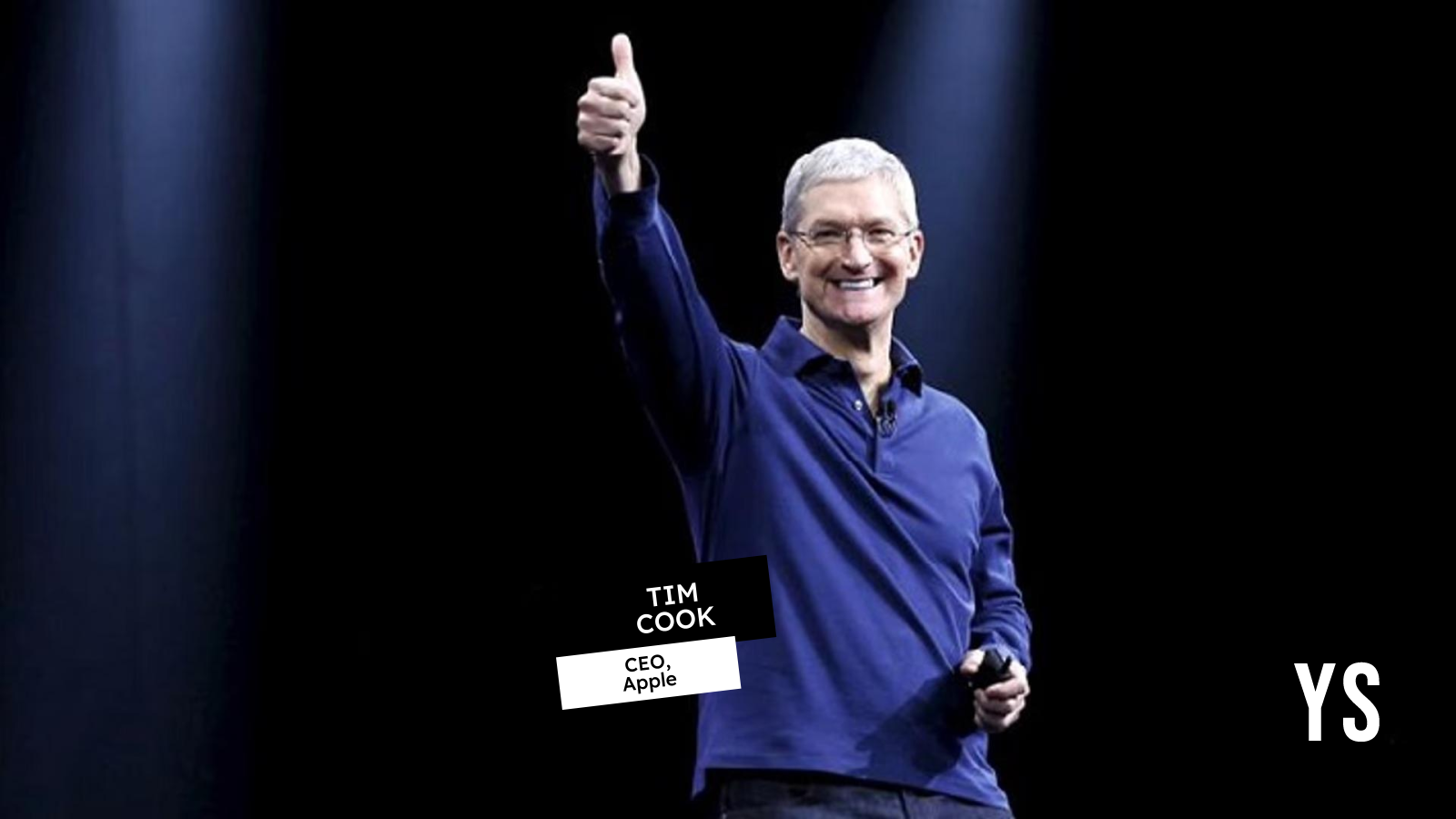

“We set quarterly revenue records on iPhone and Mac and iPad. And an all-time revenue record on services…We really like what we see there,” Cook said, as Apple rides a wave of demand in what is now the world’s second-largest smartphone market and fourth-largest PC market.
Despite that scale, Apple believes it is only scratching the surface. Cook pointed out the company still has a “modest share” in India, even after years of steady growth. “So we think there is a huge opportunity for us there. And we could not be more excited about it,” he said.
A key driver of that opportunity is first-time buyers. According to Cook, “the majority of customers that are buying iPhones and Mac and iPad and Watch are all new to that product,” underlining how Apple is expanding its user base rather than merely upgrading existing ones.
The company is also deepening its physical presence to support that growth. “We were excited to open our fifth store in India in December,” Cook said, adding that Apple is planning to open another retail store in Mumbai soon.
Overall performance
Overall, Apple reported what Cook described as a “quarter for the record books,” driven by a “fantastic quarter for iPhone”.
“We are reporting our best-ever quarter…exceeding our expectations. The demand for iPhone was simply staggering, with revenue growing 23% year-over-year and all-time records across every geographic segment,” the Apple chief shared, during the company’s first quarter earnings call.
The California-based company’s both top line and bottom line surged 16% YoY for the first quarter of fiscal year 2026 (Q1 FY26), which ended on December 27. During this period, Apple clocked a revenue of $143.8 billion and a profit of $42 billion.
As always, the iPhones sales were leading these growth numbers. “It was a fantastic quarter for iPhone with an all-time revenue record of $85.3 billion…This is the strongest iPhone lineup we have ever had and by far the most popular. Throughout the quarter, customer enthusiasm for iPhone was simply extraordinary,” Cook said.
Meanwhile, Apple’s services segment continued its steady climb, cementing its role as a key revenue driver. In the first quarter, services revenue set an all-time record, growing 14% YoY to $30 billion.
iPad revenue increased 6% YoY to $8.6 billion, with an all-time record for upgraders. However, Mac revenue was down 7% YoY to $8.4 billion, attributed to tough comparisons against prior-year launches despite continued emerging market growth.
Revenue from wearables, home, and accessories segment fell 2% YoY to $11.5 billion. Apple CFO Kevan Parekh said the category was impacted by AirPods Pro 3 supply constraints, and that the group would have grown otherwise.
Both Cook and Parekh addressed supply constraints on advanced silicon nodes and forecasted ongoing gross margin pressures due to rising memory costs.
“…iPhone grew 23%. What the result of that was that we exited December with very lean channel inventory due to that staggering level of demand. And based on that, we are in a supply chase mode to meet the very high levels of customer demand,” Cook noted.
“We are currently constrained, and at this point, it is difficult to predict when supply and demand will balance. The constraints that we have are driven by the availability of the advanced nodes that our SoCs are produced on. And at this time, we are seeing less flexibility in the supply chain than normal, partly because of our increased demand,” he elaborated.
The Apple chief said memory had a minimal impact on Q1 but the company expects it to be a “bit more of an impact on the Q2 gross margin”. “Beyond Q2, we do continue to see market pricing for memory increasing significantly,” he added.
Google-powered Siri
The much-anticipated Siri upgrades unveiled at the Worldwide Developers Conference in 2024, including more natural conversational abilities and on-device processing through Apple Intelligence, are yet to be released in a public software update.
To address this, Apple earlier this month entered into a multi-year partnership with Google to use the latter’s Gemini models for its revamped Siri, which is expected to roll out later in 2026.
“We basically determined that Google’s AI technology would provide the most capable foundation for Apple foundation models. And we believe that we can unlock a lot of experiences and innovate in a key way due to the collaboration. We will continue to run on the device and private cloud compute,” Cook said, adding “We will obviously continue to do some of our own stuff.”
Apple continued with a hybrid capital expenditure (CapEx) approach, supported by recent investments in private cloud data centers to power new AI capabilities.
The CFO said the company follows a “hybrid model for CapEx,” noting that spending can be “volatile, independent of the volume performance of our business,” as it spans several areas including tooling, facilities, retail investments and data centers.
Parekh added that Apple relies on a combination of first- and third-party capacity for tooling and data centres, making CapEx trends difficult to interpret in isolation.
“Last year, you will remember we did build out our private cloud compute environment,” he noted, with those investments showing up in the December-quarter results.
Unlike peers such as Microsoft, Alphabet, Meta, and Amazon, which are investing tens of billions in AI-focused servers and data centre expansion, Apple’s capital spending has remained concentrated on manufacturing capacity, retail expansion, and ongoing operations, with only selective investments in AI.
Meanwhile, Apple has acquired Israeli AI audio startup Q.ai, though it did not disclose the terms of the deal. The company was valued at about $1.6 billion, according to Reuters.
Outlook
“We expect our March total company revenue to grow by 13% to 16% year over year, which comprehends our best estimates of constrained iPhone supply during the quarter,” Parekh remarked.
He said the company expects gross margin to be between 48% and 49%, and operating expenses to range from $18.4 billion to $18.7 billion. Those expenses are broadly in line with December levels and reflect higher year-over-year spending on research and development, he added.
Edited by Megha Reddy
Discover more from News Link360
Subscribe to get the latest posts sent to your email.