


Azamgarh’s Black Pottery: Shaped by Smoke, Sustained by Markets

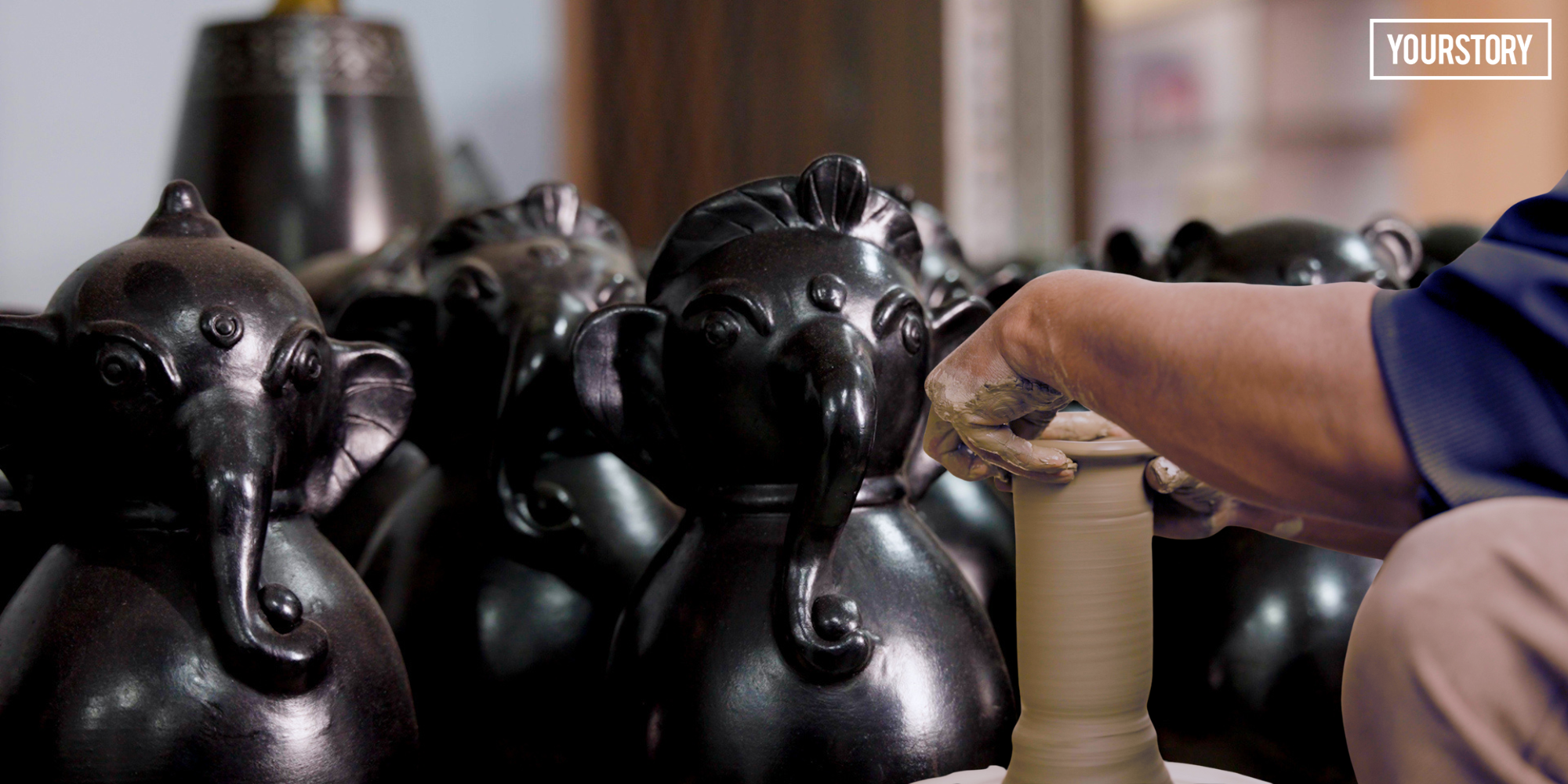

Black pottery from Azamgarh is known for its restraint. There is no glossy glaze or bright colour. Instead, the craft is defined by a deep, matte-black finish that gives each piece a quiet elegance—whether it is a surahi, tea set, dinnerware, or flower pot. Much of this pottery comes from the Nizamabad region, where families continue to shape local clay into products used for everyday living and thoughtful gifting.
Under Uttar Pradesh’s One District One Product (ODOP) programme, black pottery has been officially identified as Azamgarh’s district product. This recognition has helped the craft reach wider markets, exhibitions, and support systems—an essential shift in a sector where skill alone does not guarantee livelihood.
Sohit Kumar Prajapati, an artisan from Khusenabad village in Nizamabad, represents this tradition. His family has practised black pottery for generations, and his work has received national recognition. Yet, like many artisans, he remembers a time when limited platforms and unreliable demand made survival difficult, forcing several craftsmen to leave the district in search of work.
A Craft Rooted in Tradition
Black pottery is not ordinary clay work. Its identity lies in a specialised firing process where controlled smoke and limited oxygen turn the surface black. The knowledge is passed within families—through observation, repetition, and shared tools—rather than formal training.
Prajapati recalls years when artisans had finished products but lacked exposure, better tools, and steady buyers. During this period, migration was common. He himself spent time outside the craft, a reminder that traditional skills can survive only when markets remain accessible.
From Clay to Smoke-Black Finish
The process begins with clay collected from local ponds and stored for months to ensure year-round production. After cleaning and shaping on the wheel, the pieces are dried in stages and refined by hand. A natural coating made from local earth and plant-based materials is applied, followed by mustard oil to achieve a soft finish.
Designs are carved manually using fine iron tools. The final firing takes place in a closed earthen setup, where smoke from dung cakes reacts with the pottery surface. This controlled environment gives black pottery its distinctive colour and texture.
What ODOP Enabled
ODOP support has helped reconnect Azamgarh’s black pottery with markets through training, improved tools, common facilities, and participation in exhibitions across India and abroad. According to Prajapati, visibility has made the critical difference.
In Azamgarh’s black pottery, the final polish may be done by hand—but it is market access that keeps the kiln burning.
Discover more from News Link360
Subscribe to get the latest posts sent to your email.