


How small town brands are empowered to go national
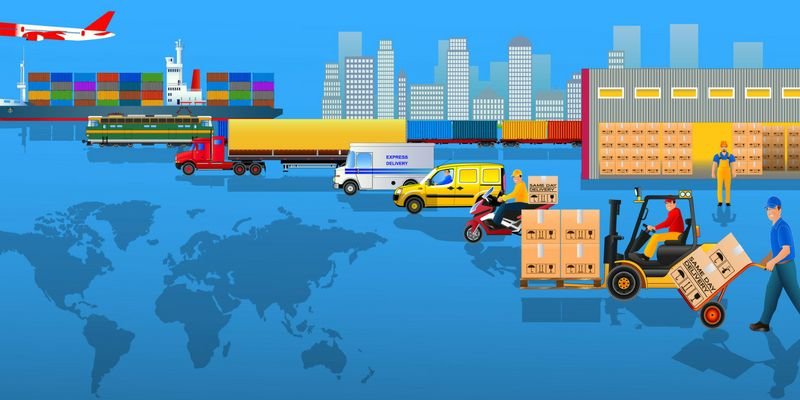

Unlike their metro counterparts, businesses in towns like Indore, Siliguri, Coimbatore, or Bhagalpur have historically struggled with fragmented logistics networks, limited courier coverage, and restricted access to commerce technology. These entrepreneurs face distinct operational challenges.
For years, these structural gaps kept many regional sellers confined to local markets, even when demand existed beyond their geography.
The infrastructure constraint
The primary challenge for MSMEs in smaller cities isn’t capability or market opportunity, it’s operational infrastructure. Ecommerce performance depends on delivery speed, return management, and checkout reliability. When these systems underperform, customer retention suffers.
Traditional logistics providers often prioritise metro routes, leaving smaller towns with inconsistent service levels and higher costs. For sellers operating on slim margins, operational inefficiencies, delayed shipments, complicated return processes, or limited tracking visibility can constrain growth. The outcome: entrepreneurs with viable products and customer demand often remained unable to scale.
The shift over the past few years has involved the emergence of commerce infrastructure platforms designed for the operational realities of smaller cities.
Shiprocket, which relaunched as an aggregator platform in 2017, represents this category. The model consolidates multiple courier partners, payment gateways, and fulfilment tools into a single interface, allowing sellers to access capabilities previously available mainly to large enterprises, including courier selection, rate comparison, automated tracking, return management, and predictive delivery intelligence, without individual contracts or specialised technical expertise.
This approach simplifies multiple layers of ecommerce operations. For sellers in Tier III towns, this means access to tools that enable national reach from the outset, with operational efficiency comparable to metro-based businesses.
Operational simplification
Aggregator platforms address several pain points. Sellers can compare rates across multiple courier partners for each order, selecting options based on speed or cost efficiency for specific destination pin codes. Real-time tracking, predictive RTO (return-to-origin) scoring, and streamlined return processes reduce manual operational management.
This becomes particularly relevant as order volumes increase. Several businesses using such platforms have managed five-fold increases in daily orders during peak demand periods without major logistical disruptions—outcomes that would be more difficult with fragmented, self-managed courier relationships.
Siroski Beauty, a skincare brand launched in April 2023, started with a few thousand orders monthly; the brand now processes thousands daily. Available data indicates that integrated checkout solutions contributed to conversion rate improvements from 20-30% to over 50%, while logistics infrastructure enabled the brand to handle order surges of up to 15,000 orders daily.
Expanded service offerings
Infrastructure platforms have expanded beyond shipping to address additional operational challenges. Checkout abandonment remains common for online sellers — customers add items to carts but don’t complete purchases due to payment gateway issues, limited payment options, or page loading problems.
Some platforms now offer integrated checkout systems, working capital access, and post-purchase tools. Shiprocket Capital, for example, provides short-term loans to sellers, often disbursing funds within 48-72 hours based on shipment history rather than traditional credit assessments. For businesses like Sam & Marshall, this capital access has complemented logistics support, enabling faster
reinvestment.
The integration of capital and logistics creates operational synergies: infrastructure enables growth, growth improves creditworthiness, and credit access supports further expansion.
Traditional brands adapting
Infrastructure challenges affect both new ventures and established businesses transitioning online, particularly when product quality depends on delivery speed.
Bikanervala, a 60-year-old Delhi-based sweets and snacks brand, faced this when expanding ecommerce operations. Shipping perishable items requires precise timing—delays affect product freshness and brand perception.
The brand worked with Shiprocket to implement tiered delivery services: same-day for Delhi NCR, next-day for major metros, and express for other cities. Predictive RTO technology helped assess delivery risk in advance, allowing the brand to manage high-risk orders proactively rather than addressing customer complaints and inventory loss afterward. The outcome included improved delivery speed and operational reliability.
Market access expansion
Infrastructure platforms have reduced barriers to entry and scale, allowing MSMEs to offer service levels comparable to larger brands in terms of reach and reliability.
Winston, a footwear brand, transitioned from fragmented courier partnerships to an integrated model with Shiprocket. With access to same-day and next-day delivery services, the brand has managed demand increases of 400-600% during peak periods while maintaining delivery commitments. Fulfilment accuracy has remained between 95-98%.
Sellers across categories — handicrafts in Siliguri, regional fashion labels in Coimbatore, or wellness brands in Bhagalpur — can now access national logistics networks and commerce tools that were previously primarily available to large enterprises. This shift is changing India’s ecommerce landscape. Growth is less concentrated in metros and more distributed across different city tiers.
Operational dependencies
As sellers increasingly use infrastructure platforms for core operations, they transfer some control over customer touchpoints to third parties. Delivery experience, return handling, and checkout processes become externally managed functions. Fee structures, typically per-shipment charges or subscription costs, also factor into profitability calculations and may shift as platforms evolve.
For most small-town entrepreneurs operating with limited teams and resources, this represents a calculated trade-off. Building and managing comprehensive logistics and technology infrastructure independently requires capital, expertise, and time that most businesses lack. Platform infrastructure allows focus on product development, branding, and customer relationships while operational complexity gets managed externally.
India’s commerce infrastructure continues to develop. Last-mile connectivity in remote areas presents ongoing challenges. Cash-on-delivery transactions create working capital constraints. Return rates in certain categories remain elevated, affecting unit economics.
However, operational capabilities once primarily available to metro businesses are becoming more accessible. Industry estimates suggest over 200,000 MSMEs now use commerce aggregators for shipping and fulfilment, roughly triple the number from 2020.
Whether this creates more equitable market conditions or reshapes competitive dynamics differently remains unclear. What’s evident is that geography has become less limiting. Entrepreneurs are building national brands from regional locations, using infrastructure that has emerged in recent years.
Through technology investment, AI-based analytics, and adaptable infrastructure, platforms like Shiprocket are enabling MSMEs to scale operations, whether through category expansion, conversion optimisation, or sustained growth management.
The geography of Indian entrepreneurship is no longer concentrated in a few cities. It’s distributed across multiple locations, reflecting diverse regional contexts while maintaining national connectivity. As India’s digital economy develops, ecommerce performance will increasingly depend on how effectively it serves its broader base of entrepreneurs, a base that extends well beyond metropolitan areas.
Edited by Jyoti Narayan
Discover more from News Link360
Subscribe to get the latest posts sent to your email.