
India Semiconductor Mission 2.0 to strengthen chip ecosystem in India: Ashwini Vaishnaw
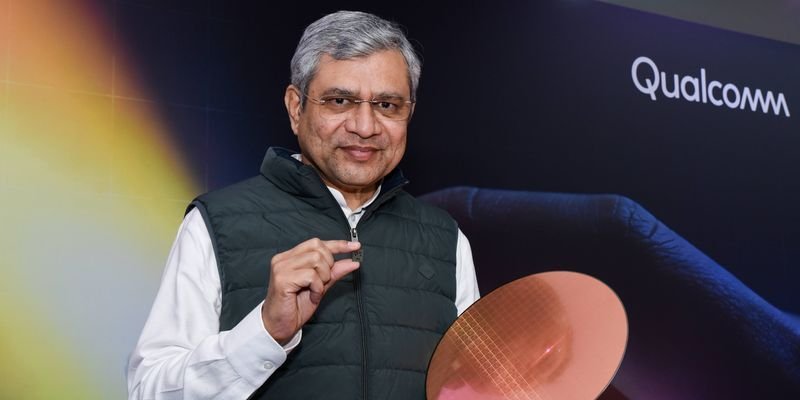

“We will be focusing on design as the topmost priority, equipment and materials as the next priority, and then nurturing talent where we go to the next level with much deeper capability,” the Minister said at the Qualcomm Technologies office in Bengaluru.
Qualcomm Technologies also announced the successful tape-out of its 2-nanometre semiconductor design.
The India Semiconductor Mission 1.0, launched in December 2021, offered an incentive of Rs 76,000 crore with fiscal support up to 50% for silicon fabs, compound semiconductor facilities, assembly and testing units, and chip design.
As of December 2025, 10 projects with a total investment of Rs 1.60 lakh crore have been approved across six Indian states.
<figure class="image embed" contenteditable="false" data-id="589719" data-url="https://images.yourstory.com/cs/2/220356402d6d11e9aa979329348d4c3e/LabTour-1770463094837.jpg" data-alt="Ashwini Vaishnaw" data-caption="Union IT & Electronics Minister Ashwini Vaishnaw during a lab tour of Qualcomm Technologies’ R&D centre in Bengaluru
” align=”center”> Union IT & Electronics Minister Ashwini Vaishnaw during a lab tour of Qualcomm Technologies’ R&D centre in Bengaluru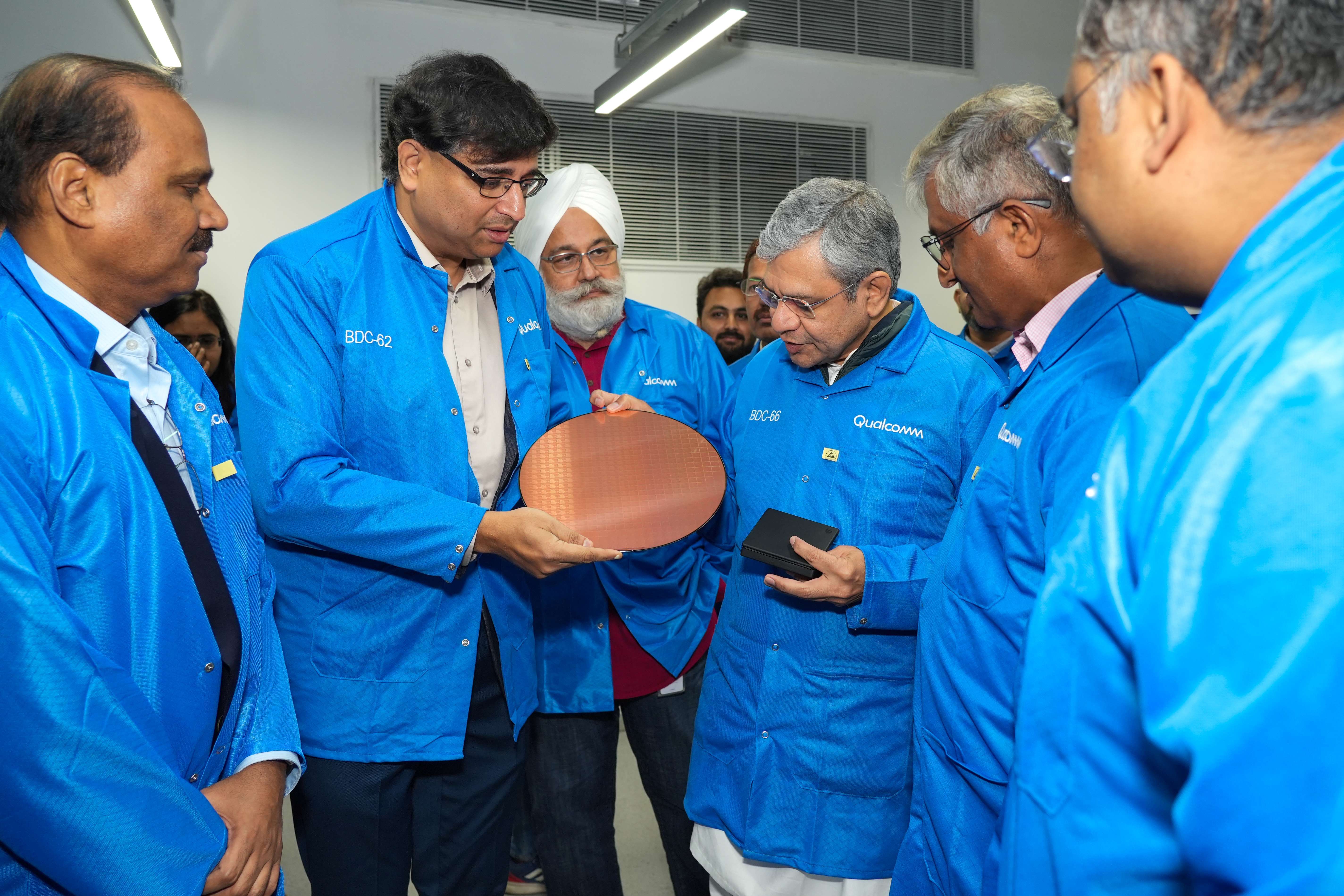
The Minister said the government is taking a long-term view of the semiconductor industry, and it has started with the manufacture of 28-nanometre chips. The Semicon 2.0 policy is expected to be unveiled in a couple of months.
“Getting more fabs and ATMP units will also be part of the work, and making sure that our path to 7-nanometre from the current 28-nanometre. That progress to 7-nanometres will be part of the next version of Semicon 2.0,” Vaishnaw said.
Toward this end, the government has taken initiatives to create a talent base for the semiconductor industry, and in the last four years, it has created about 67,000 semiconductor engineers.
This was largely due to the industry and academia partnership, where 315 universities and colleges got access to the semiconductor sector and curriculum designed by the companies.
“There is a one million talent gap in the semiconductor industry, and this will be practically filled up mostly from India,” the Minister remarked.
On the challenges faced by the Indian technology industry, especially the software services segment, from artificial intelligence (AI), Vaishnaw said the industry, academia, and government should fully synchronise to ensure students and workers already in these jobs get the right skills.
According to the Minister, AI is both a disruption and an opportunity for the Indian IT industry. “Earlier, we were providing a software-based solution, and now we have the opportunity to provide an AI-based solution,” he remarked.
For the data centre industry, where the government allotted fiscal incentives in the recent Union Budget, the Minister said it might see more than $200 billion of investments coming into the sector. He added that two companies have already come forward to manufacture AI servers in India.
Edited by Suman Singh
Discover more from News Link360
Subscribe to get the latest posts sent to your email.