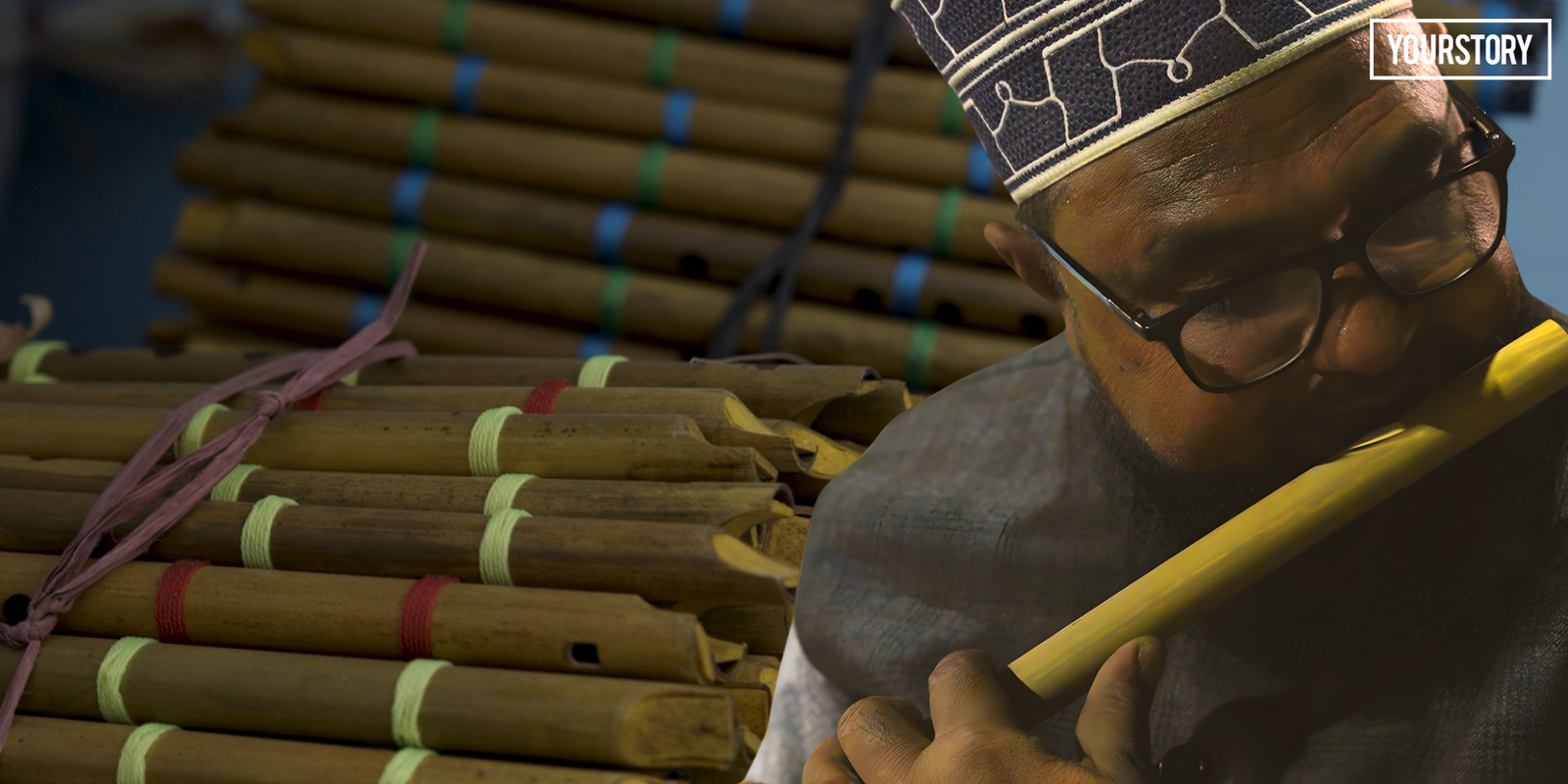
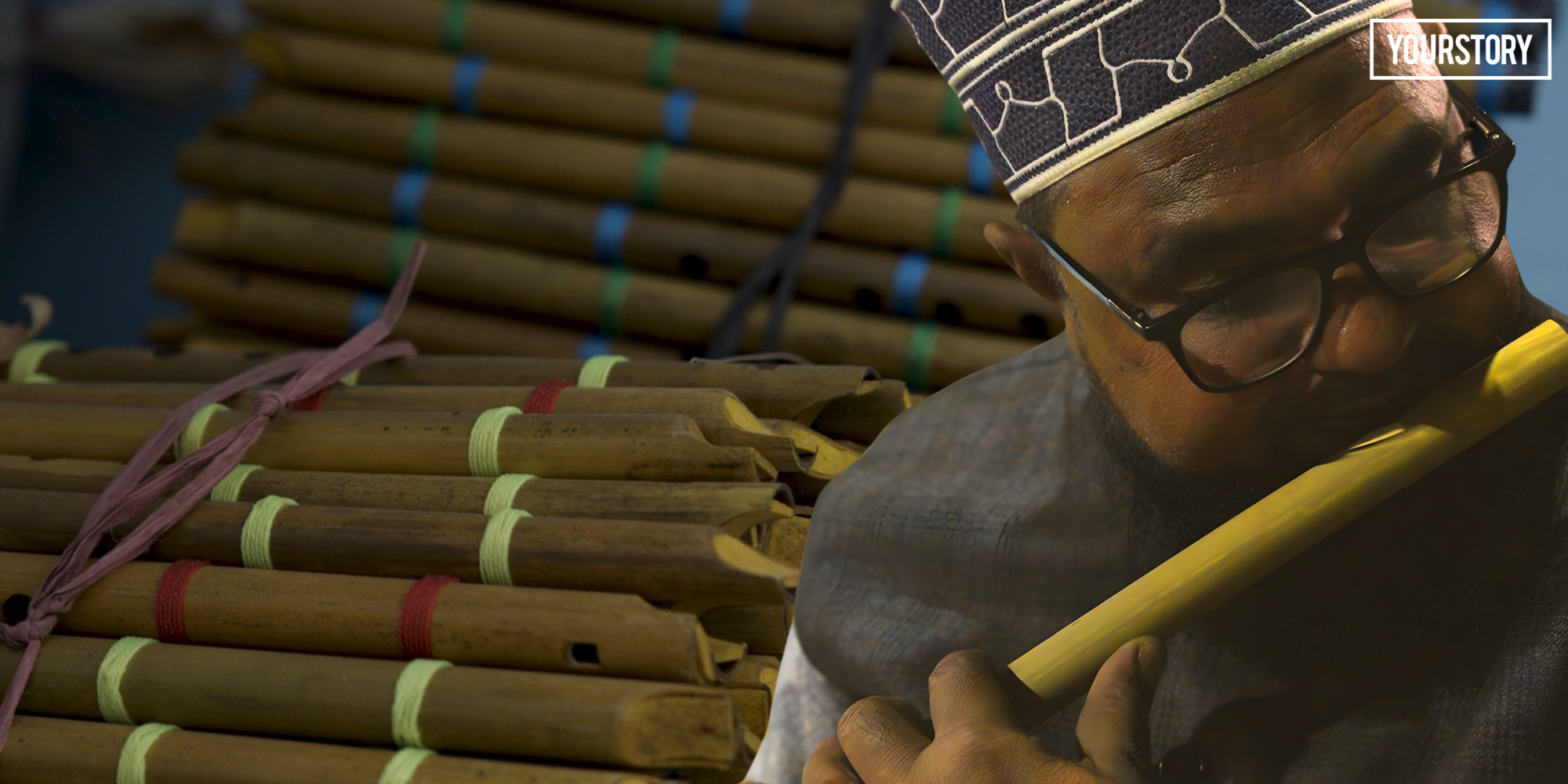

In Pilibhit, Uttar Pradesh, the bamboo bansuri is more than a musical instrument—it is a living family craft. From melas and devotional gatherings to trained musicians seeking precise tuning, flutes made here travel far beyond the district.
Among the artisans sustaining this tradition is Mohammad Shafiq, who runs Shahji Flute Maker. A third-generation craftsman, he learned the art at home, growing up among bundles of bamboo and half-finished flutes. “This work was always around us,” he says. “We did not choose it—it became part of us.”
A Lineage Rooted in Bamboo
Shafiq explains that flute-making begins with bamboo selection. Quality determines sound. For premium bansuris, the bamboo must be round, smooth, and free from cracks. After procurement, the bamboo is dried and graded. Lower grades are used for basic flutes sold at fairs, while superior tubes are reserved for tuned instruments meant for serious players.
“Material decides the music,” he notes. “If the bamboo is not right, the sound will not stay steady.”
Precision in Tuning
Once a tube is selected, measurements are marked carefully. Finger holes are drilled only after exact positioning is calculated, since length and diameter determine scale. For example, a 19-inch flute with a 19 mm diameter produces a specific tonal range.
Polishing improves both grip and finish, while tuning is tested with a meter and adjusted until the sound is clear. Decorative silk thread binding, often done by women artisans, adds both aesthetic value and income to households connected to the craft.
Market and Continuity
Through Uttar Pradesh’s One District One Product (ODOP) initiative, the craft has gained access to loans and exhibitions. Shafiq views support practically, noting that traditional tools—sharp knives and precise measuring scales—often matter more than heavy machinery.
Flutes from Pilibhit are sold across India and reach international buyers, including in the United States, through export channels. Orders often request custom scales and specific tunings.
For Shafiq, survival depends on sound. “If the bansuri gives a mithi awaaz—a sweet, melodious tone—people return.”
In Pilibhit, it is this sound that keeps three generations connected to the same workshop.
Discover more from News Link360
Subscribe to get the latest posts sent to your email.