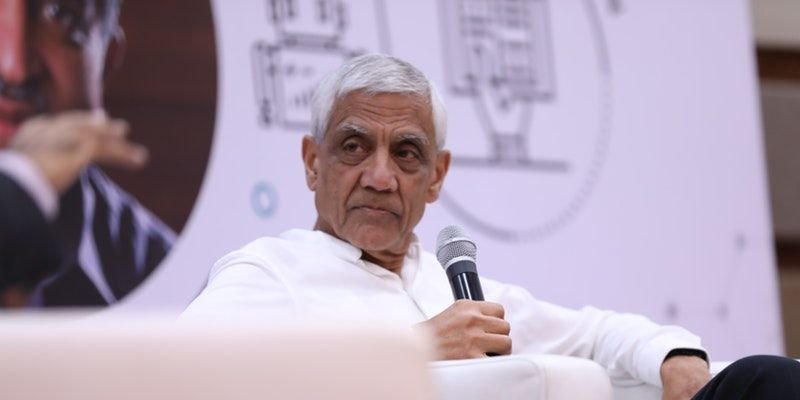
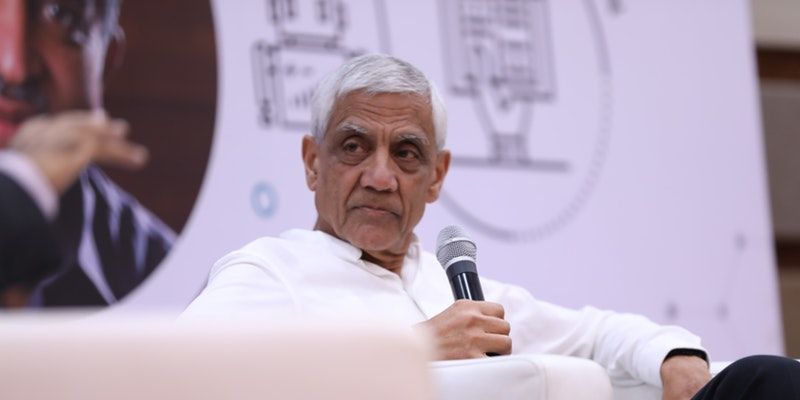

“It’s very clear to me that people in India don’t believe that the whole idea of IT services is over,” Khosla said at India AI Impact Summit 2026 in New Delhi. “By 2030, there will be no such thing as IT services. There will be no such thing as BPO. Those are gone.”
Khosla, founder of Khosla Ventures and an early backer of OpenAI and Stripe, said new AI-native services will emerge, but the transition will be “very, very disruptive to the Indian economy.”
“There will be new kinds of services based on AI that Indian companies can form and bring to the rest of the world because India has the best engineers, the best talent, the best education and all that,” he said. “But those will be very, very disruptive to the Indian economy, and I don’t think people are paying enough.”
The remarks strike at the heart of India’s $250 billion technology outsourcing sector, dominated by firms such as Infosys and Tata Consultancy Services. Khosla acknowledged resistance within the industry, quipping that “there’s somebody at Infosys hating me right now,” while noting that incumbents “have made the transition before”.
His prognosis extends well beyond outsourcing.
Khosla forecasts that by 2050, “nobody needs jobs,” as AI drives the cost of healthcare, education, legal services, transportation and entertainment toward near-zero, reshaping the economic foundations of modern societies.
“The question you have to ask is, will anybody need jobs?” he said. “I think by 2050 it will be very clear nobody needs jobs but enough production of goods and services that are near free, you won’t need jobs”.
.thumbnailWrapper{
width:6.62rem !important;
}
.alsoReadTitleImage{
min-width: 81px !important;
min-height: 81px !important;
}
.alsoReadMainTitleText{
font-size: 14px !important;
line-height: 20px !important;
}
.alsoReadHeadText{
font-size: 24px !important;
line-height: 20px !important;
}
}

He argued that AI systems will handle most economically valuable tasks across professions. “I define AI very specifically as when AI can do 80% of all the jobs that have economic value,” he said. “Whether you’re a structural engineer, a farm worker, an assembly line worker, a doctor, or an accountant. If AI can do 80% of all jobs, that’s AI. I think we’re there in the next few years.”
In Khosla’s view, the downstream effects will compress prices across essential services. “I suspect the minimum level of services — healthcare, education, legal, food — will be very cheap because it might be robots and not needing labour,” he said.
He cited advances in personalised medicine and education as early indicators of structural change. “It’s possible to provide every Indian child… an AI personal tutor,” he said. “It’s possible to provide a near-free AI doctor to every Indian, 24-7.”
The shift, he suggested, will challenge institutions built around credentialing and employment.
“So if you ask me 15 years from now, I don’t see any need for universities at all,” Khosla said. “I think there would be other ways to learn that are much better on your time without the expense of a university and that kind of dedication. So I don’t see a huge future for universities.”
He added that the primary function of early schooling may remain socialisation, but higher education’s economic rationale could erode as AI-driven personalised learning outperforms traditional models.
Khosla framed the transformation as inevitable but politically contingent. “My general view is that adoption of AI will be very different in different countries because politics are different in different countries,” he said.
While he acknowledged potential dislocation, Khosla argued that a post-work economy could unlock new forms of human activity. “In the future, you tell that kid, learn a passion and explore it,” he said, describing how advice to children may shift away from securing employment. “I think people in humanity will generally pursue passions, not jobs.”
For India, the near-term challenge lies in navigating what he characterised as a rapid erosion of its traditional export engine. The longer-term question, he suggested, is whether policymakers can manage the social and political adjustments required in a world where AI systems perform the bulk of economically valuable work.
“It’s only 25 years,” Khosla said of his 2050 horizon. “I think we are looking at a very different world now”.
Edited by Jyoti Narayan
Discover more from News Link360
Subscribe to get the latest posts sent to your email.