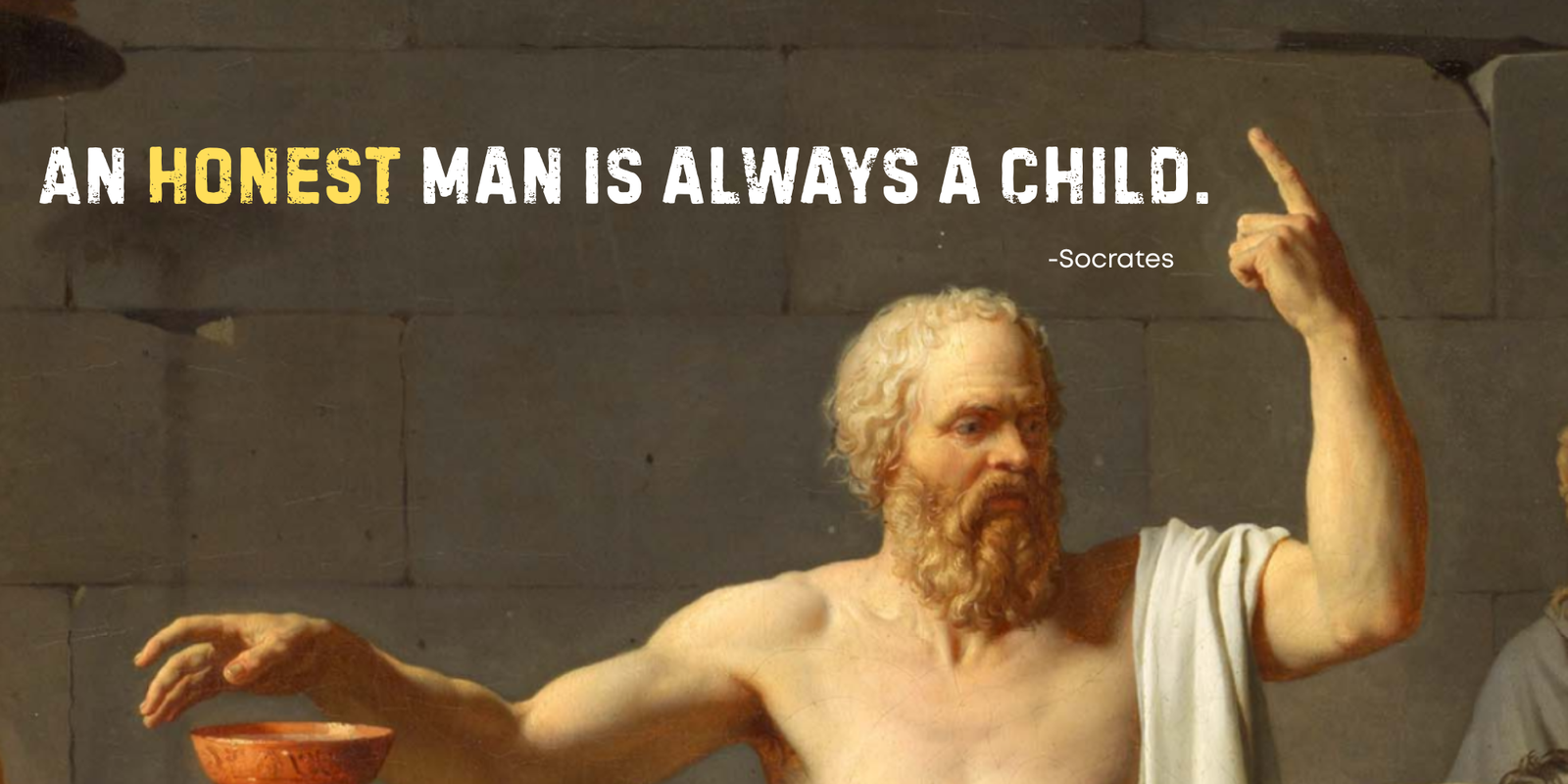
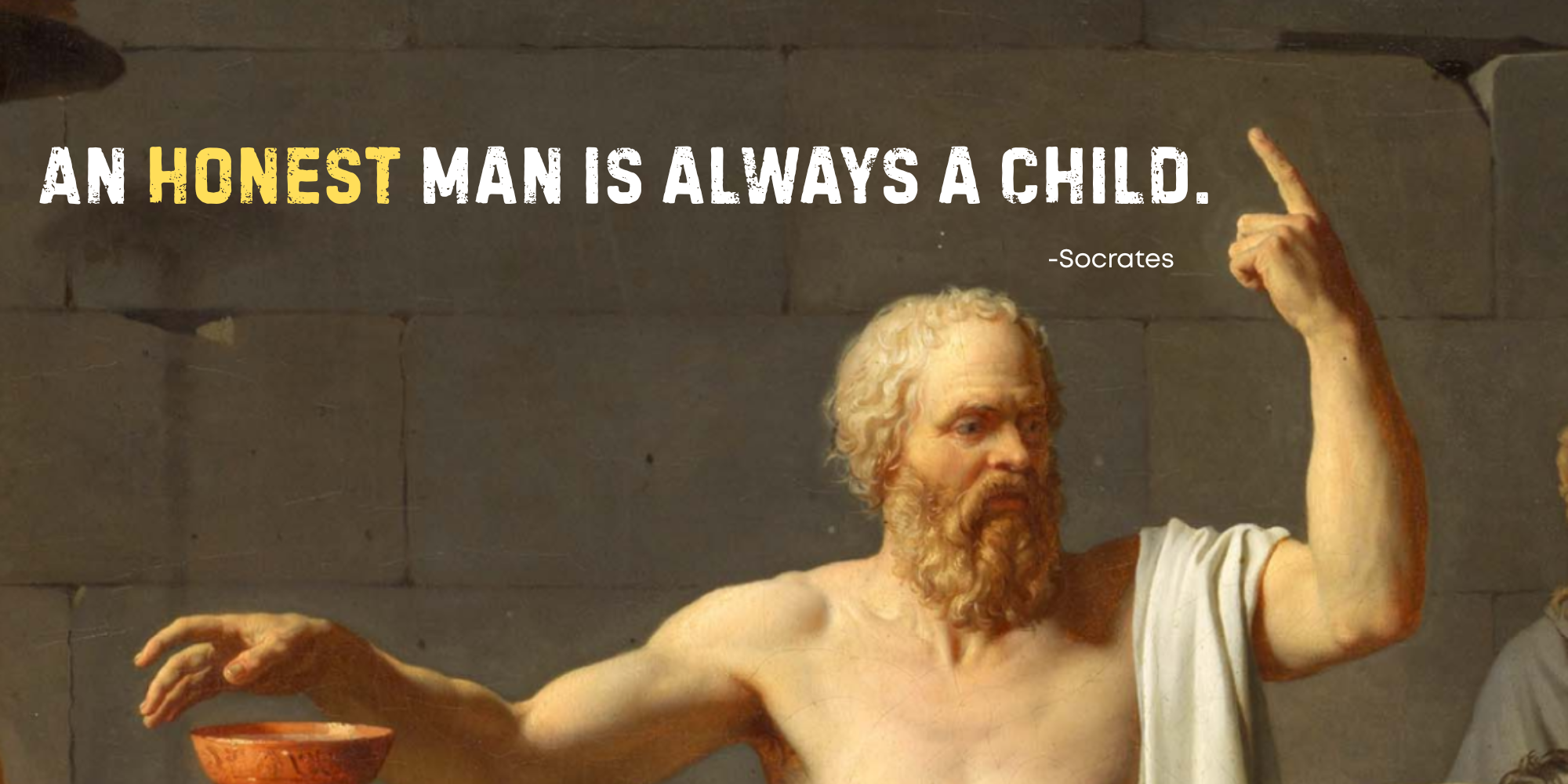

At first glance, the line sounds almost playful—maybe even naïve. But Socrates wasn’t praising immaturity. He was pointing to a rare kind of strength: the kind that comes from being untrained in deceit. In a world where people often polish their image, soften their mistakes, and edit their intentions, honesty can look childlike—simple, direct, and unafraid.
Yet that simplicity is not weakness. It is courage.
Honesty as Innocence, Not Ignorance
When we call someone “childlike,” we often mean they are open, straightforward, and free from manipulation. A child says what they feel before learning the social art of hiding it. They don’t calculate every sentence. They don’t build layers of meaning to protect status.
Socrates suggests that an honest person preserves this inner innocence—not because they don’t understand the world, but because they refuse to distort themselves to fit it. They can still be wise, experienced, and sharp, but they choose transparency over performance.
Why Truth Feels Risky as We Grow Up
As adults, honesty becomes complicated. We learn that truth can cost us: approval, comfort, relationships, even opportunity. We begin to manage impressions. We select what to reveal. We rehearse what sounds acceptable rather than what is real.
This is how people slowly move from truth to strategy. Not always out of malice—often out of fear. Fear of conflict. Fear of being judged. Fear of losing control.
Socrates’ quote quietly exposes this shift. The “child” in us does not fear truth the way adulthood often does.
The Quiet Power of a Straight Answer
Honesty simplifies life in ways most people underestimate. A truthful person carries less mental clutter: fewer stories to maintain, fewer contradictions to defend, fewer identities to switch depending on the room.
There is also a moral clarity in honesty. You don’t need to be perfect—you only need to be real. When you admit what you did, what you want, what you don’t know, you stop living in fragments. You become one person everywhere.
That wholeness is what makes honesty feel peaceful, even when it’s difficult.
Honesty Builds Trust, The World’s Rarest Currency
Trust is the foundation of every strong relationship—personal or professional. But trust doesn’t grow from charm; it grows from consistency. People trust those whose words match their actions.
A child’s honesty is predictable. You don’t have to decode it. That predictability becomes safety. In teams, families, friendships—honesty reduces suspicion and increases respect, because it removes the exhausting need to guess.
Living Like a “Child” Without Being Naïve
Socrates isn’t asking us to be careless or blunt. Honesty is not cruelty. It doesn’t mean saying everything, all the time, in the harshest way. It means refusing to live a lie.
A mature honesty has two parts: truth and kindness. It speaks clearly, but it also considers impact. It doesn’t manipulate, but it also doesn’t humiliate. That balance is what turns innocence into wisdom.
The Quote That Fits Every Life
Most people want peace, respect, and genuine connection. Socrates offers a simple path: stop performing, start telling the truth. The honest person becomes “a child” again—not in intelligence, but in purity of intention.
In the end, the quote is less about childhood and more about freedom: the freedom of a life that doesn’t require hiding.
Discover more from News Link360
Subscribe to get the latest posts sent to your email.