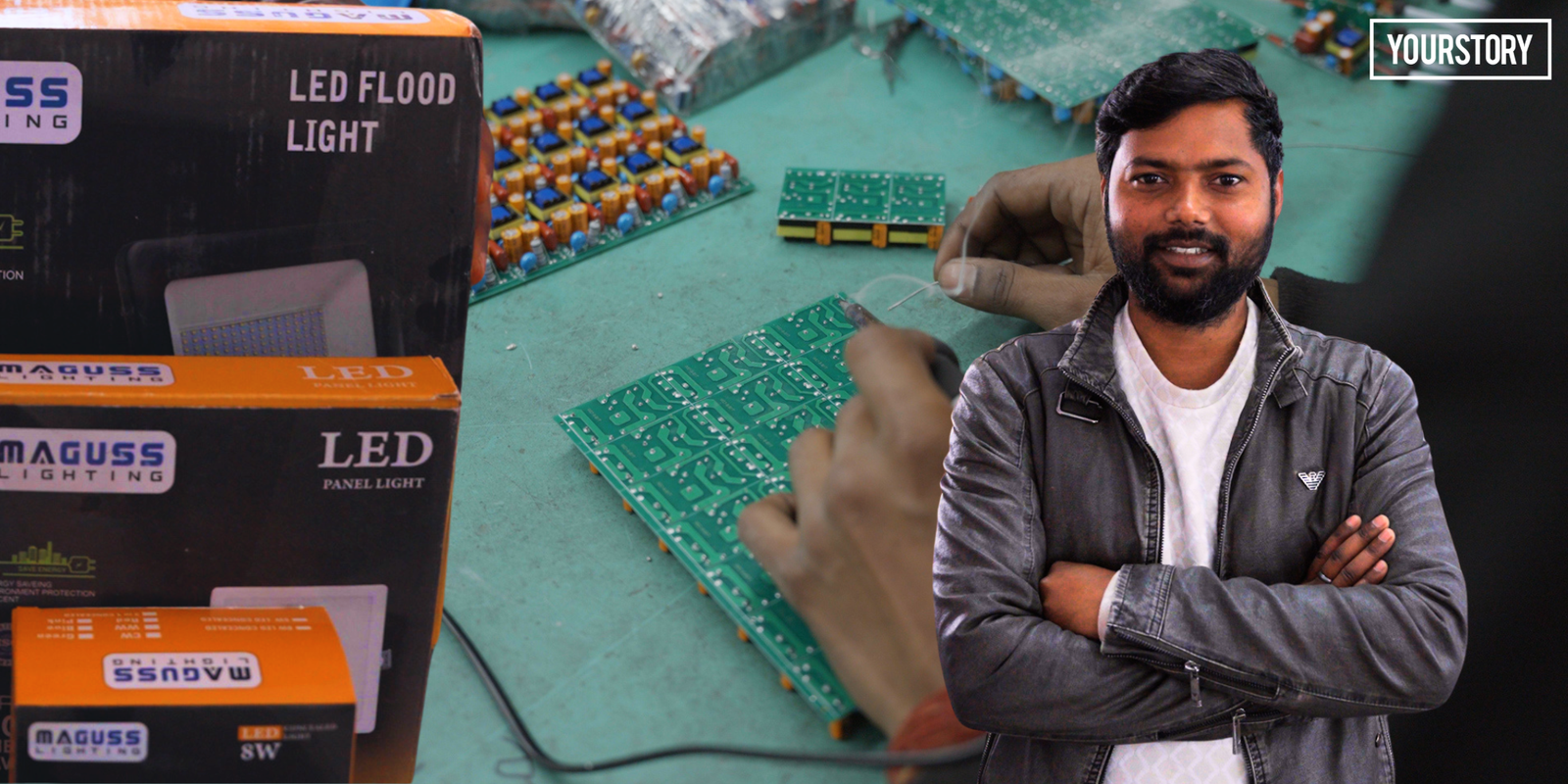
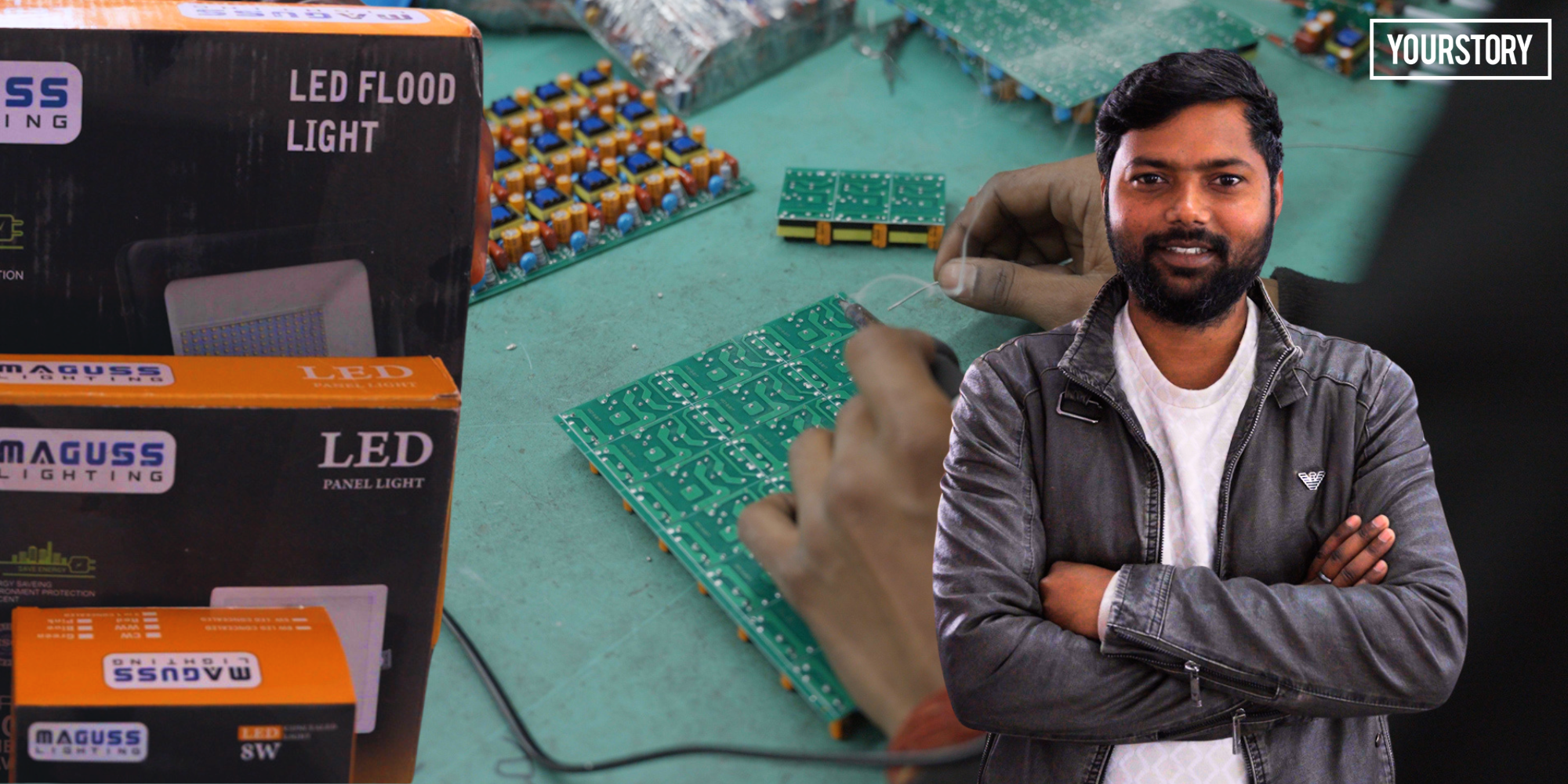

He first entered into a partnership in the LED lighting business, but differences led to the venture being dissolved. Instead of stepping away from the sector, he set up an independent unit in February 2025. His company, Sugam Lighting Technology, operates under the brand name Megas Lighting and is based in Sector 80, Noida.
Today, the enterprise employs five to six people, including two women. Kushwaha says the current annual turnover stands at around Rs 60 lakh, and he hopes to cross the Rs 1 crore mark this year, with a longer-term goal of scaling further over the next five years.
Building a local manufacturing base
Sugam Lighting Technology manufactures both indoor and outdoor LED lighting products. The business sources raw materials from Delhi-NCR and Ahmedabad, while certain components, such as drivers, are procured from other suppliers. The printed circuit board designs are developed based on the requirement, and final assembly is handled at the Noida unit. Packaging and printing are also handled in-house before the finished products are supplied to markets across Uttar Pradesh, Rajasthan, and Punjab.
Within the small team, two employees focus on marketing, one works in research and development, and the rest are involved in assembling and finishing the products. Kushwaha says keeping production largely local has helped him maintain control over quality and timelines.
In March 2025, he discovered the Mukhyamantri Yuva Udyami Vikas Abhiyan (CM YUVA) Yojana and decided to apply for support. He says the absence of collateral requirements and interest burden made it a practical option at an early stage of business. The loan was sanctioned within a few weeks, providing working capital at a time when managing cash flow was crucial. He believes that reducing repayment pressure in the initial months allowed him to focus on stabilising operations rather than worrying about interest costs. Subsequent references to the scheme, he says, are usually made as CM YUVA Yojana in conversations with other entrepreneurs.
Reflecting on his journey from employee to business owner, Kushwaha says, “If you have the determination to do something, you should take the step.” His growth so far has been measured rather than dramatic, but the shift from job insecurity to running a functioning manufacturing unit has brought a sense of stability that was missing previously.
Discover more from News Link360
Subscribe to get the latest posts sent to your email.