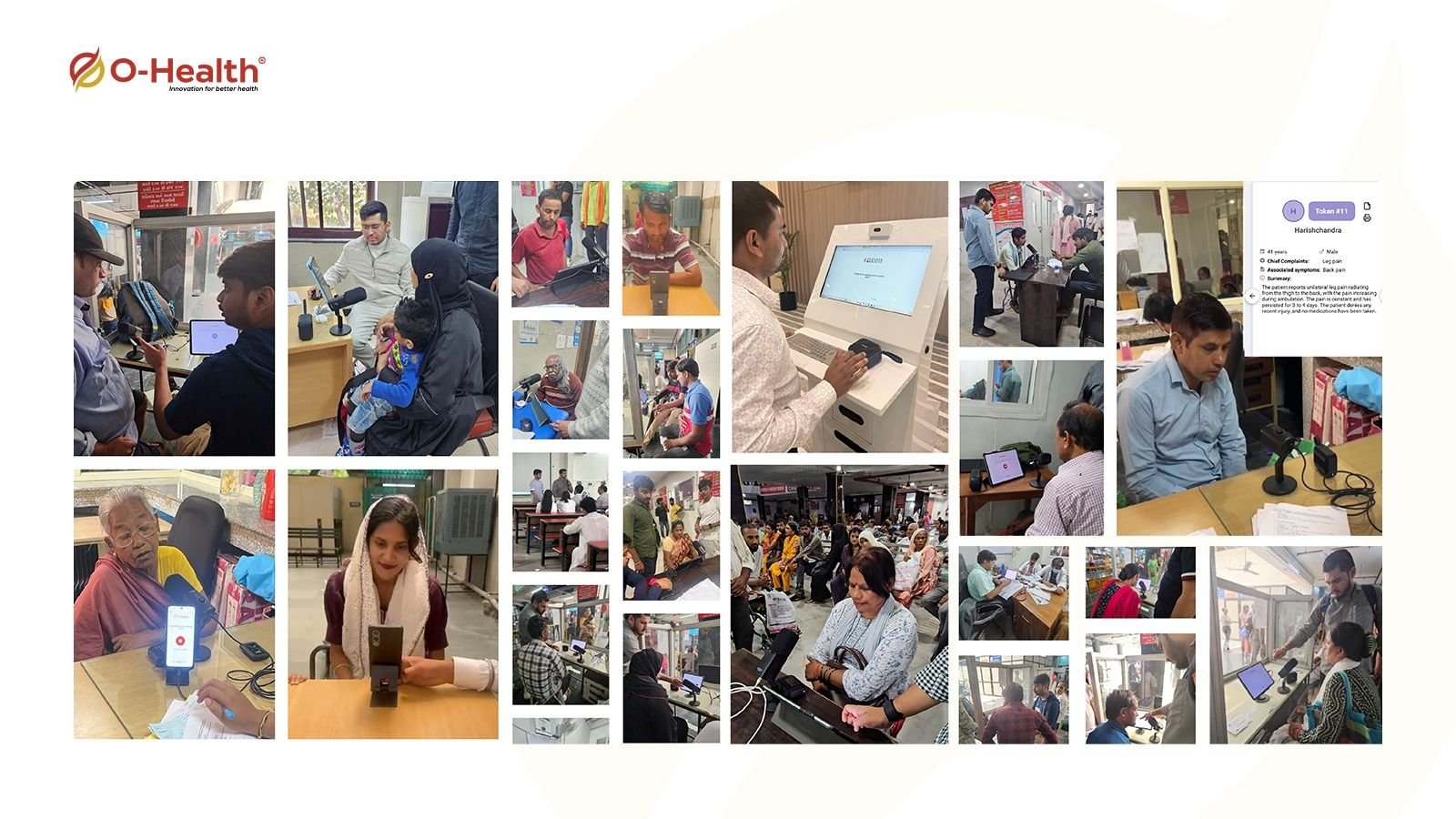
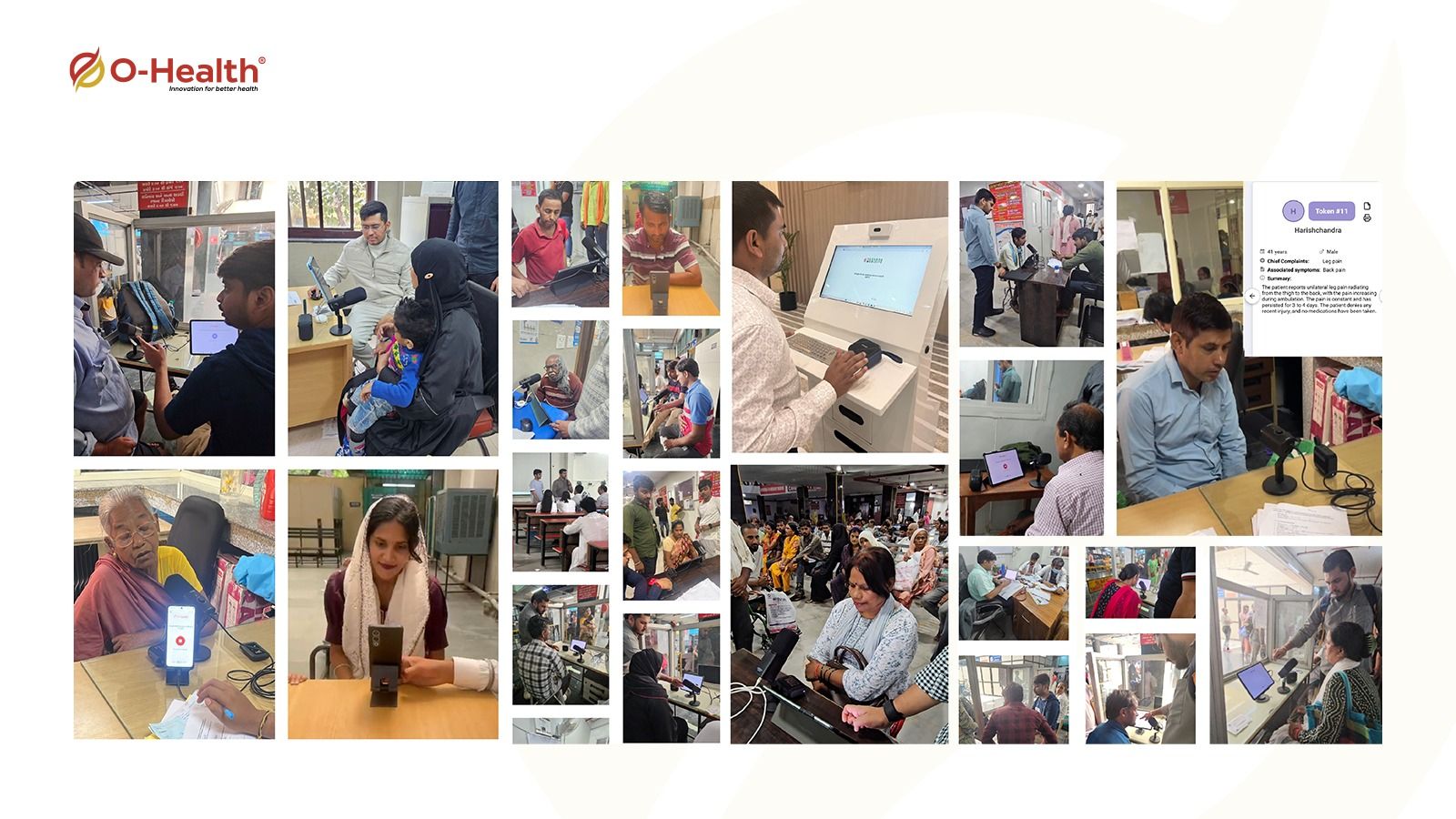

This is the testing ground where O-Health was built. The 18-month-old clinical AI startup operates on a simple belief: if technology can work reliably in the most inaccessible parts of the Himalayas, it can work anywhere in India.
When it comes to artificial intelligence in medicine, the focus often shifts to futuristic diagnostics or robotic surgery. O-Health is solving a more immediate problem: how care is delivered on the ground. It has developed an end-to-end clinical AI operating system designed for Indian conditions.
This is not just another transcription tool or a wrapper around foreign cloud APIs. O-Health offers healthcare providers a voice-first platform that turns real patient conversations into structured clinical intelligence in real time. By removing the burden of typing and triage, it allows doctors to focus on what matters most: treating patients.
The problem with turning doctors into clerks
Healthcare digitization has faltered in high-volume settings because it expects clinicians to act like data-entry operators. Instead of reducing workload, digital systems have added hours of clicking and screen time. Doctors don’t want more buttons; they want fewer.
O-Health started with a different approach. It is built around the most natural interface humans have: voice. Its platform lets doctors conduct consultations as they always have, in a private hospital or a remote primary health center, while the technology works in the background, preserving the human connection at the heart of care.
Why O-Health is a partner, not just another app
In a market crowded with ‘download-and-forget’ software, O-Health has taken a fundamentally different path. This approach is shaped by the complementary backgrounds of its founders, Arunoday Singh and Akshar KR.
Arunoday, who hails from Jammu and Kashmir, brings depth in health economics and commercialisation from his time at the London School of Economics. His focus is not just on technology, but how health systems deliver outcomes at the last mile. Akshar, meanwhile, is a mechatronics engineer, National awardee in the field of science and technology, and R&D leader, and brings technical rigour to the platform.
The result is a product built like infrastructure, not a software demo.
O-Health operates as a deployment partner, recognizing that clinical AI works only when embedded into the physical and digital realities of a hospital. The team manages everything, from site readiness and the edge hardware setup to deep clinical onboarding, ensuring doctors actually adopt the system.
The startup’s platform maps workflows across outpatient and inpatient departments, integrates with existing hospital systems, and is continuously monitored and tuned to improve performance over time.
O-Health’s approach has attracted serious validation. It has a research collaboration with CSAIL, MIT Boston, and has received backing from the Gates Foundation, signalling that its work is aligned with scalable, real-world public health impact, especially in environments where reliability and cost are non-negotiable.
A stack built for independence
One of O-Health’s defining choices is its commitment to what it calls a sovereign AI stack. While many AI companies rely on large, foreign-owned models, sending sensitive medical data to the cloud and paying per use, O-Health chose a harder path. It operates without dependency on frontier models or external proprietary APIs.
This is not just about national pride; it’s about clinical reliability. In healthcare, uptime matters. A doctor cannot wait for a server halfway across the world to respond while a patient sits in front of them. To solve this, O-Health built its own in-house medical automatic speech recognition (ASR) system and uses an ensemble of small language models (SLMs). The result is a platform that is lighter, faster, and significantly more cost-efficient than heavyweight alternatives.
Crucially, the system runs on an edge-first architecture, allowing AI to operate directly within hospitals and clinics rather than on distant cloud servers. This reduces latency, lowers costs, and strengthens data privacy. It continues to work even when connectivity is unreliable.
How the clinical intelligence layers work
One of O-Health’s key differentiators is the way it breaks down a medical consultation into deployable intelligence layers that build on each other.
The process begins with ‘Capture’, a voice-first consultation layer powered by medical-grade ASR that works reliably in noisy, multilingual clinical environments. This is followed by ‘Understand,’ where the system structures symptoms, vitals, and assessment cues in real time.
When clinically relevant gaps are detected, the platform suggests brief follow-up prompts to the doctor to improve the completeness of the medical record, without interrupting the consultation. The ‘Document’ layer then generates instant clinical summaries aligned to each provider’s preferred templates.
‘Act and Integrate’ next ensures structured data flows from hospital systems, telemedicine platforms, or national health infrastructure like ABHA. It also surfaces root-cause insights that support broader clinical and operational analysis.
This step-by-step process is designed to be seamless. Doctors conduct visits naturally, without changing how they practice. The ASR streams things into structured fields, and the task-specialist SLM validates and formats output into provider-ready notes. These outputs sync automatically to patient records, enabling individual care and population-level insights.
Real impact and validation
O-Health has already completed over 50,000 clinical consultations, securing more than $500,000 in work orders, and deployed its system across multiple private hospitals, including Yashoda Medicity in Delhi NCR. It is also running pilots with state health authorities to evaluate how the platform can scale across the public healthcare system. It has also received deployment interest from the UK and Germany, and is set to begin deployment in the USA next month.
Validation has been rigorous. Clinical assessments by AIIMS, New Delhi, evaluated the system in low-resource environments such as primary health centers (PHCs) and community health centers (CHCs). The findings showed strong similarity in structured clinical outputs, proving that the O-Health can deliver documentation quality comparable to top-tier medical institutions even when deployed in rural and constrained settings.
The road toward a national clinical layer
O-Health’s roadmap centers on transforming structured clinical voice data into compounding clinical intelligence. In the near term, the focus is on expanding support for more languages and dialects, improving performance in noisy environments, and deepening integrations across hospital workflows and digital health infrastructure.
Over the next two to three years, the startup aims to emerge as a national-grade clinical computing layer, capturing high-quality, longitudinal clinical data at scale, from remote rural care points to the largest tertiary hospitals.
By designing technology that adapts to clinicians rather than reshaping clinical behaviour, O-Health is showing that the most powerful innovation in healthcare is often the most human.
Discover more from News Link360
Subscribe to get the latest posts sent to your email.