Ajay Kumar Verma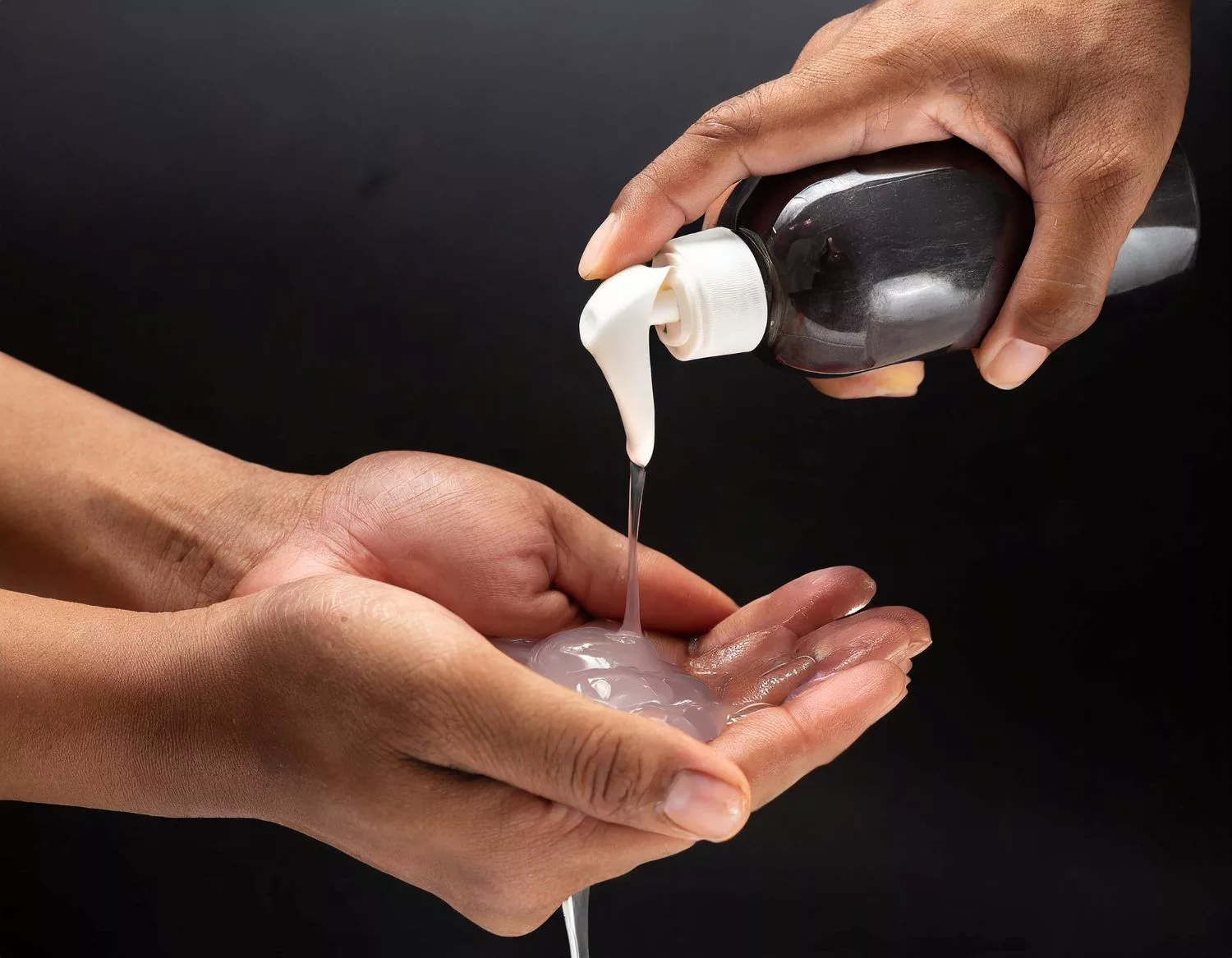
It starts in the shower. You pick up the shampoo bottle and squeeze it; nothing comes out at first, just a thick glug of liquid dancing along the inside. Then, all it takes is another tiny push, and it explodes out of the tap, a continuous stream sometimes smooth as a ribbon across your fingers, other times like a glob that splashes against your palm.
This is a glimpse into one of the weirdest behaviors in materials science: yielding, when something solid-like suddenly behaves like a liquid.
Argonne National Laboratory scientists, with help from the University of Chicago, have been hunting down this mystery, not because they hope to solve an easier way to open your shampoo bottle, but because yielding state occurs everywhere, from toothpaste and paints to concrete and 3D-printing inks, as well as even the electrodes layered within devices like batteries straight out of NASA sci-fi films. It is a deceptively simple question: why does a material maintain its shape one instant, then yield to flow the next?
The solution, it turns out, can be found in the invisible choreography of particles.
New Plastic Surface Lets You Get Every Last Drop Of Shampoo
At Argonne’s Center for Nanoscale Materials, researchers built two nearly identical samples: suspensions of tiny particles in liquid. One was tuned so the particles repelled each other. The other was nudged with a salt solution, making the particles weakly attractive to each other.
On the surface, both looked the same. But under stress, their personalities diverged.
“When the particles repel each other, the material changes shape in a very even way,” said Hongrui He, assistant physicist at Argonne. “It flows predictably, without forming large weak spots inside.”
The attractive system was messier. Particles clumped together in dense areas, creating empty pockets. Some parts flowed while others froze. The material broke into shear bands, with zones moving at different speeds.
“In the attractive system, parts of the material are almost frozen while other parts are flowing,” explained Wei Chen, chemist at Argonne and CASE scientist at the University of Chicago. “That leads to more complex behavior, such as delayed yielding and resolidification, which you do not see in simple fluids.”
Time-to-yield delay means the material resists for a while before suddenly giving way. Resolidification is a flow phenomenon in which a material suddenly solidifies again, even though the stress remains the same. These behaviors are not just theoretical. They determine whether concrete pours easily or thickens into a sludge, and whether industrial inks spread smoothly or get stuck.
To understand what was happening, the team combined rheology, which examines how materials respond to stress, with X-ray photon correlation spectroscopy at Argonne’s Advanced Photon Source. The ultra-bright beam revealed small fluctuations in scattered signals, showing how clusters of particles moved over time.
“The unique aspect of our approach is that we can measure the motion of the small particles and the overall material response at the same time,” Chen said. “That allows us to connect microscopic dynamics to macroscopic behavior in real time directly.”
Even X-rays can’t see everything. So the researchers turned to computer simulations on Bebop, Argonne’s high-performance computing cluster.
“In experiments, the material is dense and opaque, so you can’t track every single particle,” said Heyi Liang, research associate at Argonne and postdoctoral scholar at the University of Chicago. “With simulation, you can. We built the simplest model that still captures the most important parts, including delayed yielding and resolidification. We then used it to understand what is happening at the boundaries between flowing and non‑flowing regions.”
The simulations showed that so-called weak junctions between shear bands, fragile little links where particles are attached in a loose manner, such as one climber who pitches their rope out by accident and then the belayer forgets to secure them, or the anchors are super limp, make all of the difference. At low stress, they hold. If you press harder, some junctions break, allowing bands to slip past one another.
Eventually, new junctions form, locking the structure into place once again. The team constructed a unified picture that linked those microscopic events to experimental data.
“Our findings bridge the microscopic and macroscopic worlds of soft matter,” said Juan de Pablo, New York University executive vice president for Global Science and Technology and executive dean of the Tandon School of Engineering.
“By directly visualizing how particles interact and reorganize as these materials yield, we can now connect nanoscale dynamics to large-scale mechanical behavior. This gives us a framework to design and tune the flow properties of soft materials with unprecedented precision.”
Journal Reference:
- Hongrui He, Heyi Liang, Miaoqi Chu, and Wei Chen. Bridging microscopic dynamics and rheology in the yielding of charged colloidal suspensions. PNAS. DOI: 10.1073/pnas.2514216122
Discover more from News Link360
Subscribe to get the latest posts sent to your email.