Ajay Kumar Verma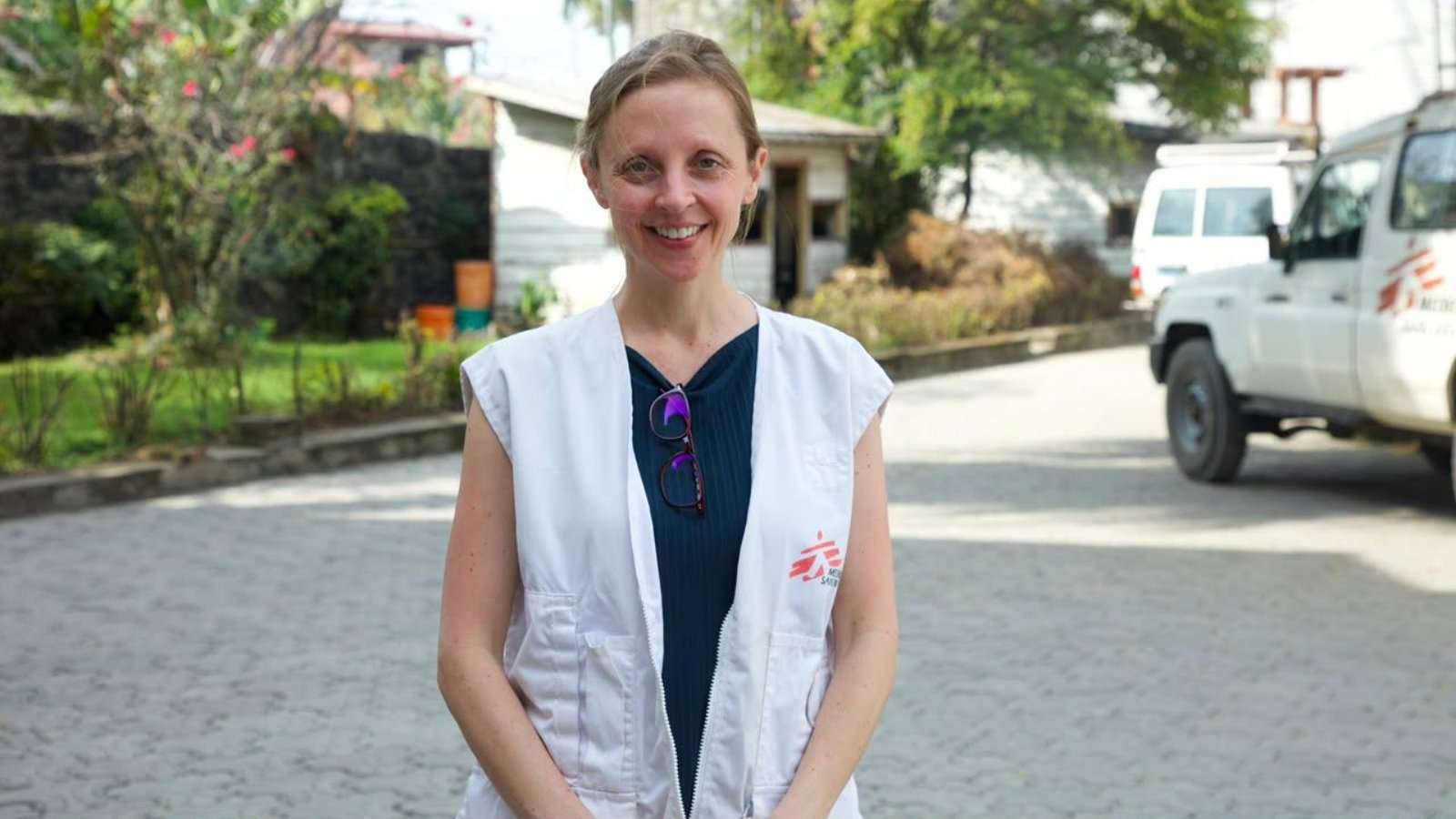
Dr Kerry Dierberg barely pauses as she coordinates shifts of doctors, nurses and healthcare workers for a 24-hour vigil at a health centre in Goma. This city, in North Kivu province in the Democratic Republic of Congo, is Ground Zero of the world’s worst Ebola outbreak.
A transit hub with a population over 1 million, it has a bustling cross-border economy with Rwanda, geography which has also made it a latent spreader zone.
“It has been a month after the Ebola outbreak and it is still outpacing our response efforts. There are big gaps in surveillance, diagnosis, contact tracing and community engagement,” she says, speaking from Goma to The Indian Express.
She rotates teams working two shifts (7.30 am to 4.30 pm and 4.30 pm to 7.30 am) to ensure that the facility remains operational 24 hours a day. Sleep breaks depend on the number of patients.
Dierberg, an emergency medical coordinator at Médecins Sans Frontières (MSF), is dealing with an epidemiological situation that remains unclear and is evolving rapidly. Authorities are struggling to catch up with the mushrooming epidemic of a rare Ebola strain that kills 30% to 50% of those infected and has no vaccine or cure.
The outbreak has caused about 933 confirmed infections and at least 245 deaths in eastern Congo, according to the country’s health ministry. But field doctors like Dierberg say that with inadequate testing, one cannot understand if seemingly unrelated deaths could also be because of Ebola.
“One of our main concerns is that we do not yet have the full picture of the outbreak due to limited diagnostic capacity and likely under-reporting of cases. Cases may be going undetected, particularly in remote and insecure areas…The affected areas are also characterised by population movements linked to conflict, trade and mining, and poor health facilities that were already under significant strain before the outbreak. There is limited access in heavily affected areas, which is also affecting care for other diseases,” says Dierberg.
Story continues below this ad
So far, India has not reported any confirmed cases of the Bundibugyo Ebola virus as suspected returnees from DRC have tested negative in Gujarat, Maharashtra and Kerala. The Health Ministry has activated rigorous surveillance protocols, including airport screening, isolation wards and testing facilities. The National Centre for Disease Control (NCDC), Indian Council of Medical Research (ICMR), and state authorities are working on swift testing, triage and contact tracing systems.
Compared with the previous outbreaks of the Bundibugyo virus, which comes from fruit bats, the number of reported cases has already exceeded those recorded during outbreaks in Uganda in 2007–2008 and in DRC in 2012.
The absence of approved vaccines and treatments, combined with limited diagnostic tools, has made early detection, isolation and patient management challenging. Dierberg explains: “Confirmation requires Bundibugyo virus-specific PCR testing, but testing capacity is limited and available in only a small number of specialized laboratories. As a result, confirming cases can take time, particularly in remote areas where access to laboratories is limited. Delays in diagnosis can affect timely isolation and make it more difficult to rapidly break chains of transmission.”
There are no rapid tests which were designed for the Zaire species. Besides, these cannot identify sick people until their viral load is extremely high.
Story continues below this ad
MSF’s emergency programme manager Trish Newport diagnoses a bigger problem. “The number of expert medical organisations responding on the ground is still far too limited, and the level of support being provided — including our own — falls far short of what is needed,” she tells The Indian Express.
She emphasises how the Bundibugyo virus requires stringent biosafety. “There’s a shortage of specific test kits and rapid decentralised testing will take time and effort to establish. No cartridge-based assay is compatible with existing equipment, (usually an assay cartridge is compatible with a specific equipment or instrument manufactured by the same developer). New suspected cases are being reported daily, yet hundreds of samples remain untested, which means the true scale of the outbreak is still unclear,” she says.
Yet DRC is not starting from zero. The country does have a strong experience in Ebola surveillance, vaccination campaigns, community engagement, laboratory capacity, and clinical care.
Still, this grid is falling short in containing the current outbreak and surveillance systems are facing significant challenges. An effective surveillance system, says Dierberg, should include both permanent laboratory infrastructure and mobile or portable laboratories capable of reaching remote communities. “Community engagement is also essential, as trust and early reporting are critical to outbreak control. Right now, this is a weak link,” says Dierberg, whose teams are also swamped by the responsibility of training healthcare workers.
Story continues below this ad
This amid incidents involving attacks against them and responders. “No matter what the care burden or shortage of medicines and supplies, we have to protect ourselves and healthcare workers,” she says.
With no verified data available regarding the average timelines between symptom onset, detection, laboratory confirmation and isolation, doctors are fighting each day as it comes.
What worries Dierberg is how broader international funding cuts have affected eastern DRC. “Many health programmes have faced reductions in resources at a time when humanitarian needs and disease outbreaks are already increasing. Fund shortage has affected surveillance, emergency response capacity and increased logistical challenges,” says Dierberg.
As a field doctor, response also means reassuring communities against fear, misinformation and mistrust. “During outbreaks, communities often ask why the disease is occurring, why it is affecting certain areas, and whether response measures can be trusted. In contexts already affected by conflict, displacement, food insecurity, and limited access to healthcare, rumours can spread quickly. This is why transparent communication and community engagement are essential parts of the response,” says Dierberg.
Story continues below this ad
According to Newport, the messaging for safe burials has become most important, too. Investigators are already talking about Patient Zero, a pastor, whose broken casket and crowded funeral are believed to be one of the suspected super-spreader events.
Over the next six to 12 months, Dierberg foresees no big change unless vaccines and treatments for the Bundibugyo virus take off, all of which are in process. “The most important intervention would be strengthening surveillance and early detection systems. Expanding access to diagnostics, improving laboratory capacity, supporting rapid isolation of suspected cases, and investing in community engagement would have the greatest impact on reducing transmission and preventing future outbreaks,” she says.
Discover more from News Link360
Subscribe to get the latest posts sent to your email.