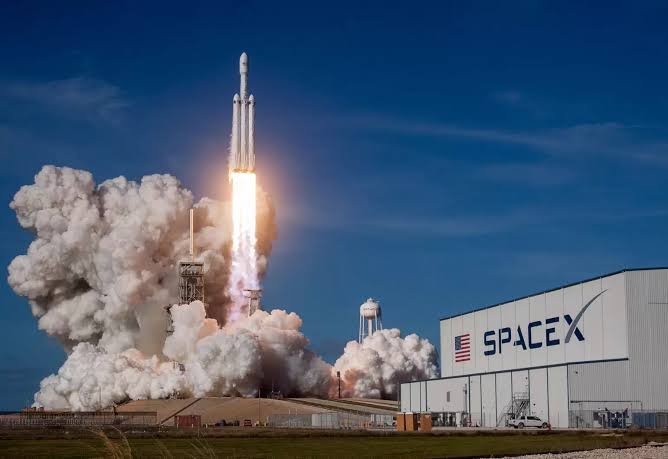
As Elon Musk accelerates development of SpaceX’s Starship—the world’s largest and most powerful rocket—new reports from NASA oversight officials are raising fresh questions about whether the vehicle will be ready to safely carry astronauts to the Moon on the agency’s ambitious Artemis missions.
The concerns come at a pivotal moment. Starship is central not only to Musk’s long-term vision of establishing a human settlement on Mars but also to NASA’s plan to return American astronauts to the lunar surface for the first time since Apollo 17 in 1972. Under contracts valued at nearly $4 billion, SpaceX is developing a modified version of Starship that will serve as NASA’s Human Landing System (HLS) for Artemis III and later missions.
Yet recent assessments from independent government watchdogs suggest that significant engineering, safety and operational challenges remain before Starship can fulfill that role.
NASA Safety Panel Warns of “Intricate Operational Design”
The strongest warning comes from NASA’s independent Aerospace Safety Advisory Panel (ASAP), which said Starship’s unprecedented complexity introduces substantial risks.
In its latest annual report, the panel concluded that a lunar landing using Starship involves extraordinary technical challenges because of the vehicle’s:
- highly intricate operational design;
- complex mission architecture;
- reliance on technologies still undergoing flight testing;
- demanding sequence of orbital refueling operations before traveling to the Moon.
Unlike Apollo-era spacecraft, the Starship lunar mission requires launching multiple tanker vehicles into Earth orbit before transferring large quantities of cryogenic methane and liquid oxygen to a waiting Starship. Only after completing those refueling operations can the spacecraft depart for lunar orbit.
NASA’s safety advisers noted that many of these capabilities have never been demonstrated in an operational environment.
Inspector General Finds Gaps in Safety Planning
A separate report from NASA’s Office of Inspector General identified additional concerns regarding astronaut safety.
According to the watchdog, NASA still faces unresolved questions involving:
- Starship testing procedures;
- crew survival analysis;
- emergency planning;
- rescue capabilities if astronauts become stranded.
The Inspector General issued one particularly stark warning.
If a catastrophic failure occurred during a lunar mission, NASA currently lacks a proven capability to rescue astronauts stranded either in lunar orbit or on the Moon’s surface.
That finding reflects the unprecedented nature of Artemis missions, which will operate hundreds of thousands of miles farther from Earth than today’s International Space Station missions.
Starship Has Made Rapid Progress—But Testing Continues
SpaceX has dramatically accelerated Starship development over the past several years using an aggressive “build, fly, learn” philosophy that accepts test failures as part of rapid engineering progress.
The company has achieved several important milestones:
- successful recovery of Super Heavy boosters using the launch tower “chopstick” arms;
- increasingly successful controlled reentries;
- major advances in reusable launch operations;
- continued upgrades to both booster and upper-stage designs.
However, several recent integrated test flights have also highlighted the difficulty of developing the fully reusable launch system.
Upper-stage anomalies, engine failures, loss of attitude control and vehicle breakups have occurred during various flight tests, demonstrating that Starship remains an experimental spacecraft undergoing intensive development.
SpaceX has consistently stated that these tests are intended to expose weaknesses before operational missions begin.
Orbital Refueling Remains One of the Biggest Unknowns
Perhaps the greatest technical challenge still ahead is orbital propellant transfer.
NASA’s lunar architecture depends on SpaceX successfully transferring massive quantities of super-cooled liquid methane and liquid oxygen between Starships in orbit—a capability never before demonstrated at this scale.
Experts have long viewed orbital refueling as one of the highest-risk elements of the Artemis landing system because it requires:
- multiple successful launches;
- long-duration cryogenic fuel storage;
- precision docking;
- transfer of hundreds of tons of propellant in space.
Until those demonstrations are completed, NASA cannot fully validate Starship’s readiness for lunar missions.
Delays Continue to Affect Artemis Timeline
Starship’s development pace has become one of the primary factors influencing NASA’s Artemis schedule.
NASA has already delayed Artemis III—the mission intended to land astronauts near the Moon’s south pole—to allow additional time for SpaceX to mature the Human Landing System.
Agency officials have repeatedly emphasized that astronaut safety will take precedence over schedule.
Before astronauts board the lunar lander, NASA requires an uncrewed demonstration mission in which Starship successfully lands on the Moon and returns to lunar orbit.
SpaceX Says Development Benefits Both NASA and Mars
SpaceX has largely declined to respond directly to the latest oversight reports.
The company has previously argued that Starship development is progressing along two parallel tracks: building the core transportation system while simultaneously adapting it for NASA’s lunar requirements.
In an earlier statement, SpaceX said it is funding more than 90% of Starship’s overall development costs, while NASA’s Human Landing System contract focuses on modifying the core vehicle for Artemis missions.
The company also emphasizes that its NASA contract is fixed-price, meaning SpaceX—not taxpayers—absorbs most additional development costs if schedules slip or engineering challenges emerge.
Elon Musk’s Bigger Vision
For Musk, the Moon represents only the first destination.
Starship is intended to become the backbone of SpaceX’s long-term strategy to make humanity a multiplanetary species. The fully reusable rocket is designed to eventually transport more than 100 people at a time to Mars while dramatically reducing launch costs through rapid reusability.
That same architecture is also expected to launch next-generation Starlink satellites, support commercial space stations, deploy deep-space scientific missions and carry cargo for NASA and the U.S. Department of Defense.
Whether Starship ultimately achieves those ambitions depends on overcoming the formidable technical challenges highlighted by NASA’s own oversight bodies.
For now, government watchdogs are not questioning the importance of Starship—they are questioning whether its most complex capabilities can be proven reliable before astronauts stake their lives on them.
GROWTH RATE (Y/Y)
63%
2024
Discover more from News Link360
Subscribe to get the latest posts sent to your email.