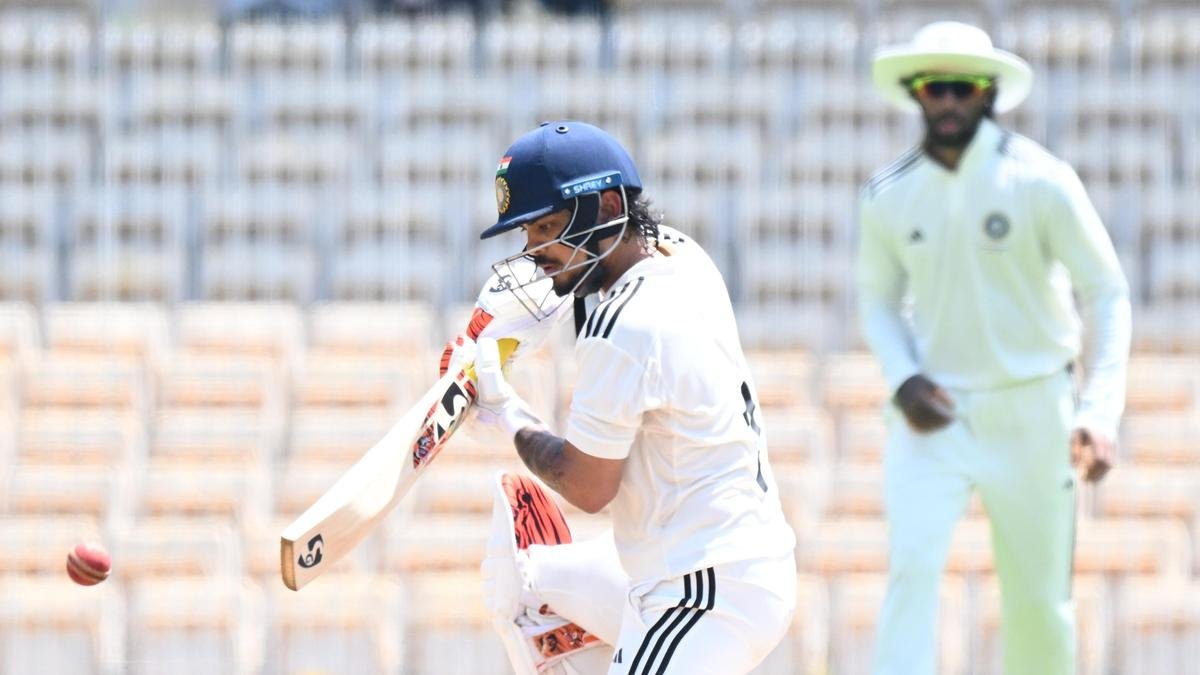
The year 2026 has been one of turnarounds for Ishan Kishan, and he completed his latest one at the M.A. Chidambaram Stadium.



In May, he was involved in a slight kerfuffle with the Chepauk crowd after his Sunrisers Hyderabad knocked out Chennai Super Kings at its home stadium. However, by the end of the East Zone captain’s marathon knock against South Zone in the Duleep Trophy 2026 final, that same home crowd was chanting his name with gusto, willing on his every run.
Indeed, by the time he came back to bat towards the end of the day after a heat-induced retirement, the cheers and whistles from the watching fans bore more than a passing resemblance to those that tend to greet a returning hero.
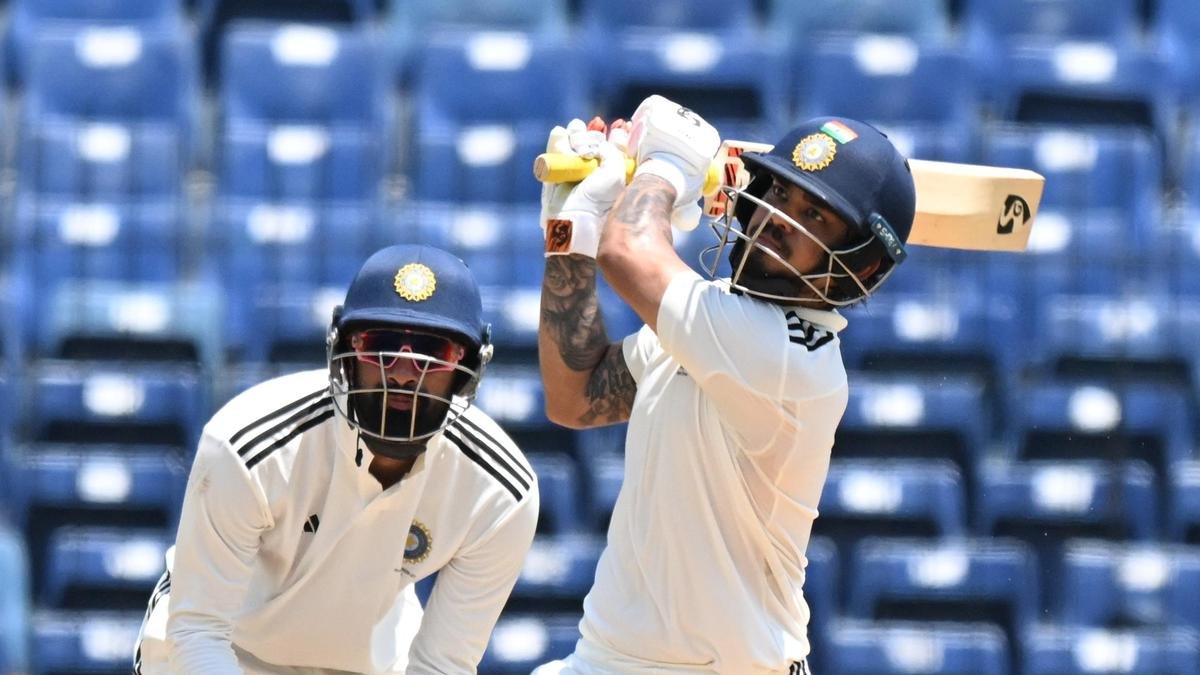
Kishan’s innings of 270 from 334 deliveries has left East Zone firmly in the driver’s seat to end a 14-year wait for the Duleep Trophy title.
“I think it was a very good innings. I would say it was very good because I always kept the team goal first,” Kishan reflected to the media after the second day. “There were many moments where I could have played shots, but I think when you are batting on such a big stage, it is very important to keep in mind the total that the team has decided.”
Kishan is often first associated with his natural talent. His ability is blinding, capable of destructive consequences that few can match when he is on song, and there was plenty of that on show in his innings through the first two days as well, particularly in the vigour with which he attacked spinners Shreyas Gopal and Tripurana Vijay.
ALSO READ | Ishan Kishan’s 270 helps East Zone end another dominant day over South
But what stood out more was his sheer hunger to stay at the crease and be the main man for his side.
It is a hunger that comes with the stage.
“Sometimes you don’t feel that motivation when you are playing internationals, but the moment you reach here and you see the hunger and motivation going around the ground, everyone is willing to perform or win matches, so it just changes the whole scenario,” Kishan had said before the match. “Being here, fighting for each and every wicket, you have to keep doing that.”
That hunger was most evident through passages of play where the 28-year-old was forced to curb his attacking instincts and put a price on his wicket. There was a hypnotic patience to the way he let short ball after short ball go as South Zone attempted to bounce him out, while he showed a similar battling quality to blunt the second new ball on the second morning.
“I was thinking that when they are trying to get me out or do something different, I can’t give them a wicket,” Kishan explained. “I can get out to a good ball; that’s totally fine, but when they are doing something and they are not getting anything from the pitch, and they are asking me to do something, that is where I don’t want to make mistakes.”
The necessity of that patience was further impressed upon him during the quarterfinal against NorthEast Zone. “When you play regular T20s you get into the habit of playing a lot of shots, which happened in my first innings when we were playing with NorthEast. I went to cut and got caught in two minds about whether I should hit or not,” he reflected.
“But the main part is when you are playing finals and you are already a two-format player for India, team members expect you to score runs. So it’s very important for us also to be in the middle, spend time in the middle, and get as many runs as you can for your team.”
Equally impressive was his leadership through those times. Kishan’s return to the Indian T20I set-up came on the back of his impressive captaincy of the Jharkhand white-ball team, and those qualities were on display as he helped his younger colleagues Shikhar Mohan and Kumar Kushagra through those passages of play.
“Ishan bhaiya was giving me a lot of advice while batting, telling me what shot is on and what is not,” Mohan said after adding 94 with him on the first day. “He played exactly as he was explaining to me, and it was a great innings.”
Kishan jokingly fumed that Mohan had ignored his advice not to play the sweep shot, with nearly disastrous consequences, before explaining, “He is a young guy making his debut in the Duleep Trophy final. It’s a big thing; cameras and media are there, everyone is going to look at him, so there is pressure. I was just trying to help him in a way that if you are already set and batting well, then why not score 100 in these important games?”
It is a habit he feels it is especially important for East Zone batters to develop. “I feel in East, we have this problem that we have never made this a habit. We were always scoring 70-80 good runs, but other teams’ batters who were set used to score big runs,” he explained. “Scoring big runs is a habit so if you are there in the middle, now just go for a big score like you should not regret afterwards that I got out on 80.”
Leadership, he mused, made him a better batter as well. “When we were young we used to think that our seniors would score runs, and we would also help. But now being part of the team, I feel it is very important that I have to take that role where I am going to score runs, where the team’s total is increasing because of me,” he said.
“So in doing all this, you grow a lot and you don’t understand it, but your mindset changes a lot. You become calm.“

“My job as a batsman is just to go there, watch the ball and react to it, not keep any expectations from myself,” says Ishan Kishan.
| Photo Credit:
R RAGU

“My job as a batsman is just to go there, watch the ball and react to it, not keep any expectations from myself,” says Ishan Kishan.
| Photo Credit:
R RAGU
His innings on Monday was the latest impressive domestic display Kishan has put in since dropping out of three-format national contention, and he said that the challenge of returning to domestic cricket is one that has motivated him.
“ Mujhe to bohot maza aaya (I had a lot of fun),” he said about returning to the domestic circuit.
“I had to work hard for two years. Sometimes when we play regularly for India, you just keep on playing in a flow. You might be a very good player, that’s why you are playing for India, but your growth stops at one place. So when you take one step back, you go back to domestic, you start from zero again,” he reflected. “You think that you have to be better, because there are so many players scoring runs, but to get back into the team the only option is to do much better than them.”
“Pressure has to come but now after playing for so long, we have understood that there is pressure in every match. Even if I go back home and play district, there will be pressure to not get out. So there is pressure everywhere, but the important part as a professional is how you deal with that pressure, whether you are enjoying it or not. If you are enjoying it, then you will be happy to stay in the middle.”
Having already become an example of how domestic performance can translate to a national-team return, conversation will naturally start about whether he can make a similar breakthrough at the Test level.
However, the East Zone skipper is not letting his mind go there, instead saying, “I think the best thing I am doing nowadays is not thinking about anything. My job as a batsman is just to go there, watch the ball and react to it, not keep any expectations from myself.”
Published on Sep 07, 2026