

2.7 lakh developers, 4,400 prototypes: What the second edition of Google Cloud’s Gen AI Exchange Hackathon delivered
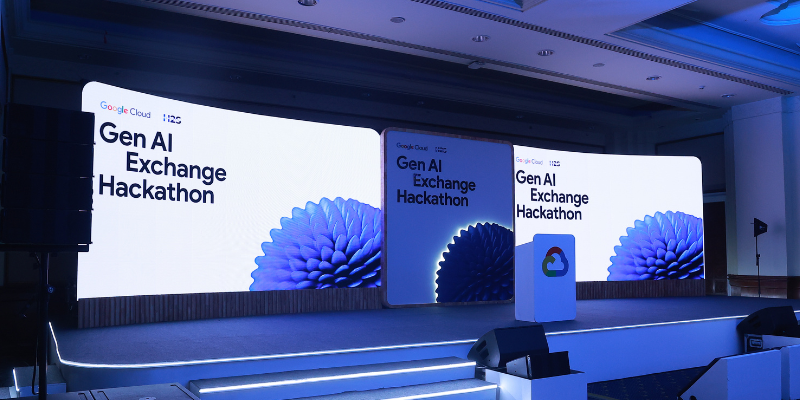
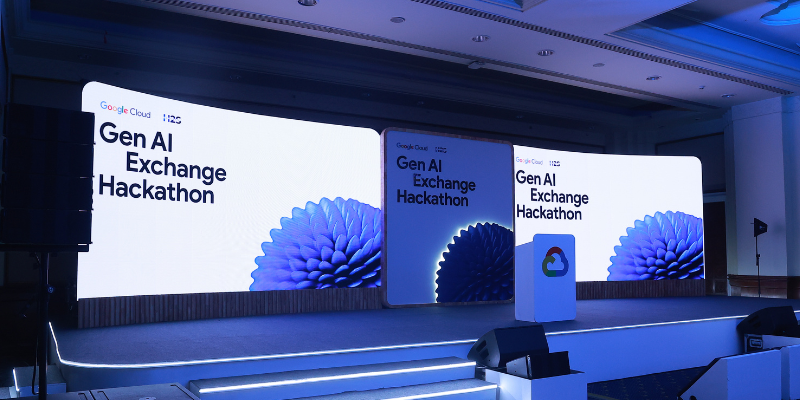

The hackathon drew over 2.7 lakh developer registrations and produced more than 4,400 AI prototypes. The top 100 teams were shortlisted for the final round held in Bengaluru, where 31 jury members from various industries assessed the solutions in person.
“The future of development isn’t something you will read about, it’s something you will build,” said Prashanth Subrahmanyam, APAC Lead, Developer Adoption at Google, addressing participants at the event.
The second edition of the program marked a significant uptick from last year, with organisers noting increased participation from both student developers and working professionals. Teams spent several weeks building their prototypes after completing training modules through the Gen AI Academy.
Industry partners shape problem statements
This year’s hackathon featured problem statements co-created with five partner organisations, a departure from the open-ended challenges typical of developer competitions. JK Cement brought challenges around industrial optimization, particularly in cement manufacturing processes. Let’sVenture sought solutions for startup evaluation and investment analysis.
EaseMyTrip focused on enhancing travel planning and booking experiences through AI. NASSCOM provided problem statements around technology adoption and skill development. The Maharashtra State Government contributed challenges related to citizen service delivery and governance efficiency.
Participants had access to Google Cloud’s AI toolkit including Gemma, Gemini, Vertex AI, and Gemini Code Assist throughout the development phase. The program structure included learning sessions, mentorship sprints, and iterative feedback before the final presentations.
“Many teams made effective use of Google Cloud’s AI tools and built with real user constraints in mind from API optimisation to cost and reusability,” said Sankalp Kaul, CTO at EaseMyTrip, adding that a few of the prototypes were already close to being market-ready.
<div class="externalHtml embed" contenteditable="false" data-val="”>
Winning solutions span industries
Five winners from the professional track presented enterprise-focused applications. Team Skippers developed an AI system for automating test case generation in healthcare software. Team May The Agents Be With You built an autonomous optimization system for cement plant operations addressing energy efficiency and environmental impact.
Team AIxpert’s PitchLense offers AI-powered investment analysis for startup evaluation. Team Ghostpye created TripAI, a personalized travel planner integrated with booking capabilities. Team Success developed GovernAI, a governance platform for citizen service delivery.
The student track featured five winners addressing social and accessibility challenges. Team Prompt-o-nauts built YouthMind, a mental wellness support platform. Team Oopsie Operators created ArtisanGully, helping local artisans reach digital markets.
Team Crewmate’s Legal SahAI simplifies legal documents for general understanding. Team Technopaths developed Parallax, a misinformation detection tool. Team Error_404_Not_Found built an AI-based career guidance system aligned with India’s job market.
Evaluation focused on deployment readiness
The 31-member jury evaluated projects across multiple parameters including technical innovation, feasibility of implementation, clarity of impact, and potential to scale beyond the prototype stage. Unlike competitions that prioritize novel approaches, this hackathon placed significant weight on whether solutions could transition to production environments.
Jury members represented various sectors including technology companies, venture capital firms, government bodies, and industry associations. The evaluation process involved live demonstrations, technical deep-dives, and questioning around deployment challenges.
Teams were expected to articulate on how they would handle real-world constraints such as data privacy, system reliability, user adoption, and cost-effectiveness at scale.
“What stood out was how many teams were thinking beyond prototypes,” said Rajan Arora, Director of Engineering at Intel, who was part of the jury. “Several solutions showed clear consideration for scalability, business viability, and real-world deployment, which isn’t always common in hackathon settings.”
Growing participation signals developer interest
The significant jump in registrations from previous editions reflects growing developer interest in generative AI applications. Organisers noted that this year’s submissions showed more sophistication in how teams approached problems, with greater emphasis on user research and market validation alongside technical development.
The program’s structure, which combined learning modules with hands-on building, appears to have resonated with participants. Several finalists mentioned that the mentorship sessions helped them refine their approaches and identify potential deployment challenges early in the development process.
The hackathon also served as a testing ground for Google Cloud’s AI tools in Indian contexts. Participants worked with the same platforms and APIs that enterprises use, giving them experience with production-grade AI infrastructure.
What’s next for winners
For student winners, the hackathon provides portfolio projects and industry connections that could prove valuable as they enter the job market or pursue entrepreneurial ventures. Professional track winners gain visibility within their industries and potential pathways to bring their innovations into their organisations.
Google Cloud indicated that it plans to continue offering similar initiatives in the future, with the aim of building a pipeline of AI developers capable of creating solutions tailored to India’s challenges and operating contexts.
The emphasis on practical applications, industry partnerships, and deployment readiness distinguishes the program from purely academic competitions, positioning it as a bridge between AI experimentation and real-world implementation.
Discover more from News Link360
Subscribe to get the latest posts sent to your email.