

The on-chain future: 5 trends that will shape blockchain in 2026

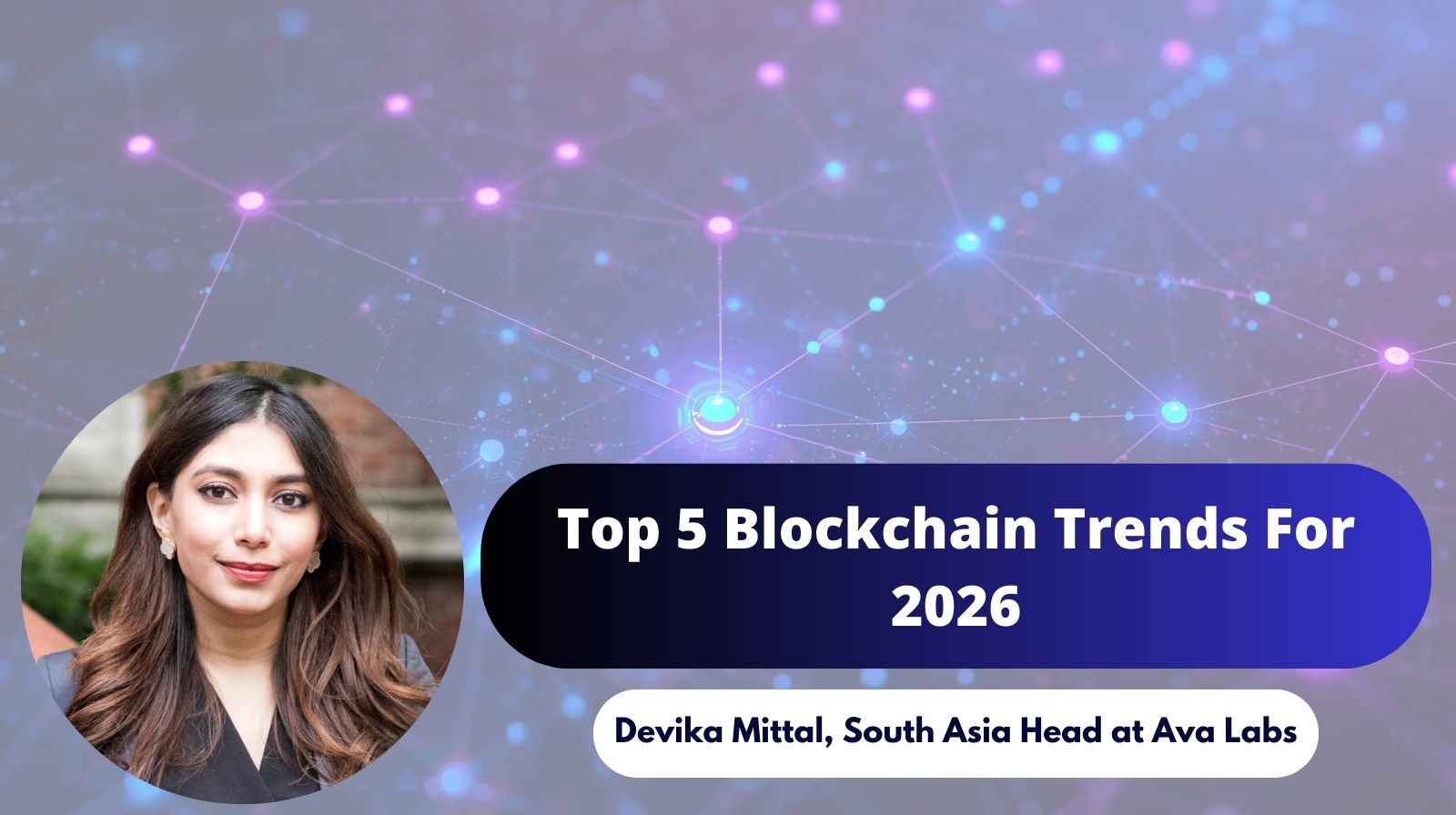

As we head into 2026, the shift isn’t about speculation or hype cycles. It’s about blockchain integrating with real economies, regulated institutions, and national digital stacks especially in markets like India.
Here are five trends that will define the on-chain future, with a closer look at what they mean for India and large enterprises.
1. Real-World asset tokenization becomes enterprise infrastructure
Tokenization is moving from experiments to execution.
Globally, assets like treasuries, private credit, and funds are already being issued on-chain. For enterprises, the value lies in faster settlement, transparent ownership, and programmable compliance. For institutions, it’s about unlocking liquidity and reducing back-office complexity. In India, this trend aligns naturally with the country’s digital-first approach to finance. As regulators explore frameworks for asset digitization and settlement modernization, tokenization could power use cases like infrastructure financing, MSME credit, real estate fractionalization, and supply-chain backed assets. We are seeing assets from equities, gold, real estate and more getting tokenized on Avalanche.
By 2026, enterprises won’t ask whether assets should be tokenized but which parts of their balance sheet belong on-chain.
2. Scalability unlocks consumer and enterprise use cases
Blockchain adoption doesn’t fail because of vision; it fails because of friction.
App-specific chains such as custom Avalanche L1s are finally removing that friction. Faster throughput and lower costs make it possible to build systems that can serve millions of users without sacrificing security. This matters enormously for India. With its scale-first digital mindset UPI, Aadhaar, ONDC any blockchain system must work at population-level volumes. Scalable on-chain infrastructure opens doors for enterprise-grade payments, loyalty systems, gaming, ticketing, and cross-border trade finance. This is possible when organizations build their own Avalanche L1s – public or private, permissioned or permissionless, and endlessly customizable and scalable.
By 2026, scalability won’t be a differentiator. It will be the minimum requirement for enterprise adoption.
3. Regulation becomes an adoption catalyst, not a constraint
The narrative around regulation is changing.
Instead of slowing blockchain down, clearer frameworks are giving enterprises the confidence to build. Globally, banks and asset managers are already launching regulated on-chain products and settlement layers. In India, while policy remains cautious, momentum is building around regulated use cases stablecoins for remittances, tokenized instruments for institutional settlement, and permissioned DeFi models for enterprises.
As regulatory clarity improves, 2026 will mark the rise of compliant on-chain systems where decentralization and governance coexist with legal accountability.
4. Blockchain + AI power trusted enterprise automation
AI is transforming enterprise operations but trust remains the missing layer.
Blockchain fills that gap. Immutable records, verifiable data trails, and on-chain permissions create accountability for AI-driven systems. This is especially critical in regulated environments like finance, healthcare, logistics, and public infrastructure. For Indian enterprises and governments alike, this convergence enables aud acknowledged automation AI systems whose actions can be audited, verified, and governed on-chain. We see this with early use cases such as Kite AI and Turf AI that are being built on Avalanche.
By 2026, blockchain won’t just store value. It will anchor trust for AI agents, enterprise workflows, and autonomous digital systems.
5. Sustainability and ESG become boardroom-level requirements
Sustainability is no longer optional for enterprises and blockchain is adapting fast.
Energy-efficient networks, on-chain ESG reporting, and programmable sustainability metrics are becoming part of enterprise procurement decisions. For global companies operating in India, ESG compliance increasingly determines access to capital and partnerships.
Blockchain platforms that can measure carbon impact, enable transparent reporting, and support green finance initiatives will see stronger enterprise alignment, especially in sectors like energy, manufacturing, and infrastructure. Avalanche is one of the top “green” chains in terms of carbon footprint, emitting roughly what a small apartment complex or a single corporate office building would annually.
By 2026, sustainability won’t be a checkbox. It will be a competitive advantage baked into on-chain design.
The bigger shift: Blockchain becomes invisible infrastructure
The most important change ahead isn’t technical; it’s philosophical.
Blockchain is no longer trying to disrupt everything at once. It’s integrating into enterprise stacks, national digital infrastructure, and regulated markets. In India, this mirrors how digital rails like UPI and Aadhaar quietly transformed daily life.
By 2026, the most successful blockchain systems won’t feel like “crypto” at all. They’ll feel like infrastructure. For developers, enterprises, and policymakers, the opportunity is clear: build for scale, compliance, and trust, not just innovation.
New consensus mechanisms (such as Proof-of-Stake and Proof-of-Space-and-Time) and environmental tracking capabilities illustrate that sustainability is now a competitive metric, not just a regulator mandate.
Blockchain platforms that can credibly reduce carbon impact, support on-chain carbon credit markets, or embed sustainable practices into smart contracts will capture more institutional and enterprise budget allocations especially where ESG compliance is mandatory.
The on-chain era is becoming a reality
By 2026, blockchain will no longer be confined to niche or speculative use cases. Instead, it will be woven into the fabric of digital finance, corporate systems, and emerging tech stacks. Key trends from tokenized assets and scalable architecture to AI integration and ESG adherence point toward a future where on-chain infrastructure underpins global value systems.
Whether you’re a developer, investor, or business leader, understanding these trends will be critical to designing systems, strategies, and services that thrive in the next era of blockchain innovation.
(Disclaimer: The views and opinions expressed in this article are those of the author and do not necessarily reflect the views of YourStory.)
Discover more from News Link360
Subscribe to get the latest posts sent to your email.