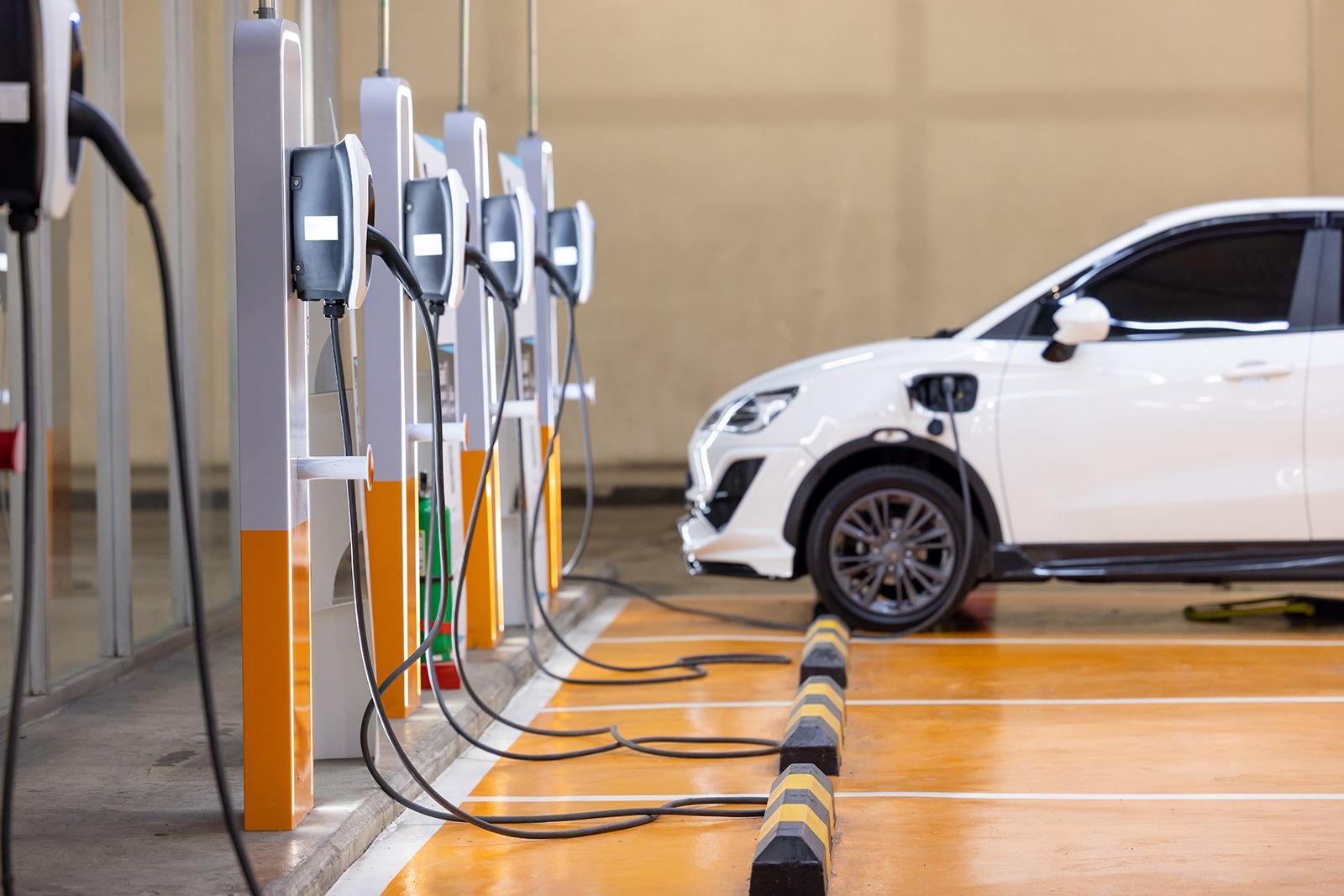

Out of these, around 70% of these units have been slow charging stations. Karnataka had the highest number of charging stations installed in the country, followed by Maharashtra and Uttar Pradesh.
The reasons behind the rising concentration of public slow chargers can be attributed to technology available during the time. Recent years have seen many charge point operators come up with fast charging solutions that have eliminated range anxiety in EV owners.
For context, slow chargers take around 8-12 hours to fully charge a vehicle, depending on the type. While faster DC chargers can charge an EV to 80% in under an hour, subject to vehicle category.
In terms of use cases, fast chargers are preferred to quickly charge vehicles on highways and other public charging stations by EV owners. This has resulted in the government shifting focus under its PM E-DRIVE Scheme.
.thumbnailWrapper{
width:6.62rem !important;
}
.alsoReadTitleImage{
min-width: 81px !important;
min-height: 81px !important;
}
.alsoReadMainTitleText{
font-size: 14px !important;
line-height: 20px !important;
}
.alsoReadHeadText{
font-size: 24px !important;
line-height: 20px !important;
}
}

Under this scheme, which was launched in July 2025, an initial outlay of Rs 2,000 crore was earmarked to set up public EV charging infrastructure from the overall scheme outlay of Rs 10,900 crore, with major focus on fast charging for all vehicle categories.
However, implementation has been slow. “While the policy (PM E-DRIVE) has come out, there has been no implementation of that. No tenders have been floated or no charge points have been procured in the segment (2W and 3W),” noted Akshay Shekhar, Co-founder and CEO at Kazam.
Shekhar also noted that chargers that were implemented four or five years back are also becoming redundant. “They have a lot of issues in terms of servicing, uptime, etc. which ultimately results in poor experience for consumers and drivers.”
But the ecosystem is set to improve as EV adoption increases. Charge point operators that have seen low return on investment (ROI) are seeing rising usage of their charge points, according to Shekhar, though marginal. “But because there is a slight uptick going to 4-5%, you see more charge points and the newer charge points have great experience for drivers coming in.”
Edited by Affirunisa Kankudti
Discover more from News Link360
Subscribe to get the latest posts sent to your email.