

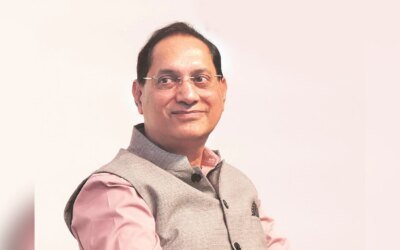
The piano man who wants to bring Harvard to Madurai
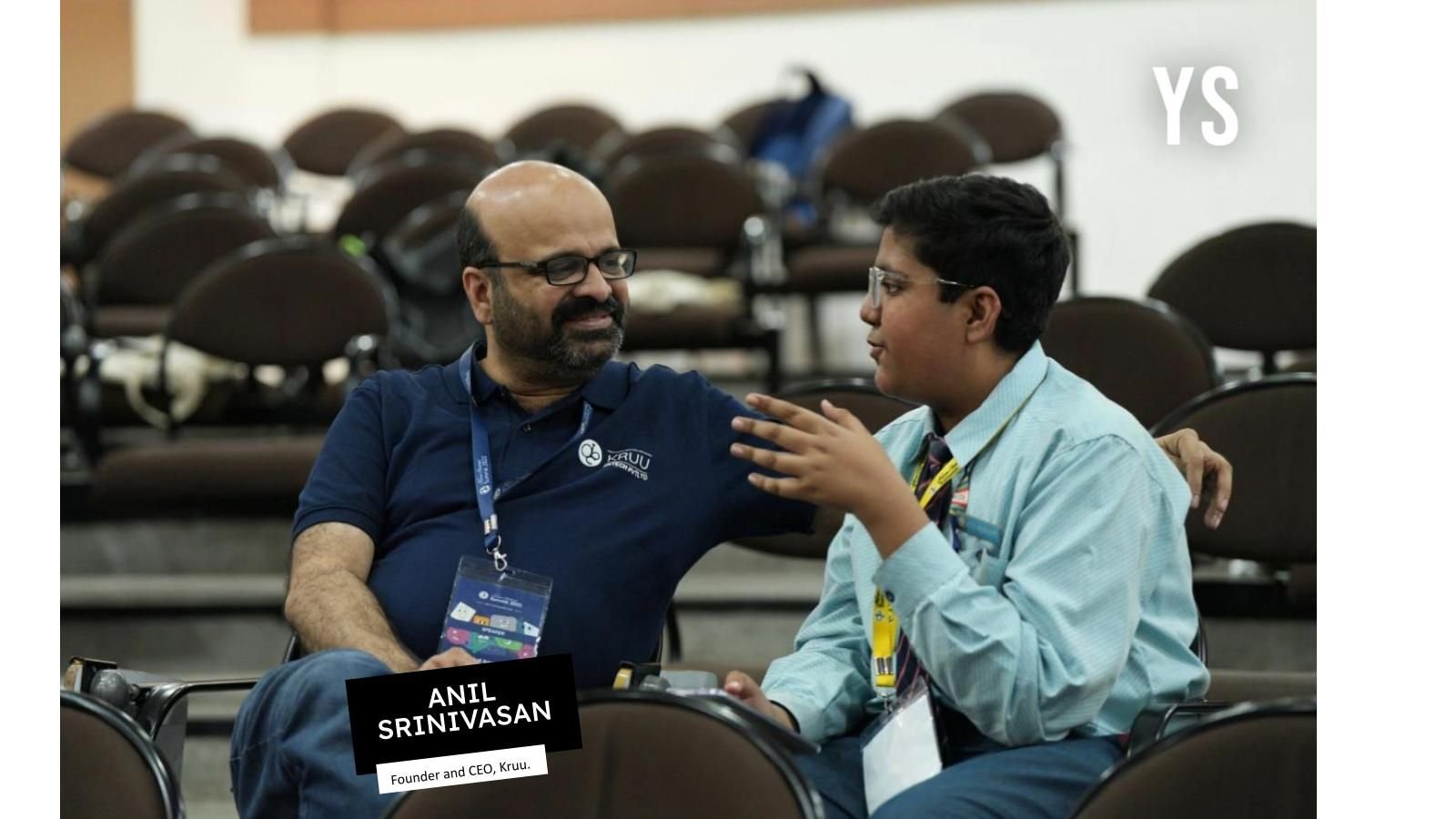

It was 2021, and the pandemic was at its peak. But it was not Covid that brought the Chennai-based musician and educator to death’s door. No one knew, not even the doctors treating him. They were baffled by his health parameters and had given up, even wondering loudly near him if his bed would be better utilised by a Covid patient who still had some hope of survival. They had given up on him.
During those tense weeks, Srinivasan noticed something that stuck with him. The doctor with prestigious degrees from abroad was the one with the least empathy. The one who had studied in India and was already his friend showed him the most kindness. It made him think about what access to the best institutions really means, and whether it shapes us the way we assume it does.
Lying in hospital, desperate for distraction from the pain, his mind kept returning to the problem: why do some children get access to the best teachers and resources while others don’t?
“I’m an academic, I know so many academics and professors around the world. I thought why not connect students with these people,” he says. “What if I can bring the Harvard professor and Stanford professor I have the privilege of knowing and get them to teach a child in Srikakulam or Madurai?”
He survived. And in 2022, he launched Kruu.
The name comes from the Sanskrit word for ‘to do’. It captures what Srinivasan believes is broken in Indian education: too much listening, and not enough doing.
On the platform, students from Class 6 to 12 don’t sit through lectures. They work on projects that stretch over weeks, guided by faculty from Oxford, IIT Madras, NYU, and the National University of Singapore, among others. They build apps, design prototypes, analyse data, and develop policy proposals. Teachers join them not as supervisors but as fellow learners.
High-school kids from Dindigul, a dusty town in Tamil Nadu, are turning raw telescope data into visual maps of distant galaxies. Their guide sits 13,000 kilometres away, at the University of California. Students from Tanzania, Qatar, and Sri Lanka have teamed up with faculty from Syracuse University to study media bias. Others are working with sustainability researchers from IIT Madras to design green solutions for their schools and communities.
“This is what access looks like when it is taken seriously: not guest talks or competitions, but sustained academic work where students are trusted to build, question, and contribute—together,” says Srinivasan.
<figure class="image embed" contenteditable="false" data-id="588147" data-url="https://images.yourstory.com/cs/2/c5c652a0fb5a11eca125d7821ea2fbc4/Screenshot336-1768542689811.png" data-alt="Kruu" data-caption="On the Kruu platform, students from Class 6 to 12 don’t sit through lectures. They work on projects that stretch over weeks, guided by faculty from Oxford, IIT Madras, NYU, and the National University of Singapore, among others. They build apps, design prototypes, analyse data, and develop policy proposals. Teachers join them not as supervisors but as fellow learners.
” align=”center”> On the Kruu platform, students from Class 6 to 12 don’t sit through lectures. They work on projects that stretch over weeks, guided by faculty from Oxford, IIT Madras, NYU, and the National University of Singapore, among others. They build apps, design prototypes, analyse data, and develop policy proposals. Teachers join them not as supervisors but as fellow learners.
The accidental educator
To many, Srinivasan is better known as a musician. He is the man who drags pianos into concert halls and plays Carnatic music on a Western instrument. But he calls himself an educator who stumbled into music.
His first venture, Rhapsody, worked with schools to teach maths and science through music to children from kindergarten to primary grades. Kruu builds on that foundation but aims higher, drawing on his years as a PhD student at Columbia University and his current role as a professor of entrepreneurship at Krea University.
Before jumping in, Srinivasan enrolled in online courses to understand how digital education worked. He was convinced that video lectures wouldn’t cut it. Students needed to get their hands dirty on real projects.
“The idea is for students to try their hands at experiential learning. We need to give students something tangible to hold on to,” he says. “Kruu will bring the world’s best professors to guide our children, not by taking classes but by letting them learn by doing.”
The entire platform is built around design thinking. Students move through research, ideation, prototyping, and testing. They analyse data, build artefacts, explain their choices, and present their findings. Trained mentors offer live support throughout. Experts on the panel include Prof Ashwin Mahalingam of IIT Madras, Arun Jain of Intellect Design Arena, Prof Vish Krishnan of the University of California, and faculty from the National University of Singapore, Ashoka University, and Macquarie Business School, among many others.
Current projects on the Kruu platform include powering smart homes with data, making air purifiers from household items, designing sustainable green spaces, and figuring out how citizens can become civic superheroes.
“Overall, this model can be a great leveller, because problem solving is a talent that every child can possess. You don’t have to be hyper educated. You don’t have to be a specialist,” says Srinivasan.
Unexpected patterns
The platform’s results have been interesting.
Girls finish projects much faster than boys. Students in Tier III and IV cities outperform those in metros. And the best performers come from average CBSE schools, not expensive IB programmes.
“Boys usually tend to leave at about 60%,” says Srinivasan. “Second, in Tier III and IV places, the thirst for learning is really high. They are actually taking it very seriously and there is no other distraction as well. Third, our maximum high performers are students from the average CBSE schools, not the fancy IB schools.”
There is a deeper point here about timing. Srinivasan believes adolescence is when such interventions matter most.
“This intervention is needed during adolescence because it helps figure out the direction in which your life will go—when you are 13, rather than at 40,” he says. “By doing a project you will also learn what you don’t want to do.”
In a country where lakhs of students pursue engineering without knowing what it is or whether they have any aptitude for it, that might be the most valuable lesson of all.
<figure class="image embed" contenteditable="false" data-id="588148" data-url="https://images.yourstory.com/cs/2/c5c652a0fb5a11eca125d7821ea2fbc4/Screenshot351-1768542766764.png" data-alt="Kruu" data-caption="
In a post-AI world, problem solving and critical thinking are going to be big. And creativity will be the overarching philosophy, and this is what Kruu is focused on, says Anil Srinivasan, Founder and CEO, Kruu.
” align=”center”> In a post-AI world, problem solving and critical thinking are going to be big. And creativity will be the overarching philosophy, and this is what Kruu is focused on, says Anil Srinivasan, Founder and CEO, Kruu.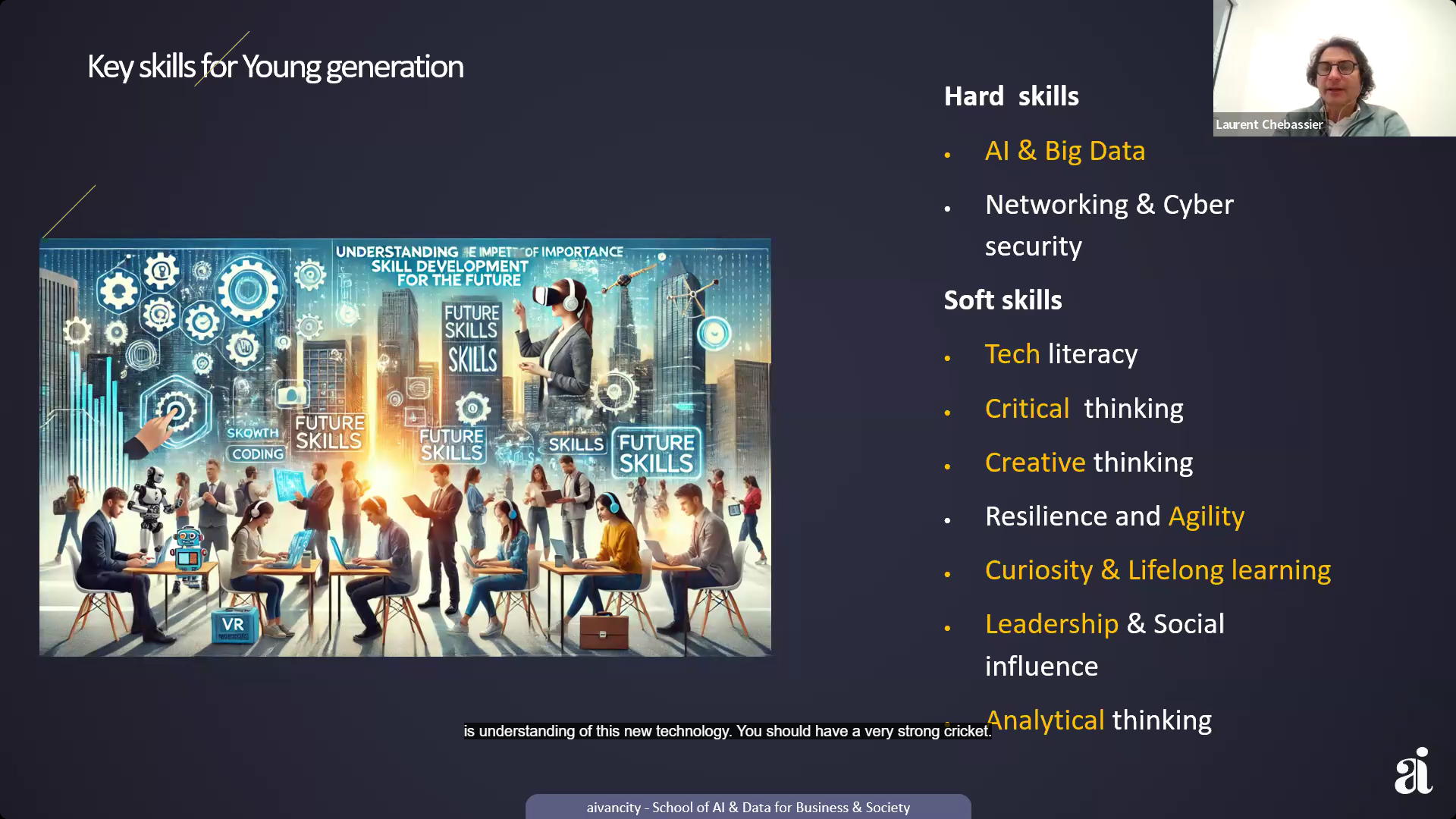
Scale and ambition
Kruu has reached over 450 schools across India, Sri Lanka, the Maldives, parts of Africa, and Vietnam. Of these, 420 are in India. Over 4.5 lakh students have gone through its programmes. Schools pay through customised subscriptions; parents can sign up their children directly for Rs 3,500 a year.
The investor list reads like a who’s who of India’s startup world: Girish Mathrubootham of Freshworks, Mithun Sacheti of CaratLane, BV Jagadeesh of Kaaj Ventures, Chaitanya Kalipatnapu of Emeritus, Mekin Maheshwari of Udhyam, and Praveen Sharma of Accenture.
Beyond schools, Kruu has struck partnerships with global universities. Through a tie-up with Boston-based Excelerate, students can access Saint Louis University’s experiential learning ecosystem, including virtual internships, skill-building courses, and scholarship pathways. A partnership with the Illinois Institute of Technology has spawned the K2 Virtual Incubation Lab, where students tackle challenges in science, technology, design, and society under faculty mentorship. Several other global universities are in talks to contribute through project design, short-term courses, and incubation support.
Srinivasan is also pushing into higher education. ‘College in the Cloud’ embeds project-based learning into university programmes, offering masterclasses with global professors, guided projects with mentorship, showcases and certifications, and pathways into internships, research, and startup incubation. It is open to students across STEM, design, entrepreneurship, social sciences, humanities, and policy.
The startup is also building InvestEd, an AI-powered tool to assess startup ideas based on various parameters.
The creativity imperative
Sean Branagan, a serial entrepreneur who directs the Center for Digital Media Entrepreneurship at Syracuse University, is among the experts on Kruu’s panel. He was recently in Chennai to deliver a masterclass on entrepreneurship.
His advice for young founders is blunt: Start with what you have, not what you don’t. Don’t try to be good at things you are not good at; give up. Start with your means. Take tiny little risks, not big ones. Share your idea/story with everybody; tell it differently. Co-create the idea, shape it. Lastly, take action, for action creates opportunity—instead of waiting for an opportunity and then taking action.
These are the kinds of lessons Srinivasan hopes will stick with students long after they leave Kruu. In a world where artificial intelligence can churn out competent answers to any question, he believes the real premium will be on creativity and independent thought.
“In a post-AI world, problem solving and critical thinking are going to be big. And creativity will be the overarching philosophy,” he says.
It is a philosophy built on a conviction Srinivasan has held since his days teaching music to children: real learning happens when students stop watching and start doing. And it took a near-death experience to finally turn that conviction into a company.
Discover more from News Link360
Subscribe to get the latest posts sent to your email.