


Budget 2026: Beyond stimulus, India Inc seeks structural reforms to spur consumption


With the Union Budget less than a week away, consumers, retail businesses, and D2C brands are hoping for more announcements to fuel the consumption story further. Apart from stimulus and tax benefits, India Inc is also seeking structural reforms to spur demand and consumption.
Rural reforms
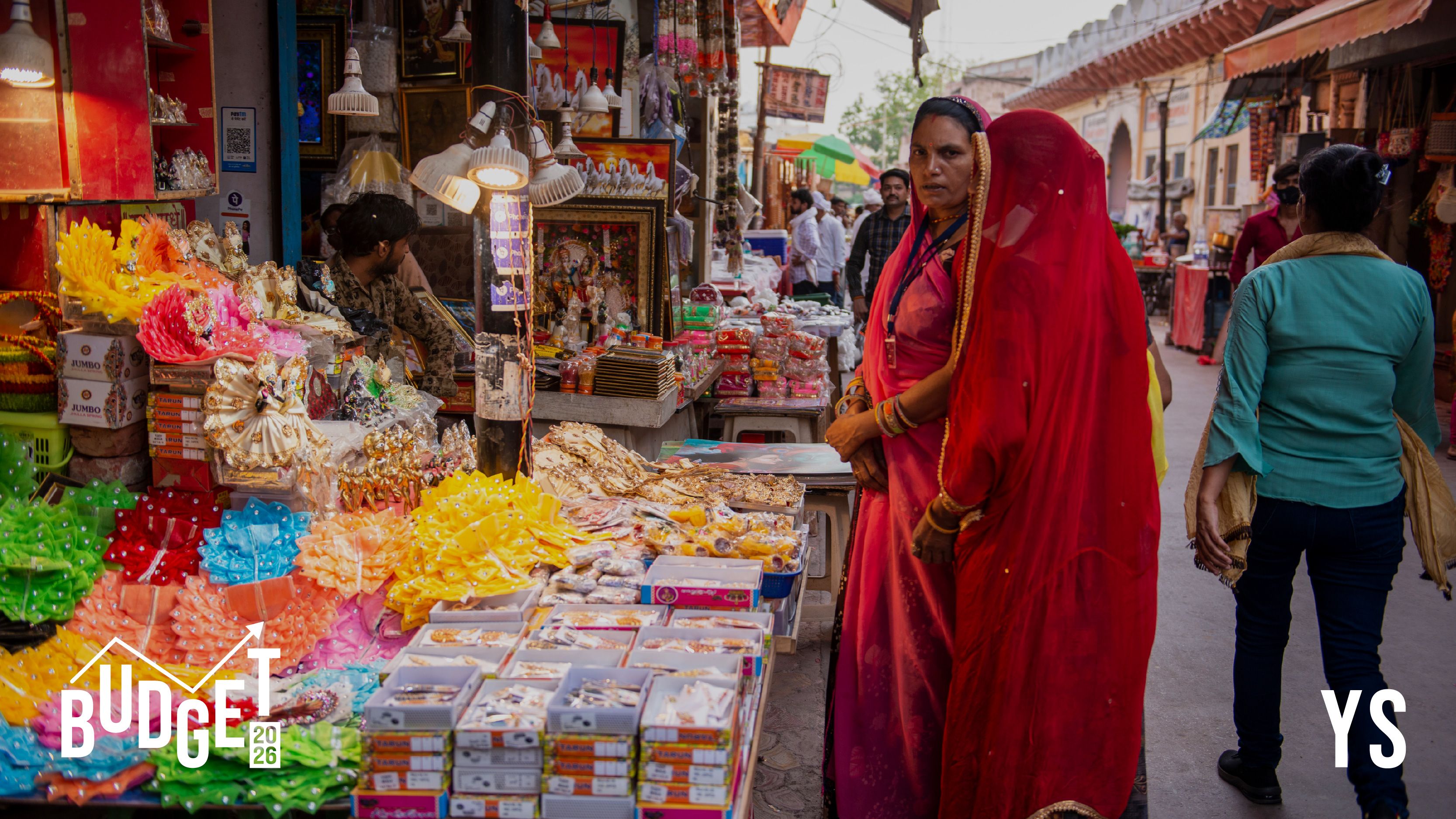
The Indian consumption story is incomplete without the rural consumers who represent a large part of the market.
According to NielsenIQ’s second quarter snapshot, the Indian FMCG industry delivered a robust 13.9% value growth in Q2 of 2025 compared to the previous year. This was fuelled by demand from the rural market, which has now outpaced urban markets for the sixth consecutive quarter.
The rural markets recorded a surge in smaller pack purchases with unit growth outpacing overall volume. This signals that, while rural consumers are willing to buy, they are also downsizing to manage tight budgets.
This behaviour validates the need for a critical shift in policy: rural India does not need temporary cash handouts that lead to a one-time purchase. Instead, it requires deep-rooted structural reforms such as investments in local industries, skilling, and infrastructure that create sustainable livelihoods, which in turn lead to increased consumption.
“From our perspective as a consumer-focused manufacturer, the Budget should prioritise rural employment that is continuous, skill-based, and linked to local economic activity rather than seasonal support alone,” says Prabhu Gandhikumar, Co-founder of TABP, a snacks and beverages brand in the Tier II and III markets.
He adds, “We would like to see stronger emphasis on rural infrastructure execution, agri-linked industries, food processing, and decentralised manufacturing, all of which generate steady employment in and around Tier II and III markets.”
Businesses are also calling for sustained and stronger implementation of schemes such as MGNREGA and PM Kisan, as well as continued investment in rural infrastructure under Pradhan Mantri Gram Sadak Yojana, to create steady income flows.
Logistics push
While quick commerce has grown rapidly in urban areas, moving goods is slow, unpredictable, and expensive in the heartland. To bridge this gap, the industry is batting for operationalisation of a National Digital Logistics Grid.
The digital infrastructure can tap into shipment data, geospatial information, customs and compliance layers, and real-time carrier performance into a secure, interoperable backbone. Private-sector companies and startups can build on top of this network to further provide solutions, especially those that can be powered by AI.
Sidhant Keshwani, Founder and CEO of Libas, an apparel brand, believes the National Grid is a “game-changer” that would enable businesses to reach customers in Tier II and III cities with the same “ultra-fast speed” seen in metros.
Industry players are also demanding uniformity of inter-state road transport regulations, including faster toll movement and consistent enforcement for ease of transport. Warehousing efficacy has suffered from fragmented state level approvals, zoning limitations, and restricted operating hours, and this has to be addressed, they say.
“The Budget could build on the National Logistics Policy by pushing single window clearances, enabling 24X7 warehouse operations, and incentivising large-scale, technology-enabled logistics parks under the PM GatiShakti framework, particularly near Tier II and III demand centres,” says Varun Gupta Co-founder, GOBOULT, a wearables brand.
This sentiment is echoed by Pankaj Makkar, Managing Director at Bertelsmann India Investments, who emphasises that income-generating infrastructure spend creates more durable purchasing power than short-term consumption stimulus.
Tax reforms and other incentives
Meanwhile, the ‘Make in India’ ambition faces a technical hurdle: the inverted duty structure.
EY India flags that, while GST 2.0 helped rationalise tax rates, manufacturers are still trapped in a system where inputs and services are often taxed at 18% while finished goods sell at 5%.
Crucially, manufacturers cannot claim refunds on the GST paid for services (like advertising) or capital goods, leading to blocked working capital.
“Greater stability and clarity on customs duties for essential FMCG inputs, faster customs processing through digitisation, and rationalised compliance can reduce input cost volatility and support stable pricing for mass-market consumers,” says Makkar of Bertelsmann India Investments.
Meanwhile, Vega Auto is calling for a GST reduction on essential safety gear from 18% to 5% to ensure safety remains affordable to consumers and gig workers. Beverage brand House of Bindu seeks targeted incentives for indigenous beverage brands to level the playing field so that they can compete against global giants with deep marketing pockets.
While recent GST reforms moved staples like paneer to the 0% slab and ghee to 5% to fortify the sector against external trade shocks, the spokesperson of dairy brand Milky Mist says rationalising taxes on ‘hidden’ inputs like packaging and veterinary services is vital to keeping dairy prices stable.
If the previous budget was about putting money in consumers’ pockets, India Inc wants Budget 2026 to ensure the products reach consumers faster, cheaper, and in a more efficient manner.
Edited by Swetha Kannan
Discover more from News Link360
Subscribe to get the latest posts sent to your email.