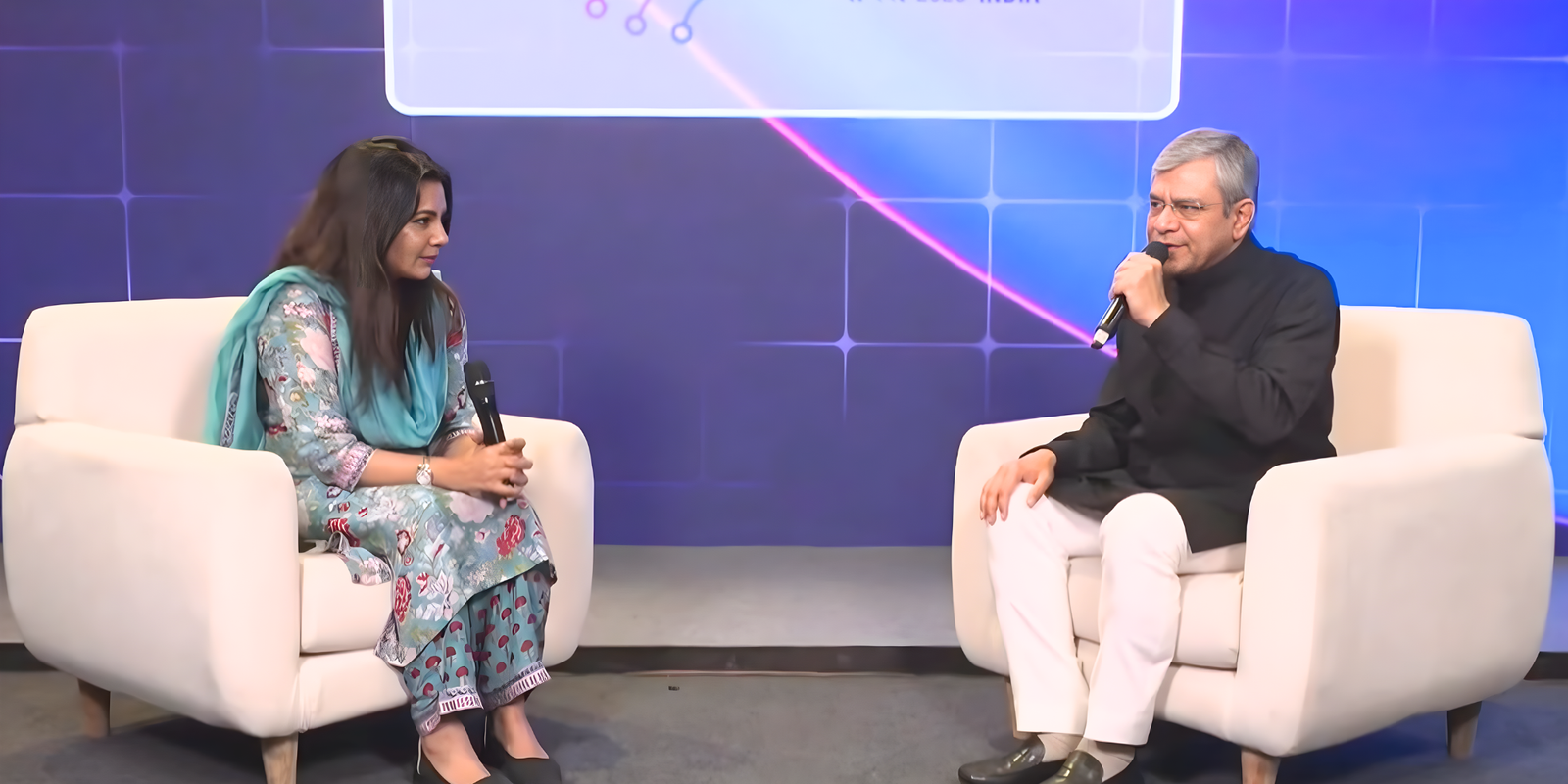
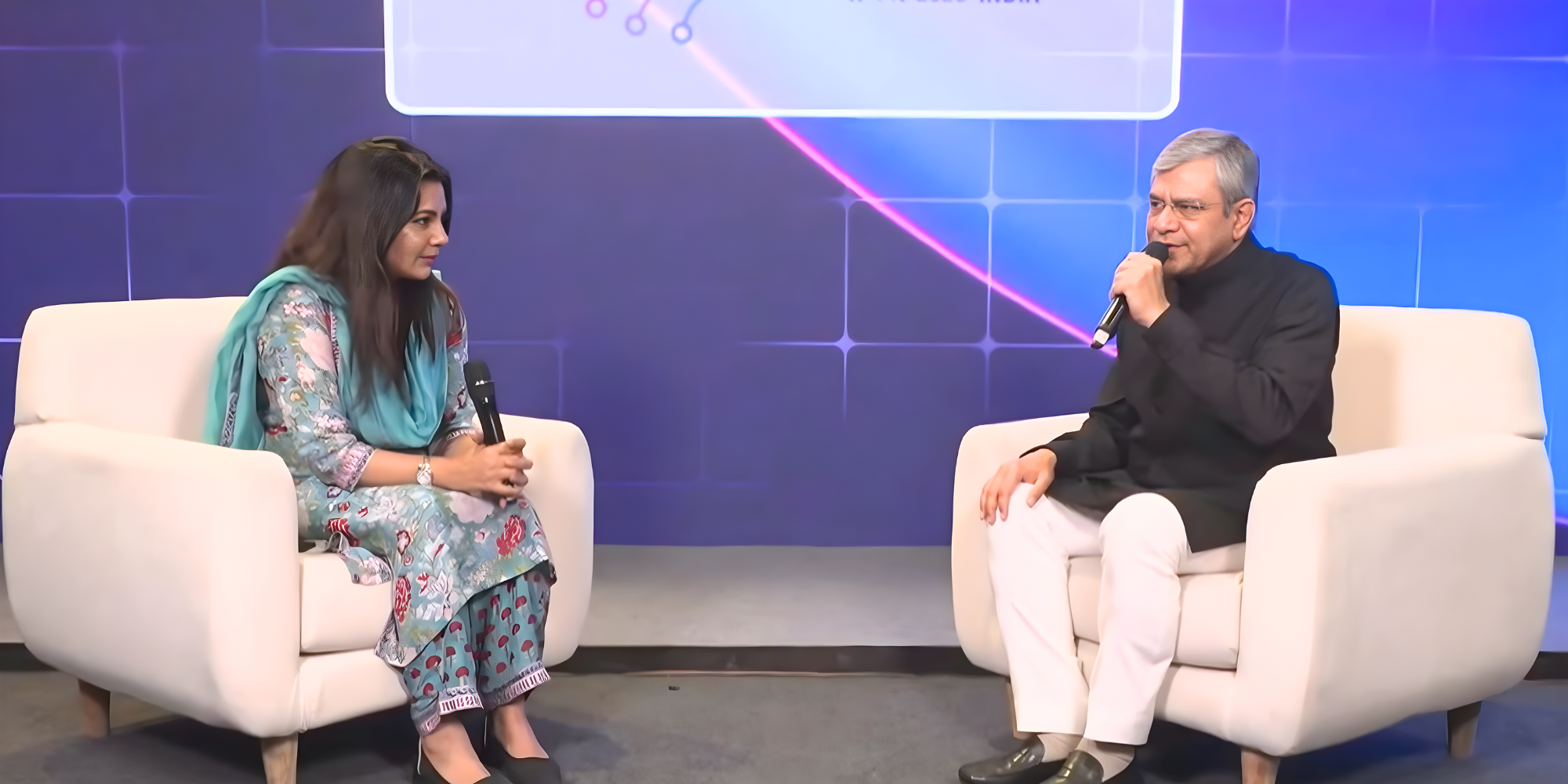

Responding to a question about why this is “India’s AI moment,” Vaishnaw pointed to momentum across what he described as the five layers of the AI stack, alongside growing investor confidence and a wave of founders building solutions designed for population-scale impact.
“We have seen huge interest from investors, from VCs, from young, very young people who are so energetic and so positive about using this new technology,” he said, adding that India’s next breakthroughs could shape models for healthcare and agricultural productivity that the world can adopt.
Capital commitments: infra and deep tech in focus
Vaishnaw cited significant capital commitments linked to the broader AI push—particularly in the infrastructure layer and the venture ecosystem funding applications and deep tech.
He referenced close to $200 billion in investments committed toward the infrastructure layer, and about $17 billion in commitments for deep tech and the application layer, where he said venture capital firms are actively looking to invest.
His argument was simple: large commitments signal that global investors see India as capable of producing AI-led innovations and deploying them at scale—an area where India’s large, diverse user base can accelerate real-world validation.
Growing talent pipeline
Pressed on what he would tell entrepreneurs and developers—especially young builders in the room—Vaishnaw emphasised talent as a long-term advantage, and suggested that the education system is being readied for what he called the “fifth industrial revolution.”
“The talent pipeline is going to increase even further,” he said. According to him, course curricula are being revised, with the aim of preparing students for the next wave of industry changes driven by AI.
The focus, he indicated, is not just to create awareness of AI tools, but to ensure students can build with the technology in practical ways.
Making tools accessible for students
Vaishnaw also hinted at a next phase of government work—describing plans for the “next version of the AI mission.” In his telling, the approach borrows from how India has pursued strategic capacity in areas like semiconductors and telecom—pairing policy direction with ecosystem enablement.
He suggested that future efforts could include providing AI solutions and AI technology-based devices that students can use to learn, experiment, and build.
The larger goal, he said, is AI diffusion—spreading access and capability beyond a narrow band of early adopters.
“AI diffusion is going to be a big thing in our country,” he said.
What startups can expect
When asked what startups across the AI spectrum should expect from the government—especially as ministries increasingly back entrepreneurship and manufacturing—Vaishnaw’s answer was direct: support will continue, and the scale will grow alongside the ecosystem.
“A lot of support,” he said, reiterating the VC funding commitments he had mentioned earlier. He also pointed to the growth of India’s startup ecosystem over the past decade, saying the country now has more than two lakh startups, compared to only a few hundred a decade ago.
In his view, the world’s recognition of India’s entrepreneurial energy is now a strategic asset—one that can translate into more investment, more global partnerships, and faster adoption of Indian-built AI solutions.
Semiconductor commercial production
On semiconductors, Vaishnaw indicated that progress is moving from planning into execution. He said that commercial production would begin soon from one of the 10 units, and suggested more details would follow in a future announcement.
“Stay tuned for the next announcement when that commercial production will start,” he said.
He also projected that India could see a meaningful pipeline of deep tech innovation in this space, stating that around 50 deep tech startups could emerge in the next few years as the ecosystem strengthens.
How Vaishnaw uses AI
The conversation ended on a lighter note, with Shradha asking how the minister uses AI in everyday life.
“I prefer to think with my brain,” Vaishnaw replied. When prompted on whether he uses AI at all, he clarified that he does use it—but keeps the core thinking to himself.
“I use it, but thinking work I do myself,” he said.
If India’s AI moment is defined by what happens next, Vaishnaw’s message to founders was clear: the ecosystem is expanding, funding interest is rising, and the expectation is to build solutions that can serve not just a market—but a population.
Discover more from News Link360
Subscribe to get the latest posts sent to your email.