
This network spans wood sourcing, cutting, turning, sanding, colouring, and assembly—much of it managed within household clusters. Through the One District One Product (ODOP) framework, the craft has gained structured access to exhibitions, credit, and toolkits, helping artisans reach markets beyond the district.
A Fourth-Generation Artisan
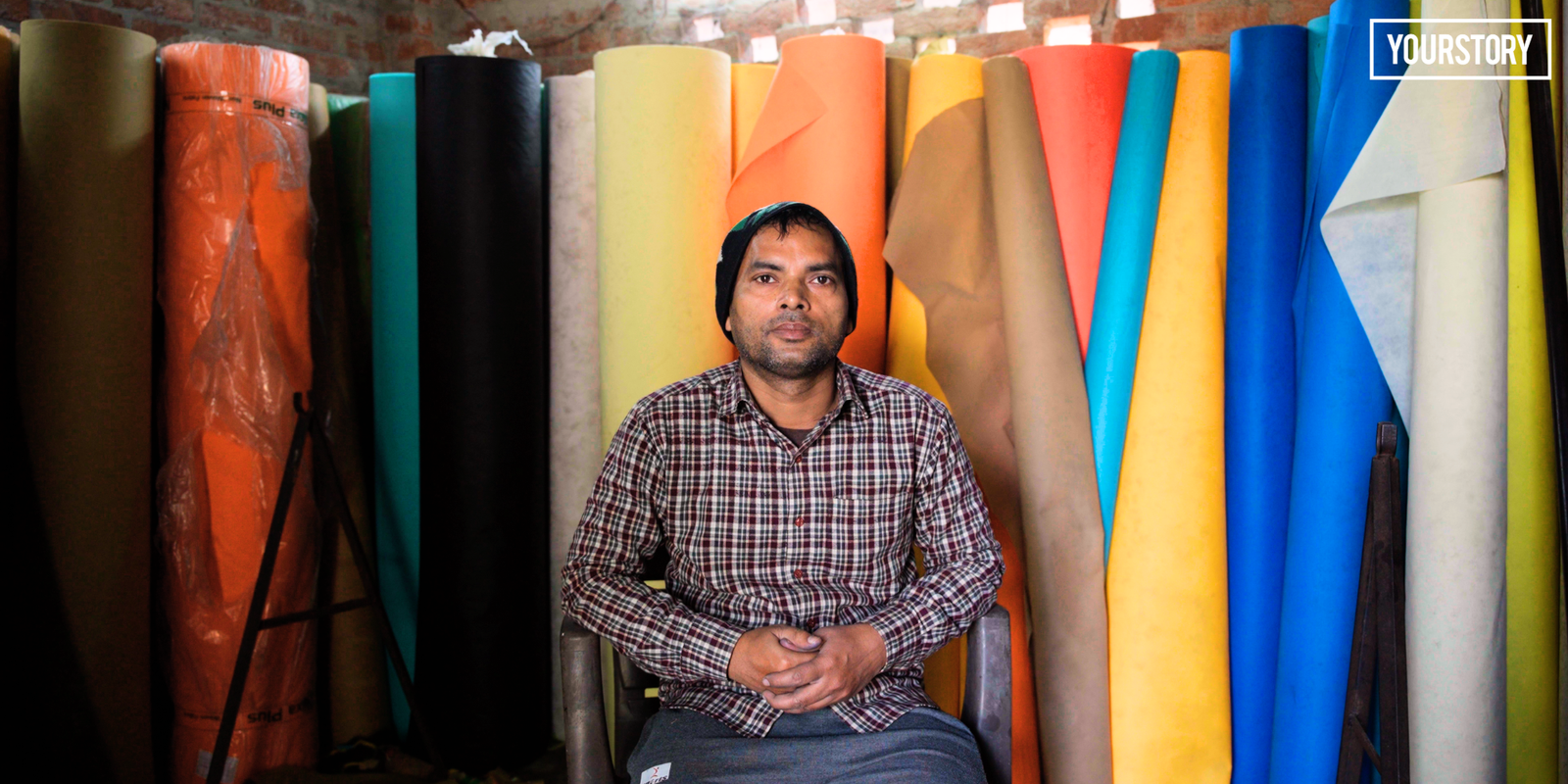
Balram Singh, a fourth-generation artisan, represents this continuity. “I learned by standing beside the lathe after school,” he recalls. “At first I only watched. Slowly, my hands learned what my elders already knew.”
The cluster also benefits from the efforts of senior entrepreneurs like Dheeraj Dwivedi, who advocate strengthening shared facilities and collective growth within the sector.
Wood, Tools, and Technique
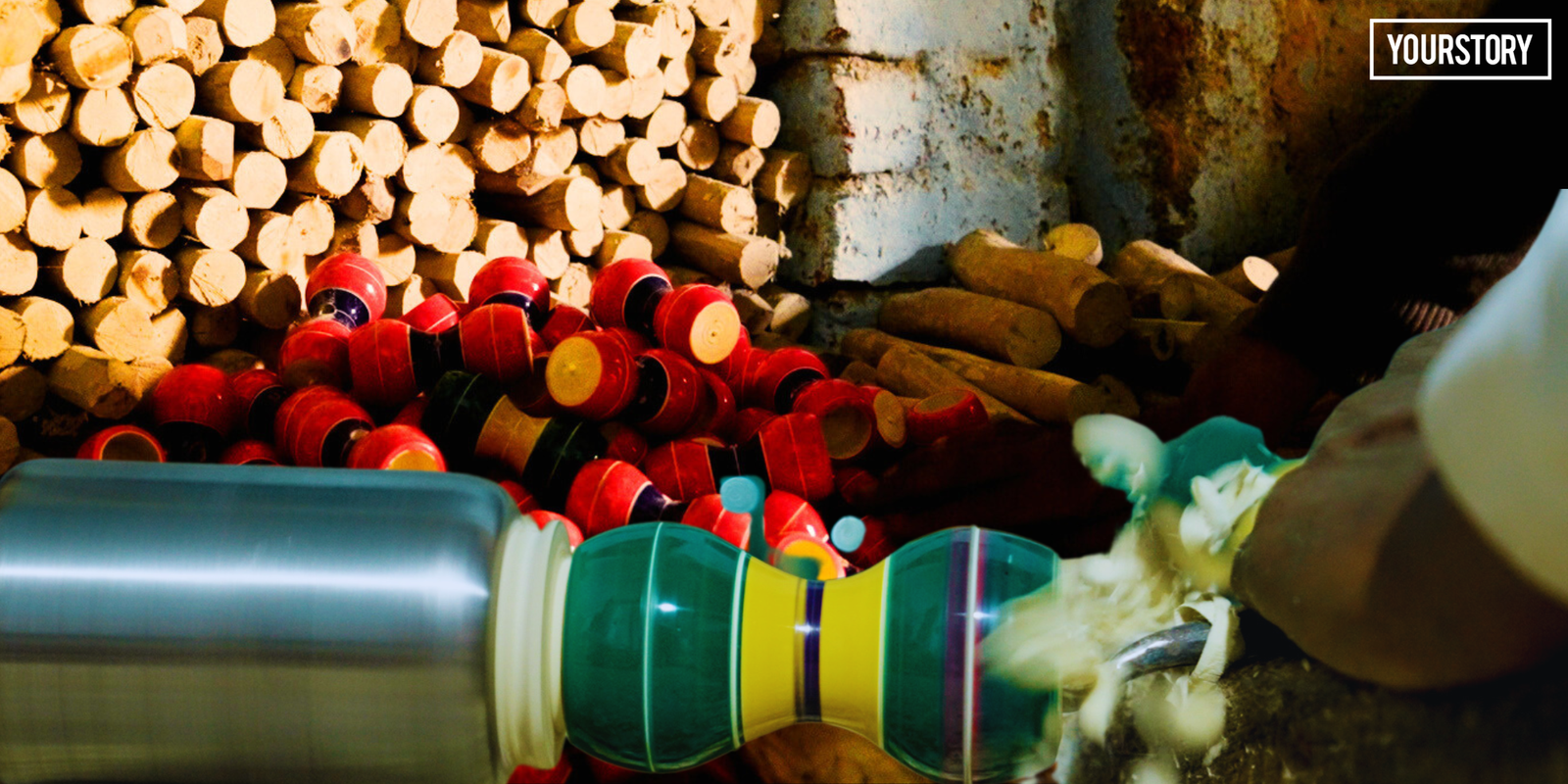
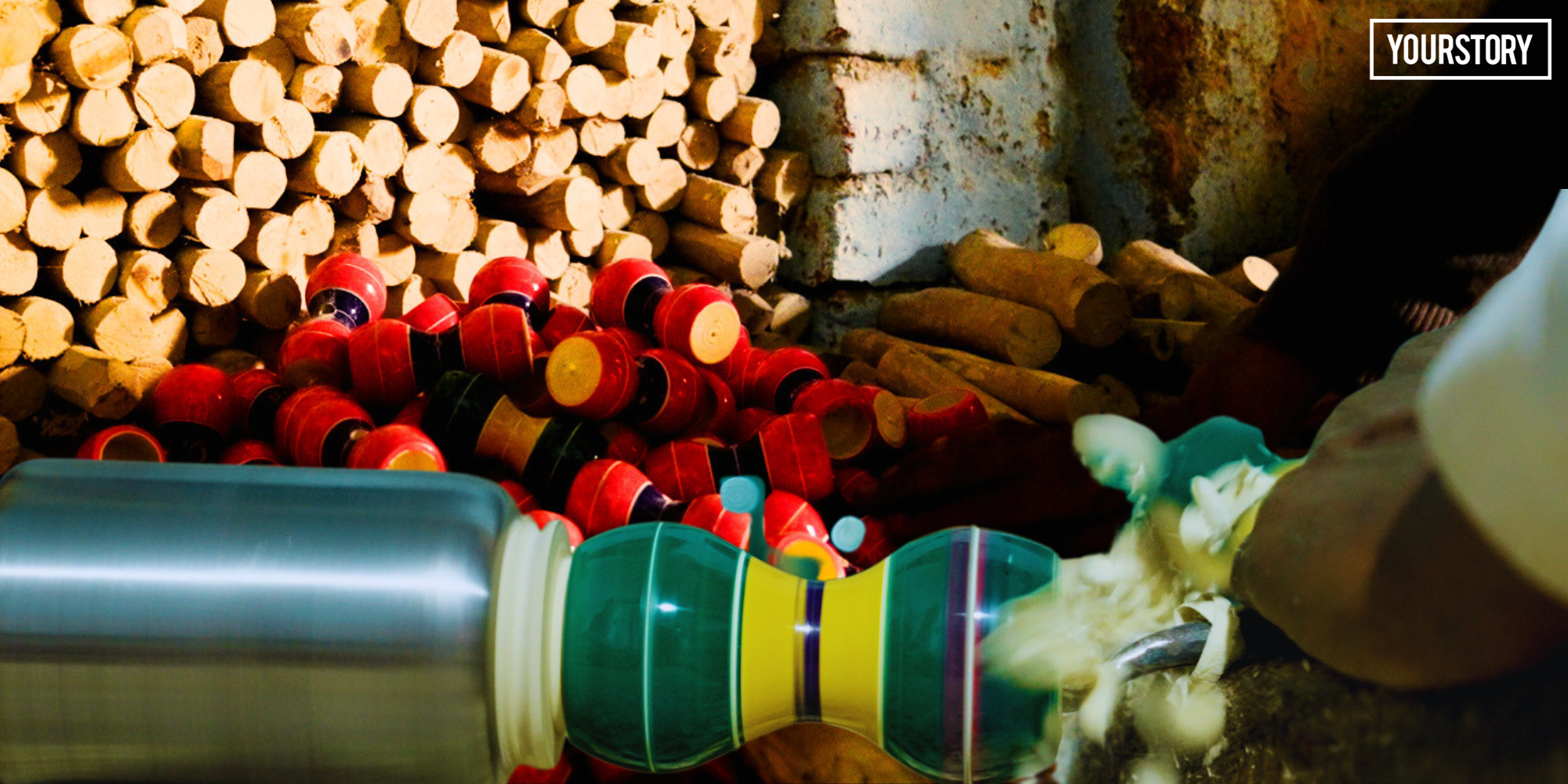
The craft relies heavily on a locally preferred wood known as kuraiya (or dudhiya), valued for its softness and suitability for rounded forms. The process begins with cutting and shaping the wood before mounting it on a lathe. As the motor turns the wood, the artisan carefully guides tools to shape spinning tops, small drums, toys, and devotional items.
Once shaped, each piece is sanded and polished. Lac finishing gives the toys their signature shine, while natural colours such as catechu and turmeric provide warm tones. Singh notes, “Finish decides whether a toy will catch someone’s eye at a fair.”
Assembly—adding strings or joining parts—often takes place at home, where women in the family contribute significantly to production.
From Workshop to Wider Markets
Exhibitions play a vital role in expanding demand. The cluster has showcased products at major platforms such as Surajkund International Crafts Mela, Pragati Maidan, and Delhi Haat, along with events in Noida, Kolkata, and Hyderabad.
For artisans in Chitrakoot, attention at such fairs translates into sustained demand. What begins as inherited skill continues as livelihood, proving that these wooden toys are far from child’s play—they are a testament to craftsmanship, continuity, and market adaptation.
Discover more from News Link360
Subscribe to get the latest posts sent to your email.