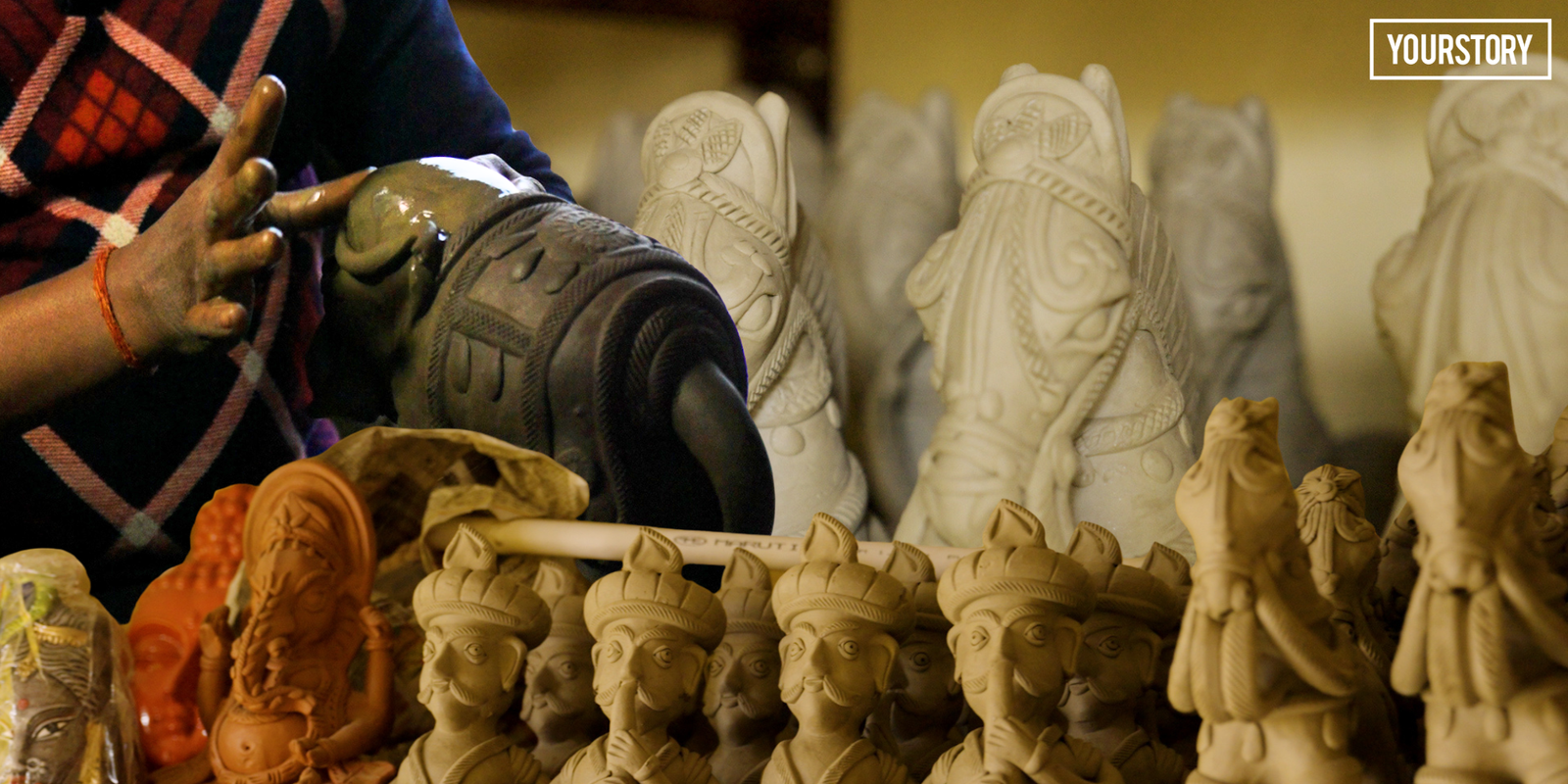
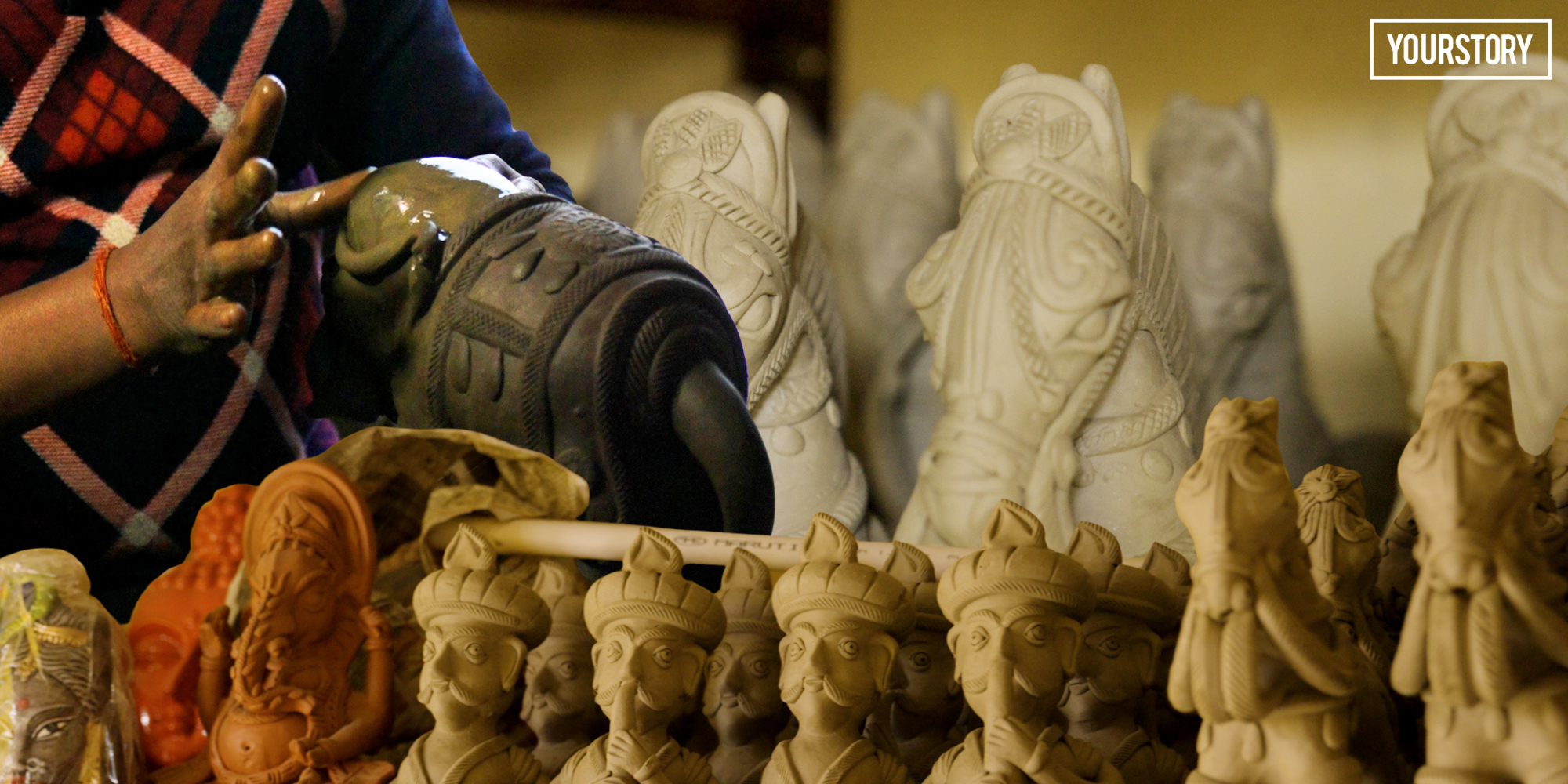

In Gorakhpur, Uttar Pradesh, terracotta is not just decorative—it is a working livelihood. Clay figures shaped in village courtyards travel to city markets, exhibition stalls, and retail counters across India. What begins as raw earth in Aurangabad village often ends up on shelves in metropolitan homes.
The supply chain links artisans, local traders, transporters, and exhibition organisers. Under the One District One Product (ODOP) framework, Gorakhpur’s terracotta has gained structured visibility, enabling artisans to access credit, better tools, and broader market platforms.
A Craft Learned at Home
Hiralal Prajapati, a terracotta artisan from Aurangabad village, represents this continuity. He learned by observing his father—returning from school and gradually taking on small tasks.
“I did not learn it in a day,” he says. “The hands learn slowly.”
For over 15 years, he has shaped elephants, horses, camels, Ganesha idols, and decorative pieces. The work is entirely hand-driven, relying on steady shaping and proportion control rather than mould-based shortcuts.
From Form to Finish
The process begins with preparing clay, now assisted by a clay-making machine. Pieces are shaped on an electric wheel and left to partially dry. Once the form stabilises, detailing begins. Prajapati uses a simple steel knife to carve patterns and define features.
A terracotta horse takes shape step by step—neck, tail, base, and hooves assembled before carving. Larger pieces demand both scale and patience; a three-foot elephant can be priced at around ₹5,000.
Bulk orders often define the workshop’s pace. Prajapati recalls fulfilling an order of 400 pieces following an exhibition. “When orders come, the whole routine changes,” he notes.
Markets and Momentum
With support from ODOP, Prajapati availed a loan of ₹1 lakh and received improved tools that boosted efficiency. However, he believes easier access to lower-interest credit would further strengthen artisan capacity.
Terracotta from Gorakhpur now reaches Lucknow, Delhi, Mumbai, Pune, Nagpur, Kanpur, and Varanasi—primarily through traders who source directly from village workshops.
For Prajapati, repeat buyers remain the simplest validation. “If people come back, it means the work holds,” he says.
In Gorakhpur, terracotta moves steadily—from clay to kiln to city shelves—sustaining hands that shape tradition into livelihood.
Discover more from News Link360
Subscribe to get the latest posts sent to your email.