
One Cane Press at a Time: Lakhimpur Kheri’s Jaggery Industry
In Lakhimpur Kheri, Uttar Pradesh, jaggery is not just a sweetener — it is a seasonal rhythm built around sugarcane supply and steady, day-long production. From small kolhu units in villages to mandi yards where traders assess colour, texture, and taste, jaggery moves through a tightly connected local economy.
Recognised under the One District One Product (ODOP) framework, jaggery represents the district’s agricultural strength. The programme has strengthened visibility, enabled access to schemes, and helped producers think beyond traditional mandi-only sales.
Among the producers keeping this cycle active is Shivam Gupta from Behjam. His family’s kolhu unit, established nearly nine years ago by his father, is now managed by him and his elder brother, Ankul Gupta. Their output moves from cane fields to mandi traders who judge quality before forwarding it into wider distribution.
A Business Rooted in Cane Supply
For Gupta, the business depends on two steady anchors: reliable sugarcane from nearby farmers and consistent buyer trust. Farmers prefer selling cane locally rather than transporting it long distances, ensuring a regular supply during the crushing season.
He explains that repeat buyers recognise their unit’s output by name, associating it with clean finish and strong flavour. In a competitive local market, reputation travels quickly. According to him, careful cooking and cleaning stages reduce complaints and strengthen trust among traders.
The district’s large-scale cane cultivation supports this ecosystem. With sugarcane widely grown across Lakhimpur Kheri, kolhu units remain active throughout the season.
From Cane to Finished Batch
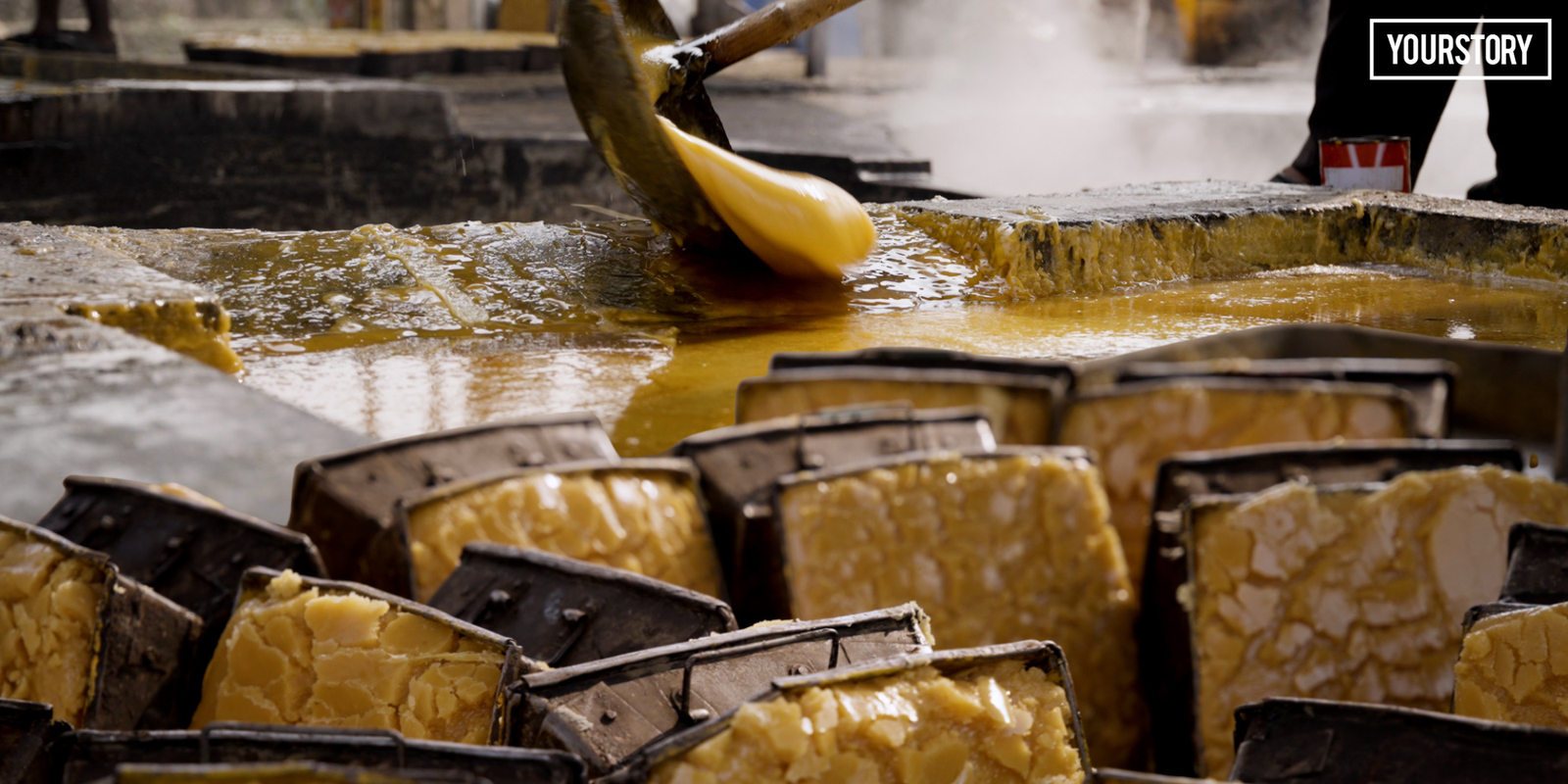
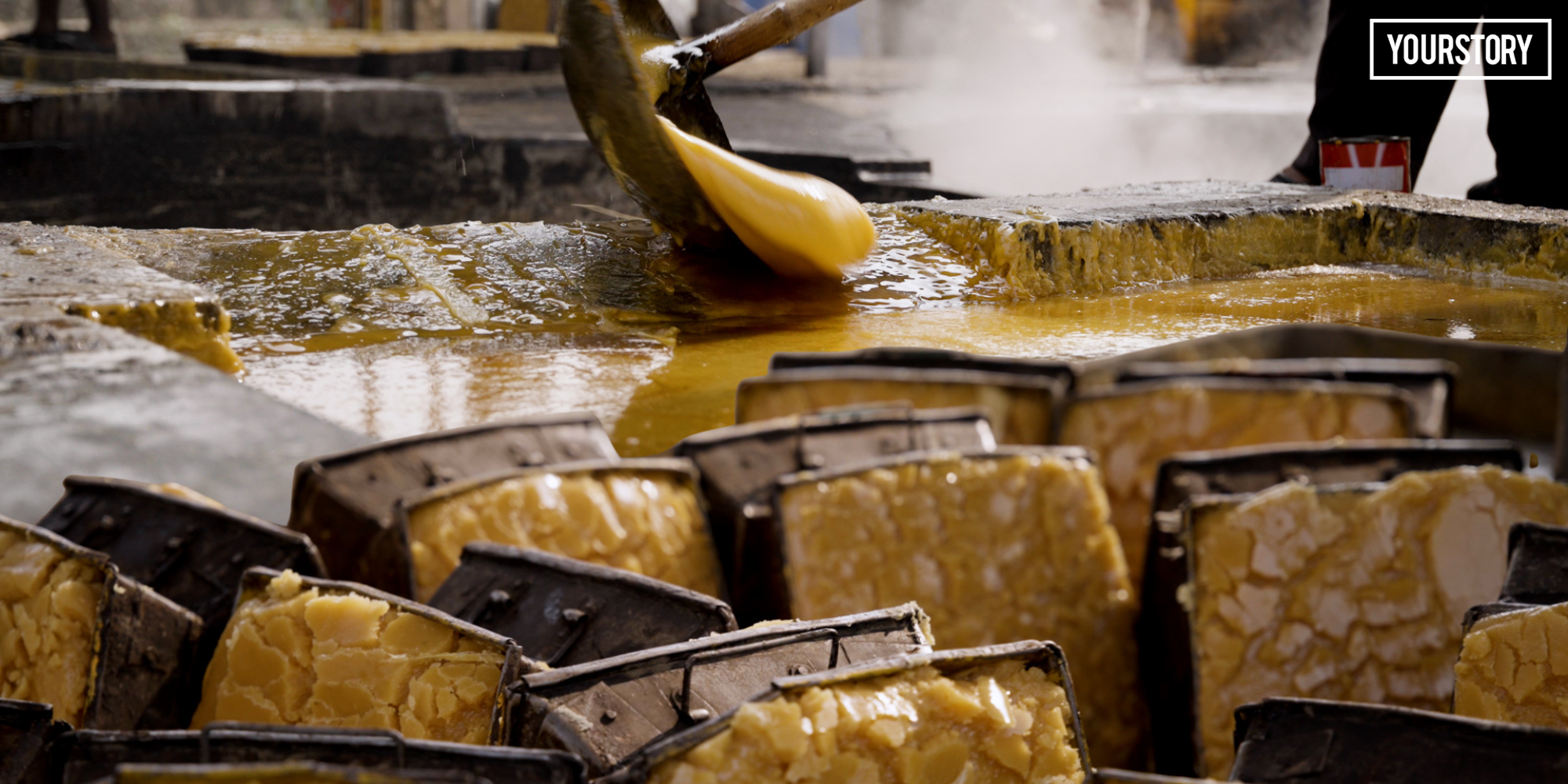
The process begins with purchasing fresh cane from nearby farms. The cane is crushed at the kolhu, and the extracted juice is transferred to large iron pans for boiling. During cooking, impurities are skimmed off and natural clarifying agents are added.
As the juice thickens, it is stirred continuously until it reaches the right consistency. The semi-solid mass is then poured into moulds or spread for cooling and setting. Once hardened, jaggery is shaped, stacked, and transported to the mandi.
Gupta estimates daily production can reach 18–20 quintals depending on workload and labour availability. The unit runs from morning until evening, with workers handling crushing, furnace management, and drying.
He credits ODOP with improving their operational awareness through training and support schemes, helping them run the unit more systematically. For him, success is measured simply: buyers returning for the same quality again.
In Lakhimpur Kheri, jaggery survives not just because cane is abundant, but because trust in the batch keeps the kolhu running season after season.
Discover more from News Link360
Subscribe to get the latest posts sent to your email.