Years may have passed since their playing days, but the bond remained untouched by time. Back then, they were driven by the sheer love for the game and the pride of wearing the India colours. And as they met again, the years seemed to melt away — as if the dressing-room chatter had only paused for a moment.
Chanderkanta Kaul had travelled all the way from London, navigating flight disruptions linked to tensions around the Iran-Israel conflict. Pramila Bhat, too, had braved travel uncertainties in the Middle East, taking a long detour before finally making it to Mumbai from Riyadh.
But distance and inconvenience meant little when friendship called.
“When all my friends and seniors are here, how can I miss it?” Pramila said, her face lighting up with a smile that said it all.
Chanderkanta shared the same emotion. “I am coming after years. Initially I thought I wouldn’t be able to make it, but when the almighty wants, things fall into place,” she said softly.
And once they met, the warmth returned instantly.
The hotel rooms soon turned into lively dressing rooms again, filled with laughter, stories and affectionate teasing. Purnima Rau, Puri di to everyone, slipped effortlessly into her familiar role, making rounds with cups of tea and ensuring everyone felt at home. She had even carried packets of freshly made pickles for her friends, a small gesture that brought big smiles.
By afternoon, Aparna Kambli and Soniya Dabir joined the gathering. Aparna had only a short trip across the city, but Soniya had driven down all the way from Pune, unwilling to miss the chance to relive those precious moments.
“Puri di, you remember how all of us would watch Kyunki Saas Bhi Kabhi Bahu Thi together?” Soniya asked, her voice carrying the nostalgia of another time.
“Even Jhulan (Goswami) would watch it regularly,” she added with a laugh.
Heads nodded, laughter filled the room, and stories flowed freely — the kind that only teammates who have shared long journeys together can tell.
And just when the room settled into that comfortable silence of shared memories, Chanderkanta gently steered the conversation back to their days with Air India — days when cricket, travel and friendship blended into a life that none of them had imagined would one day feel so distant, yet so close.
Aparna, a former Mumbai captain and an Air India veteran, was quick to respond. “Back in those days, Air India possibly had the best team. You name a player and she was part of the squad,” she said with pride.
Chanderkanta smiled as she remembered the hesitation that once stood between her and Mumbai. “Coming from a small town, my parents wondered how I would manage in a big metro like Mumbai. So they didn’t allow me to move,” she said, before pausing for a moment. “Now it feels so good to see young players chasing their dreams freely, and their parents supporting them.”
For more than three decades now, Chanderkanta has been living in Hounslow in the United Kingdom. Though she remains involved in coaching at the local level, the former India captain, under whom Mithali Raj made her international debut, admits there is one lingering regret.
“After marriage, I shifted to the UK. Even though I’m still connected with the game through coaching, it would have been nice to extend my cricketing career,” she said.
Purnima nodded in agreement. “ Kya player thi Chander (What a player Chander was)! She was one of the grittiest of our times,” she said warmly.
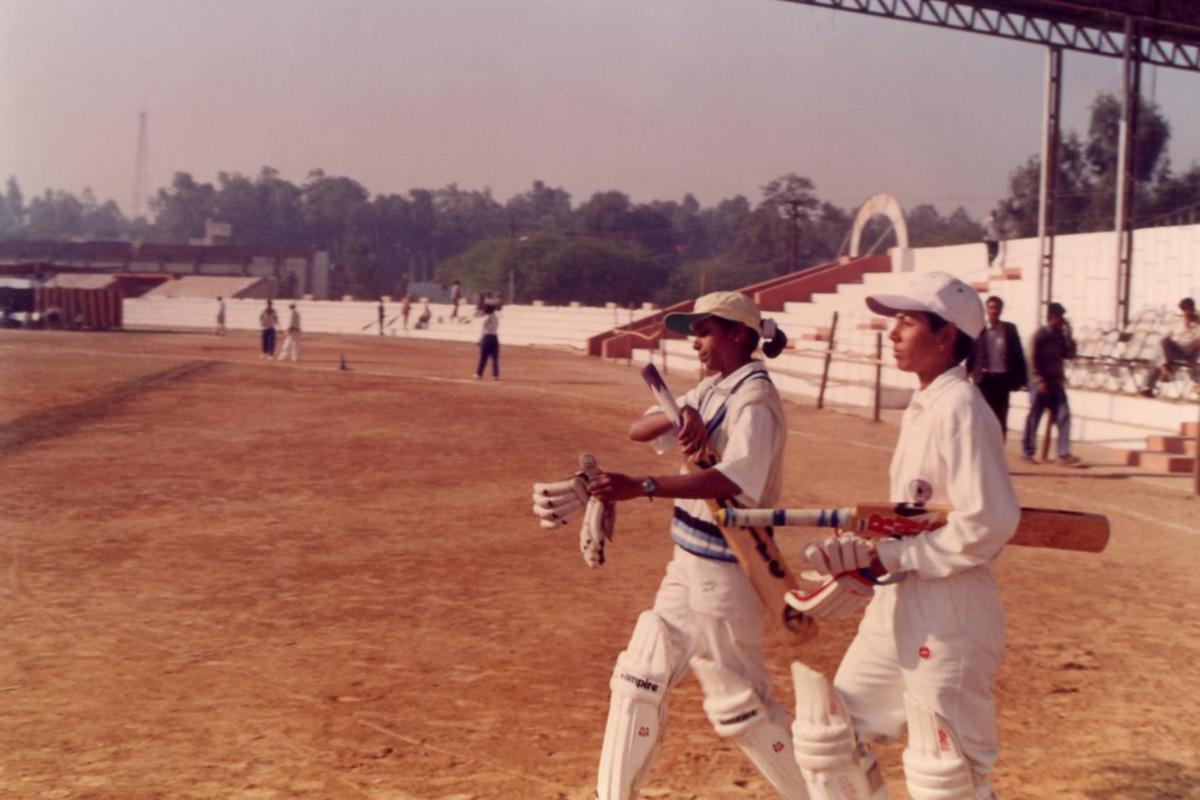
Chanderkanta Kaul (R) and Veenu Gopal, the opening pair of North Zone, go out to bat during a cricket match in March 1997.
| Photo Credit:
THE HINDU ARCHIVES

Chanderkanta Kaul (R) and Veenu Gopal, the opening pair of North Zone, go out to bat during a cricket match in March 1997.
| Photo Credit:
THE HINDU ARCHIVES
After stepping away from coaching international teams in 2017, Purnima chose a very different life. Today, her sprawling farm on the outskirts of Secunderabad keeps her busy, offering a calm contrast to the intensity of cricket.
And when she is not tending to her farm, she has other companions to keep her entertained — three cats she fondly calls her “ Sholay trio”.
“I call them Sholay,” she said with a smile, referring to the iconic film Sholay. “One of them is Jay, the other Viru, and the third one is Basanti. So the Sholay trio keeps me busy and entertained.”
Recently, she has also started a homestay near Kalimpong, which means much of her time is now spent travelling between Bagdogra and Secunderabad. “I love living close to nature,” she said softly. “That keeps me alive and keeps me going.”
When they started playing the game, the Women’s Cricket Association of India (WCAI) was the governing body. Resources were limited, opportunities were scarce, but passion kept the group going. And as Nilima Jogalekar, one of the pioneers of the game, fondly recalled, even the smallest recognition meant the world.
“I received my first prize for cricket in that game,” she said with a smile. “A glucose biscuit from the umpire. I got it for scoring a boundary — from the only shot I had at that time: a swing to the leg-side.”
It wasn’t an ordinary match. It was played at Nehru Stadium during the first national tournament in 1973.
“That was our prize. And today, thanks to the Board of Control for Cricket in India, the players have got all the support and the results are showing,” she said, praising India’s World Cup triumph last year.
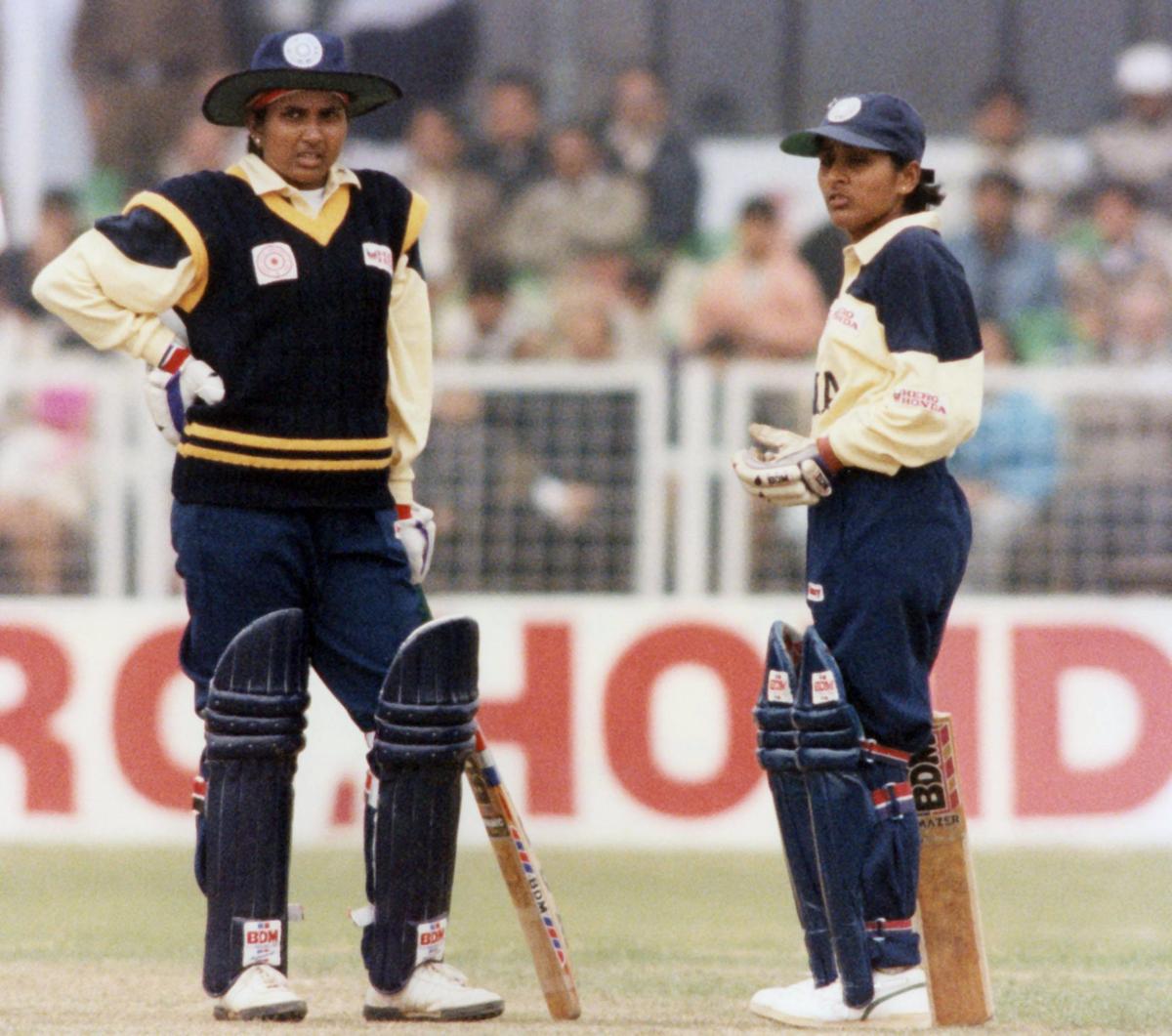
India women’s team players Smitha Harikrishna and Anju Jain (R) during the Hero Honda Women’s World Cup ODI match against West Indies in Faridabad.
| Photo Credit:
THE HINDU ARCHIVES
India women’s team players Smitha Harikrishna and Anju Jain (R) during the Hero Honda Women’s World Cup ODI match against West Indies in Faridabad.
| Photo Credit:
THE HINDU ARCHIVES
Sudha Shah and Shubhangi Kulkarni, former captains who are now associated with the BCCI, believe that with improved facilities and visibility, the fan base has grown immensely.
“When we started playing, people came to watch us out of curiosity. Our matches weren’t televised; we were lucky if we found a few corners in a newspaper. That was enough for us,” Sudha said. “We are so happy to see packed stadiums today. In our times, maybe a few of us were household names because of newspaper coverage. Today, all 15 players are household names due to massive coverage. That’s a huge step forward.”
In those days, travelling in unreserved train compartments and staying in dormitories was the norm. Players would often rely on local transport to reach grounds, carrying little more than hope and determination.
RELATED | When a search for Sanju Samson led to Glenn McGrath, Sunil Gavaskar… and hockey
“There was hardly any prize money, and we didn’t know where the future lay,” one of them recalled. “But that never stopped us from chasing our dreams.”
“I used to keep pictures of Glenn McGrath in my wallet and dream that I could bowl like him,” Jhulan said with a smile.
Anju Jain, now a respected coach, says she often reminds young players to stay grounded because she knows how unpredictable the game can be.
“Most players are focused these days, but as coaches our job is to help them handle success and failure better. That’s what I try to do,” she said.
And it is this enduring passion that still drives that generation.
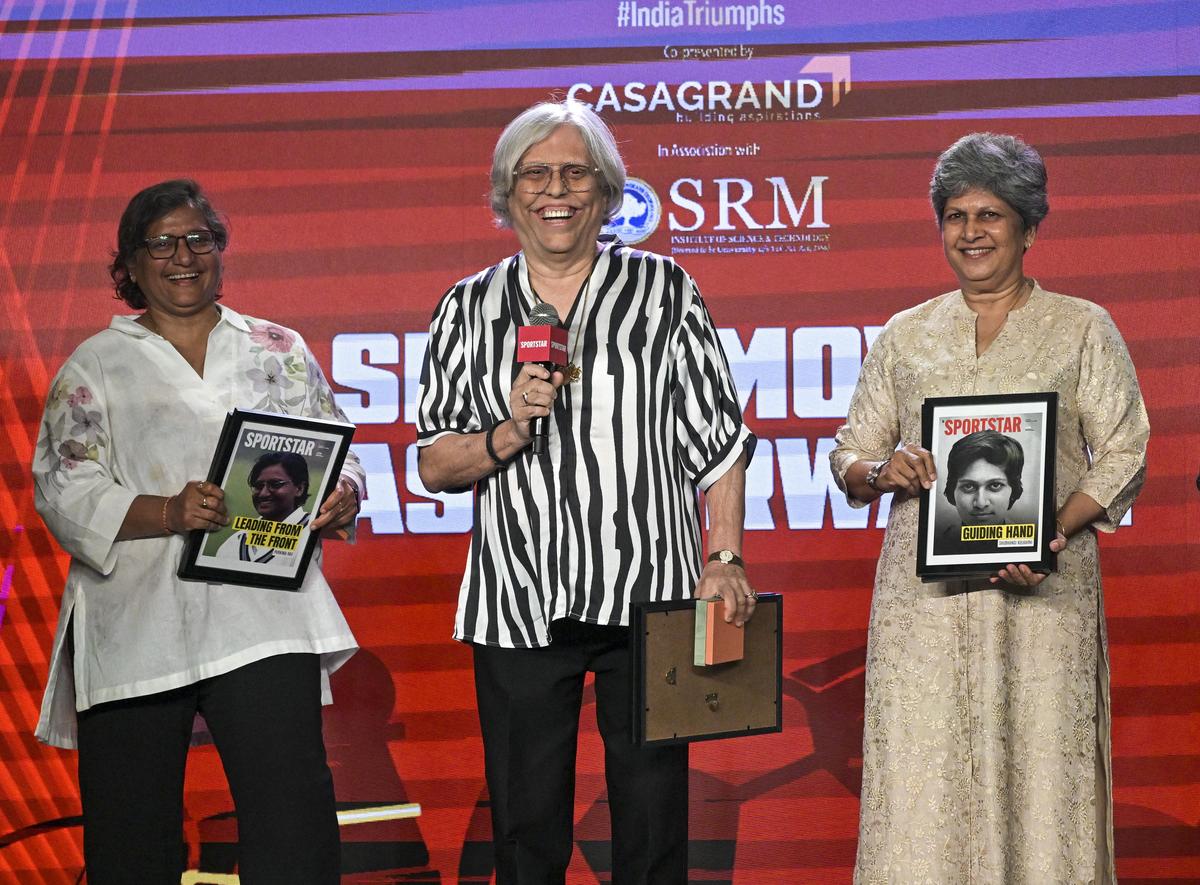
Diana Edulji (centre) said India cricket legend Sunil Gavaskar was a big motivator during her career.
| Photo Credit:
EMMANUAL YOGINI
Diana Edulji (centre) said India cricket legend Sunil Gavaskar was a big motivator during her career.
| Photo Credit:
EMMANUAL YOGINI
While Diana Edulji still fondly remembers how Sunil Gavaskar motivated her in her early days — inspiring her to watch as much cricket as possible even today — Sandhya Agarwal spends her time travelling across the corners of Madhya Pradesh in search of new talent.
“You know what,” Sandhya said, her eyes lighting up with excitement, “we have discovered quite a few youngsters who will soon set the stage on fire.”
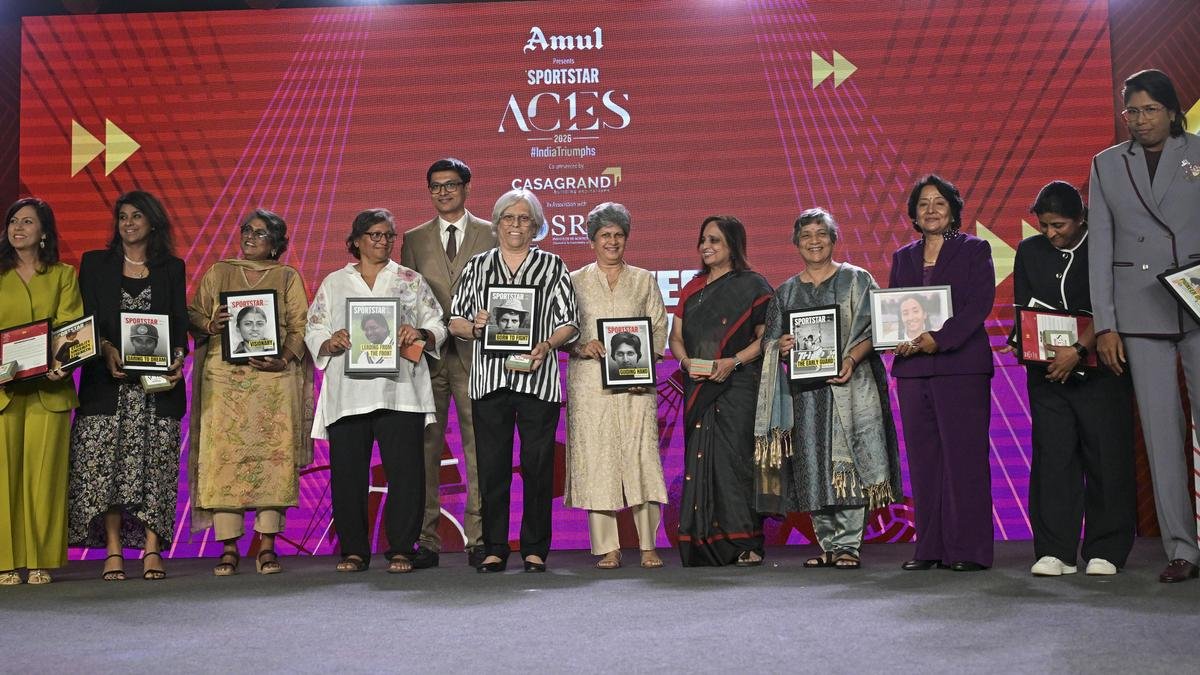
Later in the evening, in a packed hall, the captains were felicitated for their immense contribution to the game. Of the 13 players who have led India so far, 10 were present — Shantha Rangaswamy could not attend as she was unwell, while prior commitments kept Anjum Chopra and Mithali away.
But as the captains walked onto the stage to thunderous applause, their journey, from glucose-biscuit prizes to packed stadiums, told a powerful story.
A story that whispered to every young dreamer in the room: never give up on your dreams.
Published on Mar 16, 2026
Discover more from News Link360
Subscribe to get the latest posts sent to your email.