
Last Updated:
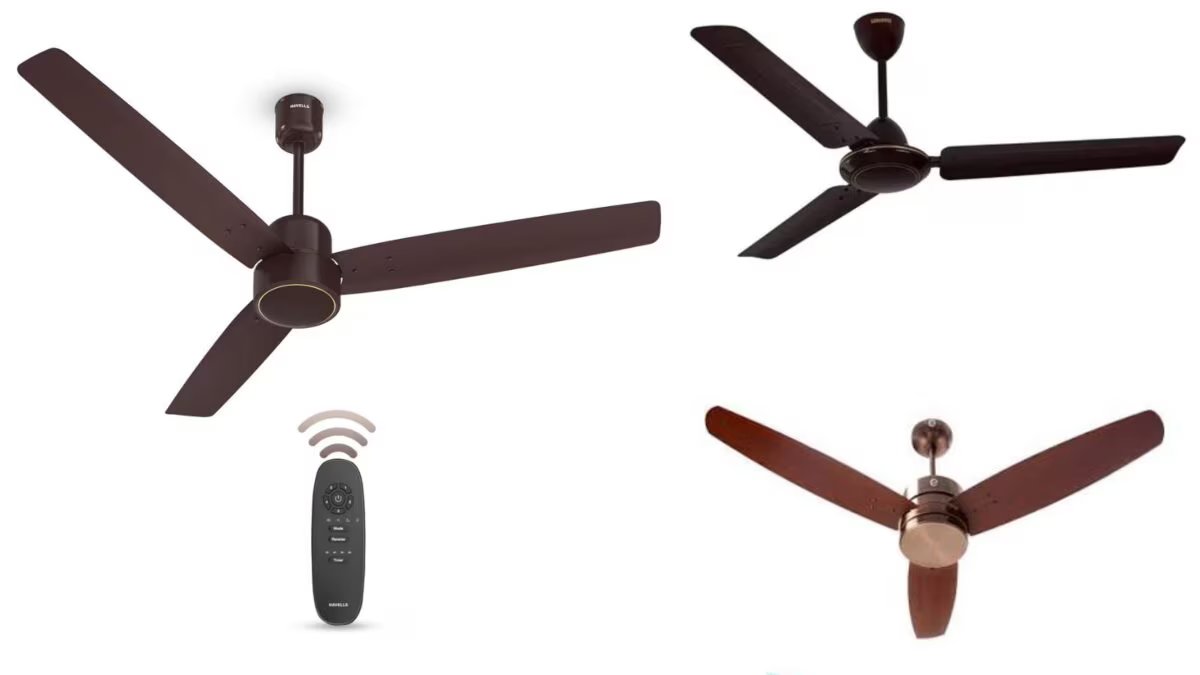
BLDC vs Normal Fan: We all have normal ceiling fans installed in our homes for years. Don’t know how many times we all have felt relief in the heat due to its breeze. But for the last five-six years, there is a lot of talk about brushless direct current fan (BLDC ceiling fan) in the market. For this reason, nowadays it is a common discussion in homes whether to install a normal fan or a BLDC ceiling fan. A question arises in the mind that which ceiling fan saves more energy. Whose maintenance and repairing is cheaper and easier? Which fan gives more backup on inverter? Let us try to know the answers to all these questions.


For home use, use BLDC fan or old ceiling fan is fine.
Energy Saving: BLDC vs Normal Fan
All the companies which have launched BLDC fans in the market claim that they save 65 percent energy as compared to the old fans. People who have actually tested it say from their experience that a normal ceiling fan consumes 50 to 60 watts of energy. That means, if a normal ceiling fan in a room runs for 8 hours every day, it will use about 12 units of electricity in 12 months. If the electricity rate is assumed to be Rs 10 per unit, then running a normal ceiling fan will cost Rs 120.
Whereas if someone has installed a BLDC fan in his room, it consumes about 28 watts of energy. Even if it is run at full speed, the maximum energy consumption will be 35 watts. Now if it is run for eight hours every day, it will use 8.4 units of electricity in a month. Based on Rs 10 per unit electricity, this cost will be Rs 84. That means, in terms of energy saving, BLDC fan is clearly saving Rs 36 per month as compared to normal fan. If we add this for the whole year, then there is a saving of Rs 432.
Feature: BLDC vs Normal Fan
BLDC fan has a remote. Because of this, you can turn the fan on and off while lying on your bed or sitting on the sofa and run it at more or less speed as per your convenience. Being remote, you can also set the timer for start and stop. Many companies also provide the facility of night light in BLDC fans. This means that people who have the habit of sleeping in dim light do not need to install a separate light. It also has an LED indicator. Apart from this, you can also handle BLDC fan by installing the app in your mobile. Whereas normal ceiling fans do not have any such features.
Inverter Backup: BLDC vs Normal Fan
BLDC fans are considered most effective on inverters. BLDC uses 35 watts of energy and normal fan uses 50 to 60 watts. Because of this, if a normal fan is able to run for 1 hour on inverter energy, then BLDC will run for about two hours. If we understand this in another way then BLDC will be able to run two fans with the same amount of energy used to run one fan on the inverter.
Price: BLDC vs Normal Fan
Good normal ceiling fans start in the range of Rs 1200 to Rs 1500. Whereas BLDC ceiling fans start at the lowest price of Rs 2500. But being energy saving, BLDC recovers its cost in two years.
Maintenance and Repairing: BLDC vs Normal Fan
If a normal ceiling fan gets damaged, you can get it repaired by calling any electrician near you. But this is not the case with BLDC fans. Local mechanics will not be able to handle it. If the PCB of BLDC gets damaged then you will have to get it from the company itself. Its price will be around thousand rupees. If there is any fault in BLDC motor then you will not be able to get it repaired locally. For this also only company people will be able to come and make changes.
One important thing is that a normal ceiling fan starts running as soon as you switch it on, but the problem with BLDC is that if it becomes one or two years old, it starts running only after about 3-5 seconds after switching it on.
Here I have tried to tell you the important advantages and disadvantages of normal ceiling fan and BLDC ceiling fan. Now you decide for yourself which option is suitable for you.
About the Author

Abhishek Kumar is working as an Associate Editor in the digital team of News18. Here he writes on various contemporary issues including politics, crime of Bihar, Uttar Pradesh, Jharkhand, Rajasthan, Madhya Pradesh, Chhattisgarh, Uttarakhand…read more
Discover more from News Link360
Subscribe to get the latest posts sent to your email.