



Life Begins When You Find Yourself: Carl Jung’s Timeless Insight

A life shaped by the inner world
Born in 1875 in Switzerland, Jung grew up in a household steeped in religion and introspection. His father was a pastor, and questions about faith, meaning, and the unseen forces shaping human behaviour surrounded him from an early age. Unlike many of his peers, Jung was less interested in fitting neatly into external structures and more drawn to the contradictions and mysteries of the mind.
After training as a psychiatrist, Jung initially worked closely with Sigmund Freud. Their collaboration was influential but short-lived. Where Freud emphasised sexuality as the primary driver of human behaviour, Jung believed the psyche was far more expansive. Their eventual split was not merely professional; it reflected Jung’s deeper conviction that personal growth begins when one dares to question dominant ideas and listen inwardly.
Finding the self, not the mask
At the heart of Jung’s philosophy is the idea of individuation, the lifelong process of becoming who you truly are. According to Jung, most people live behind a persona, the social mask we present to the world to gain acceptance and function in society. While necessary, the persona can become a trap when it replaces authenticity.
For Jung, “finding yourself” does not mean chasing happiness or success as defined by others. It means recognising the parts of yourself you have ignored, suppressed, or denied, including your fears, contradictions, and vulnerabilities. He believed that life feels empty or mechanical when a person lives only according to external expectations, and truly begins when they reconnect with their inner reality.
The shadow and self-acceptance
One of Jung’s most influential ideas is the shadow, the unconscious part of the personality that contains traits we dislike or refuse to acknowledge. Rather than viewing the shadow as something evil, Jung saw it as a source of energy, creativity, and truth. Ignoring it, he argued, leads to inner conflict and projection, where we see our own unresolved issues reflected in others.
Finding yourself, in Jungian terms, requires the courage to confront this shadow. This does not mean indulging destructive impulses, but understanding them. By integrating the shadow into conscious awareness, individuals gain a more balanced and honest sense of self.
Meaning over comfort
Jung did not promise comfort or easy answers. In fact, he believed that a meaningful life often involves tension, uncertainty, and struggle. He famously suggested that neurosis is often the result of avoiding legitimate suffering. In other words, when people refuse to face difficult inner questions, the psyche finds other ways to demand attention.
This perspective feels particularly relevant in an age of constant distraction and surface-level self-improvement. Jung’s work reminds us that growth is not about endless positivity, but about depth, reflection, and personal responsibility.
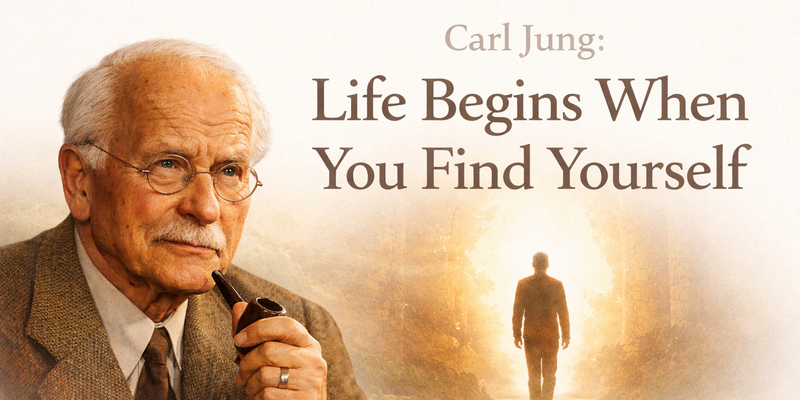
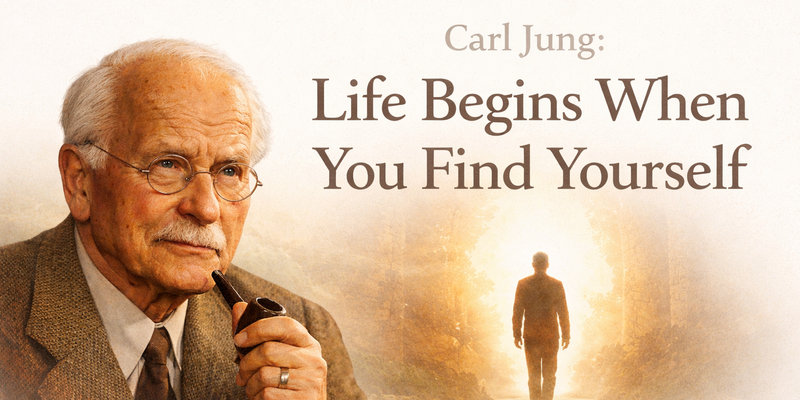
Life, as Jung saw it, is not something that simply happens to us. It unfolds when we begin the difficult, often uncomfortable task of understanding ourselves. In that sense, life truly begins when you find yourself, not as an ideal version shaped by society, but as a whole human being, aware, imperfect, and real.
Discover more from News Link360
Subscribe to get the latest posts sent to your email.