


Write Goals in Ink, Strategies in Pencil: The Mindset That Wins
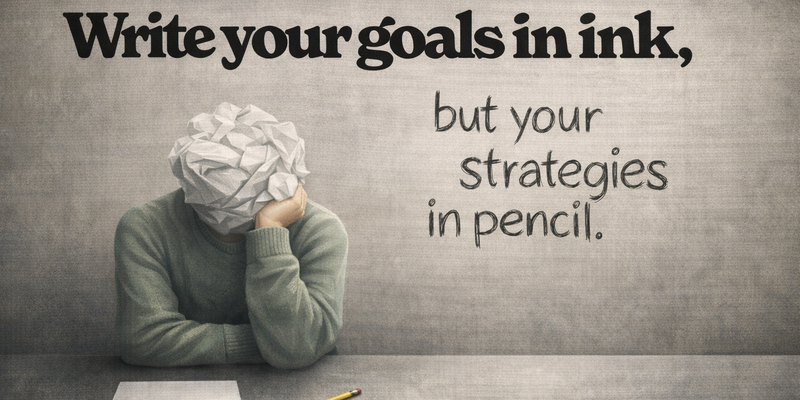
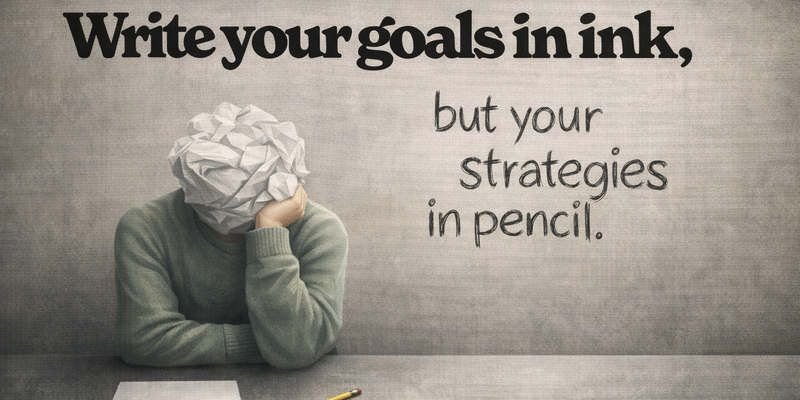

In a world that rewards speed, it is easy to confuse movement with progress. We chase the next trend, copy someone else’s roadmap, and measure our worth by how busy we look. This quote pushes back. It argues that the most serious people are not the ones who obsess over perfect plans, but the ones who commit to a direction, then adapt their route with humility.
Why Goals Belong in Ink
An ink goal is a decision. It is the part of your life you are willing to defend against distractions, moods, and shifting priorities. Ink does not mean stubbornness, it means clarity. If you want to build a business, improve your health, publish a book, or learn a skill, you need an anchor that stays steady even when motivation dips.
A clear goal also solves a quiet but costly problem: scattered effort. Many people have the talent and energy to do meaningful work, but they spread it across too many “maybes.” Ink forces selection. It makes you say, “This is what I’m building this year,” and that single sentence begins to organise your calendar, your spending, and your attention.
Importantly, ink goals create accountability. Not public, performative accountability, but personal accountability. When you know what you are aiming for, you can tell the difference between a bad day and a wrong direction. You can recover faster, because you are not constantly renegotiating your purpose.
Why Strategies Should Stay in Pencil
If goals are the destination, strategies are the roads. And roads change.
Most plans fail not because the goal was wrong, but because the strategy was treated like scripture. Pencil strategies are a reminder that execution lives in reality, not in a notebook. Markets shift, algorithms change, health fluctuates, teams evolve, and your own understanding deepens as you learn. A plan that felt perfect in January can be outdated by March.
Keeping strategy in pencil is not the same as being inconsistent. It is being responsive. It means you can test an approach, measure results, and adjust without emotional drama. If something is not working, you erase and rewrite. No guilt. No identity crisis. Just refinement.
This mindset also protects you from a common trap: overplanning. Some people plan as a way to feel safe, not as a way to move. Pencil strategies give you permission to start messy, learn fast, and improve in iterations. Progress begins when the plan becomes action.
The Practical Way to Apply It
Treat your goal as a headline and your strategy as the draft.
Write one goal clearly, in a way that can guide daily decisions. Then write two to four strategies that are specific, testable, and time-bound. Review them weekly. Ask: What is working? What is wasting time? What needs to change?
When you work like this, you become both ambitious and adaptable. You stay loyal to the outcome, but not attached to the method. And that is often the difference between people who dream and people who finish.
In the end, ink is commitment. Pencil is intelligence. Together, they turn intention into a living system, one that can survive real life and still get you where you want to go.
Discover more from News Link360
Subscribe to get the latest posts sent to your email.