

Stop Living on Autopilot: The Meaning Behind Jung’s “Awake” Quote
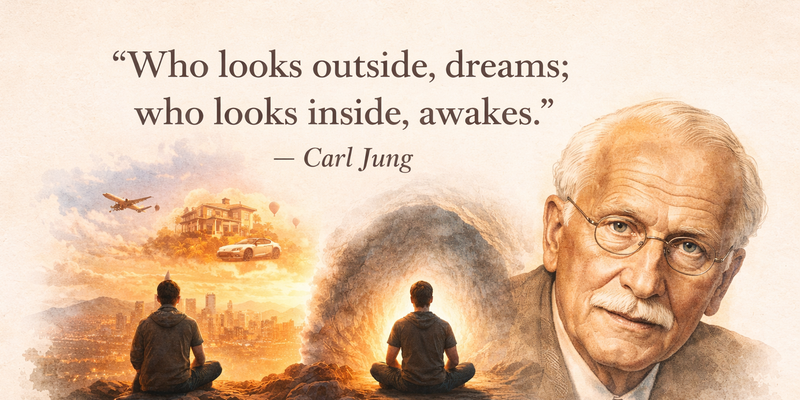
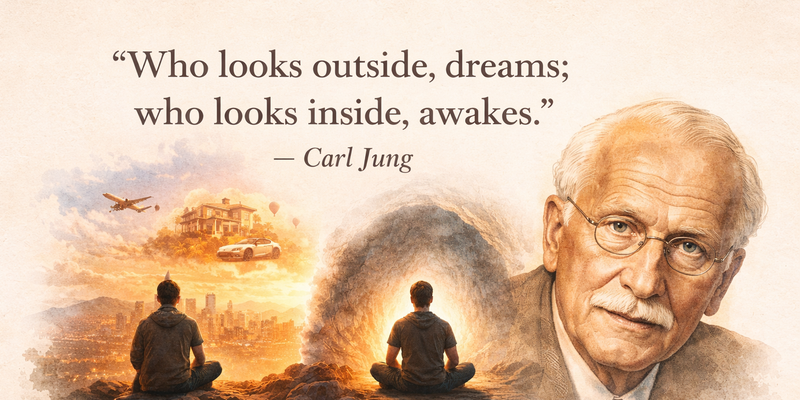

Looking Outside: The Comfort of Endless Possibility
To “look outside” is to place the centre of gravity in the external world. It is the version of you that scrolls, watches, benchmarks, collects opinions, and stays busy. Outward attention can be productive. It helps you learn skills, find mentors, notice opportunities, and build a career. But it also has a trap built into it.
The trap is postponement.
When the focus stays outside, life becomes a series of “once this happens” moments. Once the job changes. Once the money improves. Once the body transforms. Once the relationship feels perfect. The mind stays in projection mode. It lives in what could be, what should be, and what others seem to have figured out. That is why Jung uses the word “dreams.” A dream is vivid, emotional, even motivating, but it is not the same as waking life.
Looking Inside: The Uncomfortable Work of Awakening
To “look inside” is to face your inner landscape without decoration. That means noticing your fears, cravings, resentments, and patterns, not just your goals. It means asking questions that do not have quick answers.
- Why does approval matter so much?
- Why does procrastination show up at the exact moment something becomes important?
- Why do certain people trigger a strong reaction, even when they did nothing major?
This is where Jung’s idea becomes practical. Awakening is not about becoming calm all the time. It is about becoming conscious. When you see the pattern, you gain choice. You can pause before reacting. You can separate desire from impulse. You can understand what you are really chasing when you say you want success.
What Inner Awareness Changes in Daily Life
Inner work is often framed as spiritual, but its results are concrete. It improves decision-making because you stop negotiating with invisible pressures. It strengthens relationships because you communicate from clarity instead of anxiety. It makes ambition cleaner because it becomes less about proving and more about building.
It also changes how you handle setbacks. When your identity is entirely external, failure feels like collapse. When you know your internal drivers, failure becomes information. You still feel it, but it does not own you.
A Simple Way to Apply the Quote Today
Start small and specific. Take ten minutes without inputs. No phone, no music, no multitasking. Write down what has been occupying your mind, then ask one follow-up: what am I avoiding by staying busy?
That single question is often the doorway. Jung’s quote is not telling you to abandon the world. It is asking you to stop living only in reflection and projection. Dreams can inspire. But awakening is where life actually begins.
Discover more from News Link360
Subscribe to get the latest posts sent to your email.