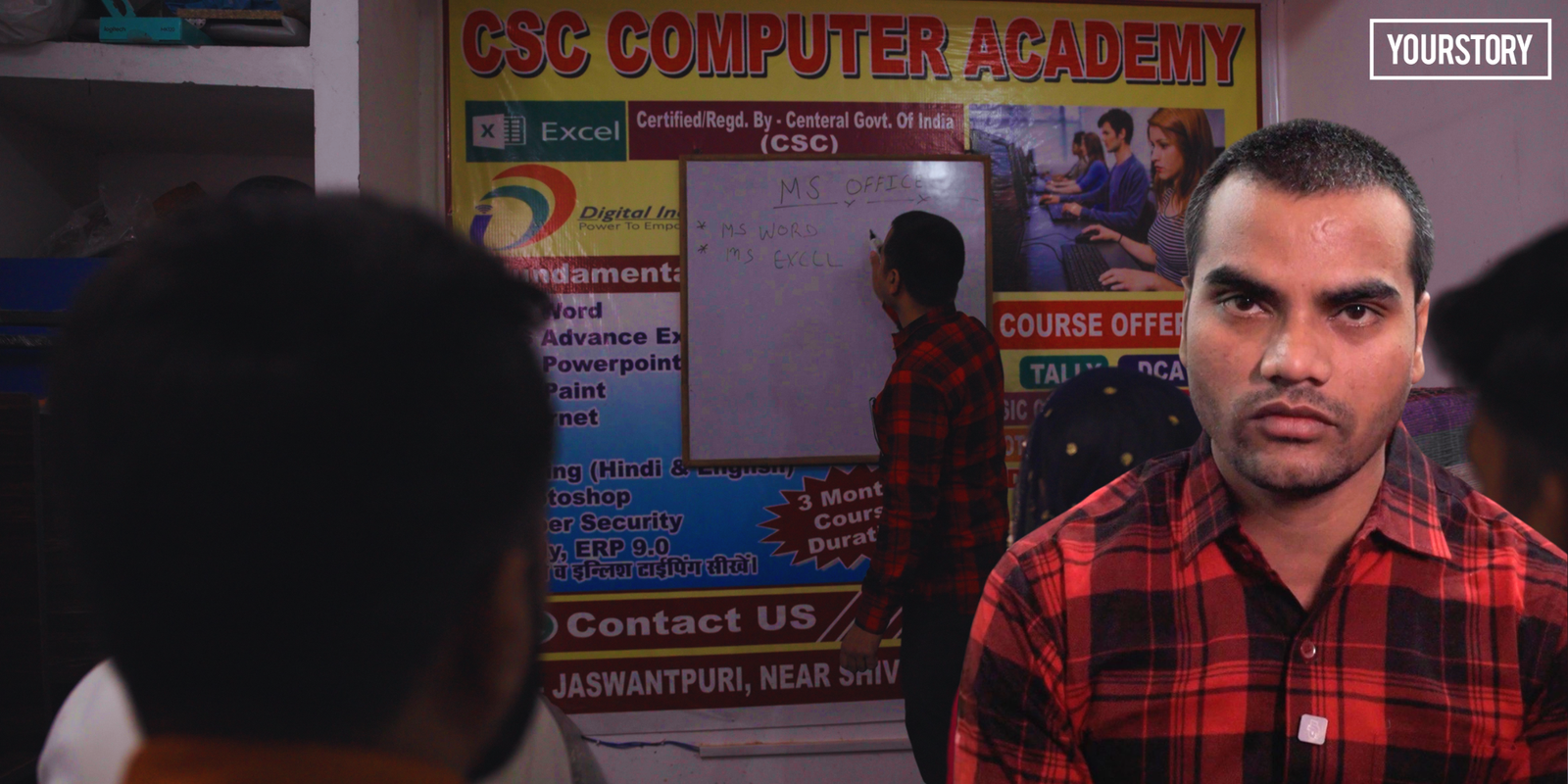
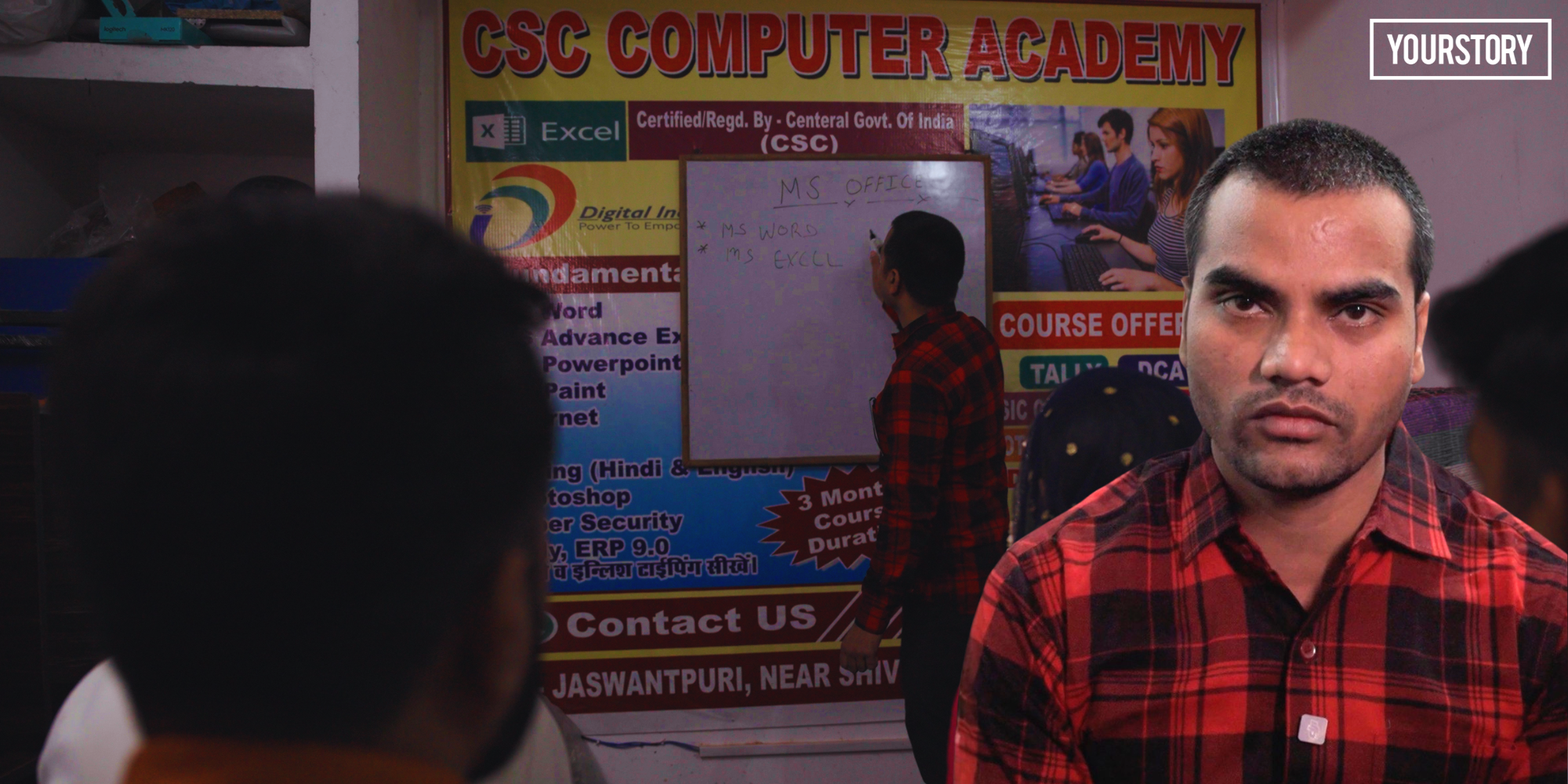

His coaching centre offers basic computer literacy, Hindi and English typing, introductory lessons in internet use, and elementary cyber-security awareness. Students are also introduced to Tally and other commonly used software, with Kumar planning to gradually add new courses as demand grows. What began with three or four students has now expanded to around 30 to 40 learners.
Starting with limited resources
Kumar completed his graduation and pursued additional computer training, including a one-and-a-half-year software course and the Triple C certification, before considering entrepreneurship. He says he never held a formal job and had long intended to start his own venture rather than seek employment. In January 2025, he established the centre with minimal infrastructure, operating initially with just a laptop.
The turning point came when he discovered, via newspapers and social media, about financial support available under the Mukhyamantri Yuva Udyami Vikas Abhiyan (CM YUVA) Yojana. Seeing an opportunity to formalise and expand his idea, he applied for a loan. After completing the documentation and verification process, he received financial assistance, including a cheque handed over at an event in Meerut.
With the funds, Kumar purchased additional computer systems, installed internet connectivity, and arranged for cameras and other essential equipment required to run a training institute. The improved infrastructure allowed him to accommodate more students and conduct classes more systematically. He chose the CM Yuva Yojana loan over other options because it did not require a guarantor or carry interest, which reduced his initial financial burden.
Building local opportunities
As enrolment increased, Kumar began offering small job roles within the centre to some of his students, allowing them to assist with routine tasks while gaining practical exposure. For him, the goal extends beyond running a coaching centre; he views it as a way to create local employment and make digital skills accessible within the neighbourhood.
Reflecting on the scheme’s relevance for young entrepreneurs, he says, “Young people have skills, but they don’t have money (capital),” which translates to, young people often have skills but lack the capital to start something of their own.
In a district where access to structured computer education was limited, Kumar’s initiative has introduced a steady space for learning. The journey from a single laptop to a functioning coaching centre has been gradual, shaped by careful expansion rather than rapid growth. For Kumar, the shift from planning to running a stable local business marks a move away from uncertainty towards a more predictable and sustainable livelihood in the Muzaffarnagar district.
Discover more from News Link360
Subscribe to get the latest posts sent to your email.