

Why don’t iron ships weighing thousands of tons sink in water? Know the secret of a ship’s floating through the simple science of Archimedes’ principle, buoyancy force and density…

Have you ever wondered how such a heavy iron ship, which weighs thousands of tons, remains floating on water? A stone sinks in water, but not a ship! Its secret is very old – it was discovered by the Greek scientist Archimedes about 2200 years ago. This is called Archimedes’ principle or buoyancy force. Suppose you fill a bucket with water and put something in it.

As soon as an object goes into water, it pushes the water – that is, it moves the water aside. The more water is moved (displaced), the more the weight of the water exerts an upward force on the ship. This force is the buoyancy force.
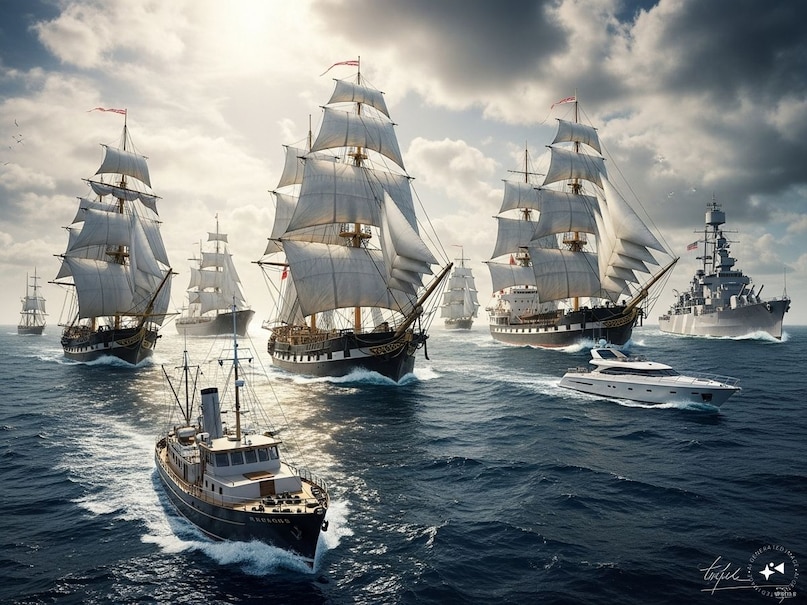
Archimedes’ principle states: When an object is completely or partially immersed in water (or any liquid), there is an upward force on it, which is equal to the weight of the water displaced. Now apply to the ship: The hull of the ship is very large and hollow. There is a lot of empty space inside – air, rooms, machines etc.
Add News18 as
Preferred Source on Google

When a ship hits water, it displaces a lot of water. The weight of this displaced water is greater than or equal to the total weight of the ship (iron + cargo + fuel + people). So buoyancy force pushes the ship up, and weight pulls down. If the upward force is greater or equal, the ship floats.

A simple example: drop a small piece of iron – it displaces less water, weighs more, so sinks. If the same iron is made in the shape of a big ship, it removes a lot of water. When the weight of the displaced water exceeds that of the ship, it starts floating.
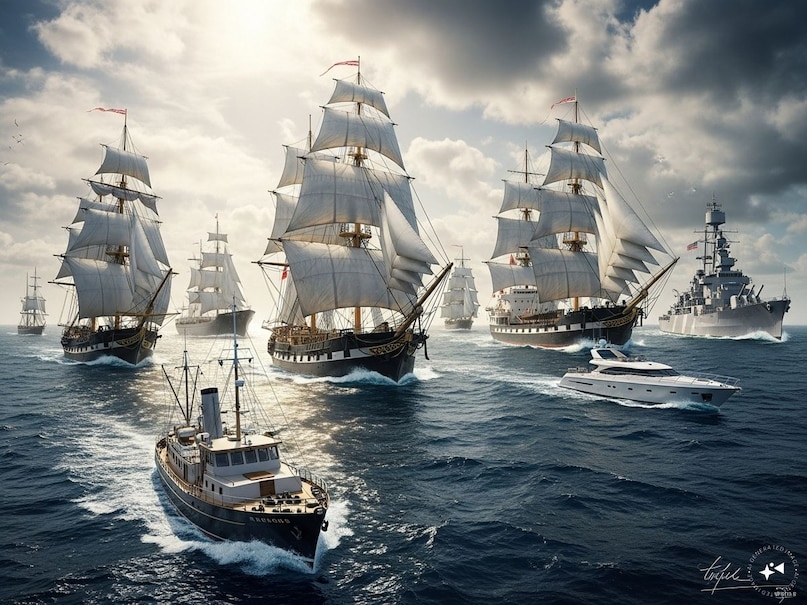
There is no magic here, just a game of density. The average density (total weight ÷ total volume) of the ship is kept less than that of water. The density of water is 1 g/cm³, the average density of a ship is less because there is more free space inside.

What does today’s technology do? In ship design, computer calculations are used to shape the hull so that more water can be displaced. Plimsoll lines – it shows how much load the ship can carry. If there is more load, it will sink more and the buoyancy force will be less.

Ballast tank is used for stability – balance is maintained by filling with water. So overall, ships float because of Archimedes’ principle—buoyant force comes from the displacement of water, and the ship’s large, hollow design makes this possible. Next time you see a ship, think – it is floating not just on water, but on science.
Discover more from News Link360
Subscribe to get the latest posts sent to your email.